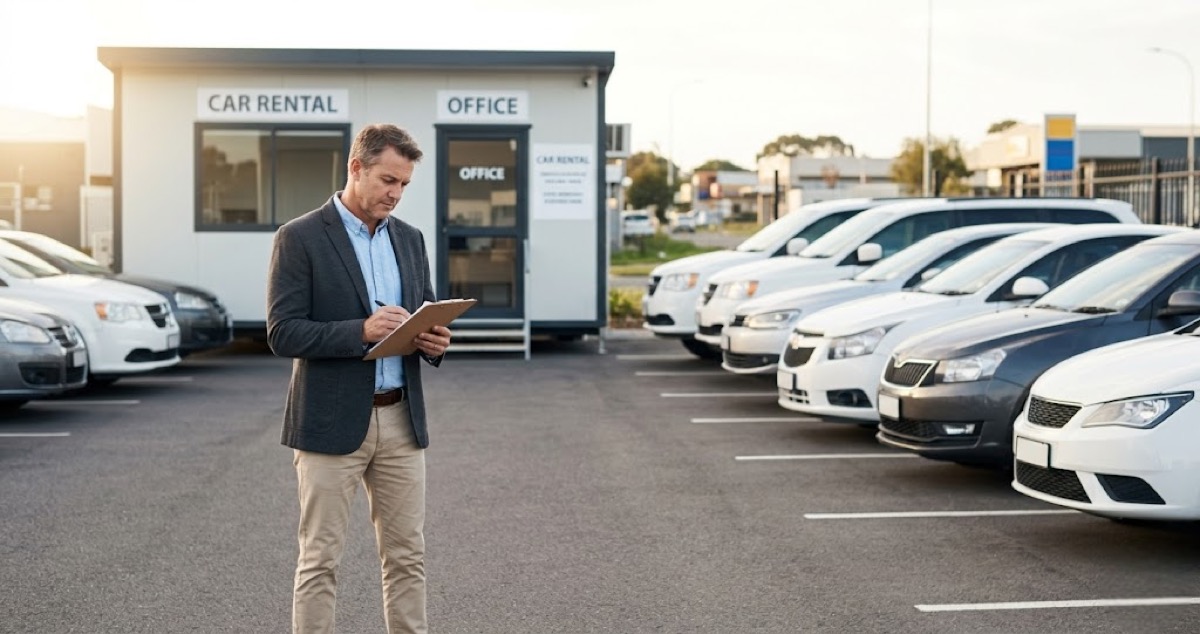

The rental car counters at every airport are packed for a reason. People need wheels — for vacations, business trips, weekend getaways, and the gaps between selling one car and buying the next. And they are willing to pay well for them.
Starting a car rental business does not mean competing with Hertz or Enterprise. Independent operators with 5-15 vehicles are building strong local businesses by serving markets the big chains overlook:
- Small-town tourism — visitors who need wheels but have no rental counter nearby
- Corporate accounts — local businesses that need reliable vehicles without airport markups
- Wedding weekends — groups booking multiple vehicles for a few days
- Underserved neighborhoods — areas far from airport locations where the big chains cluster
This guide breaks down every step with real numbers:
- What it actually costs — real startup and operating numbers
- What you need legally — licenses, permits, and insurance requirements
- How to price your fleet — rates that keep vehicles moving and margins healthy
- How to run operations — without drowning in paperwork

Why the car rental market still has room for independents
- $86.1 billion market in 2025 — projected to reach $107.2 billion by 2034 at 2.5% CAGR
- Stable, predictable demand — driven by tourism recovery, business travel, and a growing preference for renting over owning second vehicles
- Local opportunity — big chains dominate airports but are thin on the ground in smaller cities, vacation towns, and suburban commercial districts
That gap is where small car rental startups thrive. You do not need 200 vehicles and an airport desk. A 10-car fleet in the right market, with competitive pricing and responsive service, can generate $150,000-$300,000 in annual revenue. Net margins for well-run independent operators typically land between 10-20% after depreciation, insurance, and maintenance.
Know the real startup costs before you buy a single car
A car rental startup requires more upfront capital than most rental businesses because the inventory is expensive. Expect to invest $100,000–$250,000 for 5–10 vehicles to get a small independent operation running, depending on fleet size and vehicle type.
Here is a realistic breakdown for a 10-vehicle fleet:
| Expense | Estimated cost |
|---|---|
| Vehicles (10 units, mixed fleet) | $100,000-$300,000 |
| Commercial auto insurance (annual) | $10,000-$20,000 |
| Office/lot lease (first + last month) | $2,000-$8,000 |
| Business registration + licenses | $500-$3,000 |
| Commercial plates and registration | $1,000-$3,000 |
| Rental management software | $50-$200/month |
| Marketing (website, local ads, signage) | $1,000-$5,000 |
| Maintenance reserve | $3,000-$5,000 |
| Total estimated range | $117,500-$344,000 |
The vehicle fleet is the overwhelming majority of your startup cost. You can reduce this significantly by leasing instead of buying. A lease on a mid-range sedan runs $250-$400/month per vehicle, which drops your initial cash outlay dramatically — though it reduces your long-term margins since you never own the asset.
Another approach: start with 3-5 vehicles and reinvest revenue into fleet expansion. Many successful independent operators started with personal vehicles and scaled from there. Budget $1,500-$3,000 per vehicle per year for routine maintenance — oil changes, tires, brakes, detailing between rentals.
Pick vehicles that actually make money
Your fleet mix determines your revenue ceiling and your cost floor. Not all vehicles earn the same return.
Economy sedans
The bread and butter. A reliable sedan (Toyota Corolla, Honda Civic, Hyundai Elantra) costs $22,000-$28,000 new and rents for $35-$60 per day. Low maintenance, high utilization, broad appeal. These should make up the core of any starter fleet.
SUVs and crossovers
Higher daily rates — $60-$120 per day — with strong demand from families, travelers with gear, and anyone heading somewhere with rough roads or weather. A mid-range SUV (Toyota RAV4, Ford Bronco Sport) runs $30,000-$42,000 new. They cost more to insure and maintain, but the revenue per rental day justifies it.
Specialty and luxury vehicles
Convertibles, luxury sedans, and premium SUVs command $100-$250+ per day but come with higher acquisition costs, insurance premiums, and risk. These work best in tourist-heavy or event-driven markets (beach towns, destination weddings, corporate retreats). Do not start here unless your market specifically demands it.
Minivans and passenger vans
Often overlooked, but incredibly profitable in the right markets. A minivan rents for $70-$100/day and is in constant demand for family vacations, airport groups, and church/team outings. Lower utilization than sedans, but higher revenue per booking day.
A solid starting fleet for a 10-car operation:
- 4 economy sedans
- 3 SUVs/crossovers
- 2 minivans
- 1 specialty vehicle
Adjust based on what your local market actually rents.
Ready to track your fleet and bookings in one place?
Try LendControl free for 14 days
No credit card required.

Get licensed, registered, and insured
This is where most first-time operators underestimate the work. A car rental business has more regulatory requirements than many other rental categories because you are putting customers behind the wheel of a multi-ton vehicle on public roads.
Business formation and licensing
Here is what you need to get set up legally:
- LLC or corporation formation — $50-$500 depending on your state
- EIN from the IRS — free, takes 5 minutes online
- General business license — $50-$400/year from your city or county
- Vehicle rental/leasing license — required in many states. California, for example, requires a specific Car Rental Agent License through the Department of Insurance
- Sales tax permit — required in most states for collecting rental tax
Every vehicle in your fleet needs commercial plates and registration. Using personal registrations on rental vehicles is a common mistake that can void your insurance and result in fines.
Insurance — your biggest non-vehicle expense
Standard personal auto insurance does not cover rental operations. You need a commercial fleet insurance policy specifically designed for vehicles rented to the public. This is non-negotiable.
A full insurance package for a car rental business typically includes:
- Commercial auto liability — covers injuries and property damage caused by your renters
- Comprehensive and collision — covers damage to your vehicles
- Hired and non-owned auto (HNOA) — covers gaps when vehicles are operated by renters
- General liability — covers slip-and-fall at your office, customer disputes, etc.
- Garagekeepers insurance — covers vehicles while stored on your lot
Expect to pay $1,000-$2,000 per vehicle per year for a comprehensive commercial fleet policy, depending on your location, fleet composition, and claims history. For a 10-car fleet, that is $10,000-$20,000 annually — a major operating expense, but one that protects your entire business.
Require signed rental agreements and damage waivers from every customer. Offer optional collision damage waivers (CDW) as an add-on — this is also an additional revenue stream, as many renters will pay $15-$25/day for peace of mind.
Set pricing that covers your costs and stays competitive
Car rental pricing has gotten more sophisticated. The big chains use airline-style dynamic pricing algorithms that adjust rates multiple times a day. As an independent, you do not need that complexity — but you do need a pricing structure that covers your per-vehicle costs and stays within market expectations.
Here are standard rate ranges for independent operators in 2026:
| Vehicle type | Daily rate | Weekly rate | Monthly rate |
|---|---|---|---|
| Economy sedan | $35-$60 | $200-$375 | $700-$1,200 |
| SUV / crossover | $60-$120 | $375-$700 | $1,200-$2,500 |
| Minivan | $70-$100 | $400-$600 | $1,400-$2,200 |
| Luxury / specialty | $100-$250+ | $600-$1,500+ | By arrangement |
Pricing strategies that protect your bottom line
- Weekly discounts of 15-30% — encourage longer bookings and reduce turnover costs (cleaning, inspection, key handoff). A customer renting for 7 days at a 20% discount still pays more total than two separate 2-day rentals after you account for turnover time.
- Require a security deposit — $200-$500 on a credit card hold, depending on vehicle value. This covers minor damage, fuel shortages, and late returns.
- Charge for extras — GPS units ($10/day), child car seats ($8/day), additional drivers ($12/day), and roadside assistance packages ($5/day) all add up. These ancillary fees can add 15-25% to your average booking value.
- Seasonal pricing matters — if you operate in a tourist market, charge full rates during peak season and offer 20-30% off during shoulder months to keep utilization above 60%.
- Mileage policies — offer unlimited mileage for local renters and cap mileage (with overage charges of $0.25-$0.50/mile) for longer-term or one-way rentals to protect against excessive wear.
Use car rental software to manage your fleet
Managing a car rental business with phone calls, text messages, and a spreadsheet works until it does not. And the point where it breaks is usually a double-booked vehicle, a missed return, or a customer showing up to an empty lot because you lost track of who had what.
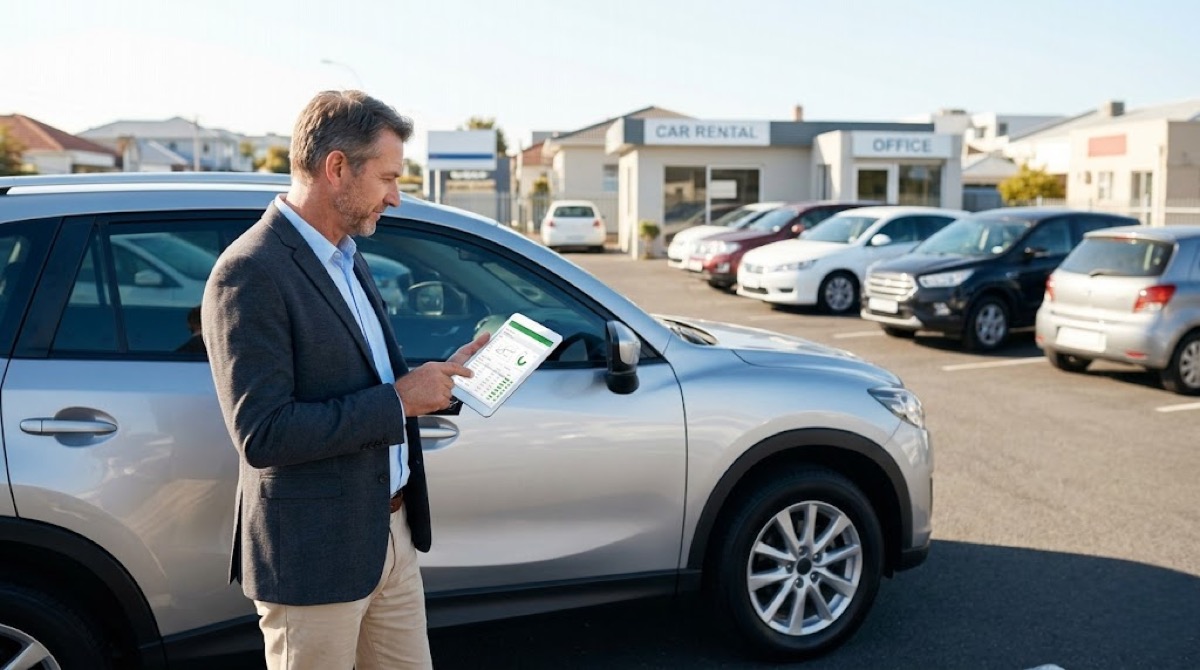
Car rental software gives you real-time fleet visibility, online booking, automated contracts, and payment processing in one system. Here is what to prioritize:
- Live fleet availability — every booking instantly updates which vehicles are available. No manual tracking, no overlaps.
- Online reservations — customers check availability and book without calling you. This alone can increase bookings by letting you capture demand outside business hours.
- Digital rental agreements — signed electronically before pickup. Legally binding, timestamped, and stored automatically.
- Payment processing — collect deposits, daily charges, and security holds online.
- Customer communication — automated booking confirmations, pickup reminders, and return notifications.
LendControl is built for exactly this kind of operation. One feature that matters for car rental management specifically: WhatsApp AI availability — a customer messages you asking “Do you have an SUV available next Friday through Sunday?” and gets an instant answer pulled from your live inventory. No forms to fill out. No waiting for you to manually check and reply. For operators fielding 15-30 availability questions a day through messaging apps, that is hours of back-and-forth eliminated.
Manage your fleet, bookings, and customers in one place.
Try LendControl free for 14 days
No credit card required.
Frequently asked questions
How much does it cost to start a car rental business?
A small independent operation with 5-10 vehicles typically requires $100,000–$250,000 for 5–10 vehicles in startup capital. The biggest cost is the vehicles themselves. You can reduce upfront costs by leasing instead of buying, or by starting with 3-5 cars and scaling up from revenue.
Is a car rental business profitable?
Yes, but margins are tighter than many expect. Independent operators typically see 10-20% net profit margins after accounting for depreciation, insurance, maintenance, and financing. A well-run 10-car fleet generating $200,000 in annual revenue can net $20,000-$40,000 in profit. Profitability depends heavily on utilization rates — you need vehicles rented at least 60-75% of available days.
What insurance do I need for a car rental business?
You need commercial fleet auto insurance at minimum — standard personal auto policies do not cover rental operations. A comprehensive policy includes commercial auto liability, comprehensive/collision, and general liability. Budget $1,000-$2,000 per vehicle per year depending on your fleet and location.
Do I need a special license to rent cars?
Requirements vary by state. At minimum, you need a general business license, an EIN, and a sales tax permit. Some states (like California) require a specific vehicle rental agent license. Every vehicle must have commercial plates and registration. Check with your state DMV and local city clerk for exact requirements.
How many cars do I need to start?
Start with 5-10 vehicles. That gives you enough variety to serve different customer needs while keeping your initial investment and insurance costs manageable. Many successful operators started with 3-5 cars and expanded once they understood their local demand patterns and utilization rates.
Start your car rental business with the right foundation
A car rental business with the right foundation is a viable and profitable small business. The market is stable, the demand is consistent, and independent operators have clear advantages in local markets.
- Get your vehicles — right fleet mix for your market
- Get your licenses — state, local, and commercial plates
- Lock in proper insurance — commercial auto, GL, and umbrella
- Use car rental software — handle bookings and fleet tracking from day one
The operators who struggle are the ones who buy too many vehicles too fast, skip proper insurance coverage, or try to manage everything through text messages and memory. Do not be that operator.
Ready to launch your car rental business?
Try LendControl free for 14 days
No credit card required.