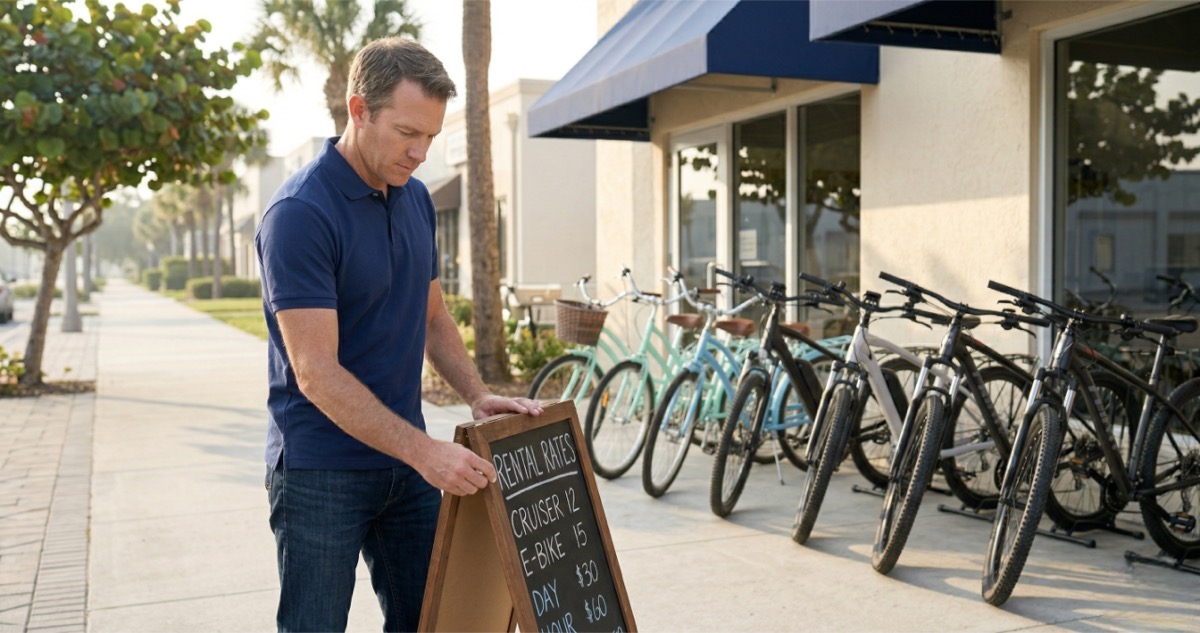
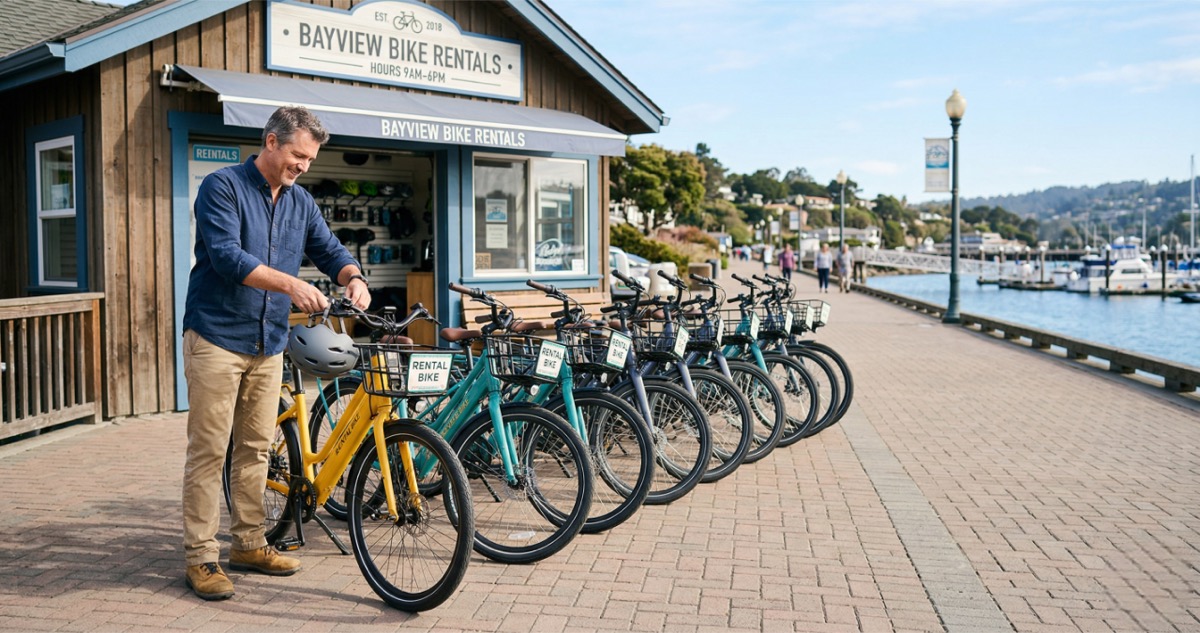
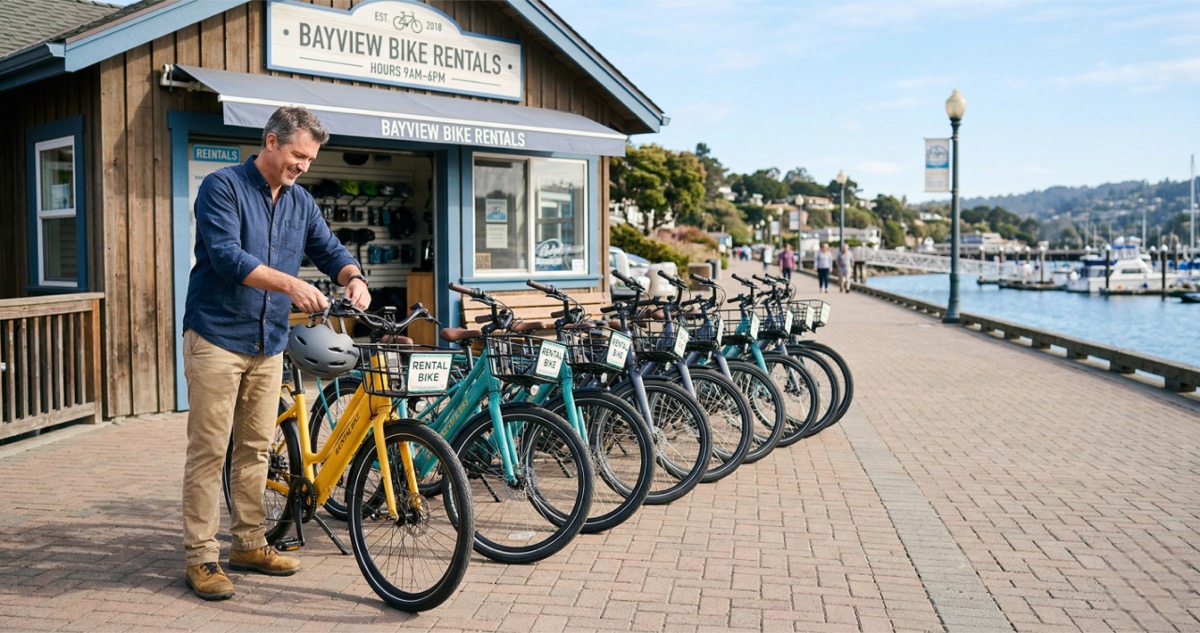
You see bike rental shops thriving in beach towns, downtown districts, and near every major trail system. People want to ride, and most of them do not want to travel with their own bike.
Starting a bike rental business is one of the more accessible rental ventures — but “accessible” does not mean easy:
- Startup costs are manageable, margins are strong
- Demand keeps growing — tourism, urban mobility, trail systems
- The hard part — picking the right bikes, finding a location, pricing correctly, and managing bookings
This guide covers every step — with real numbers, not vague advice.
Why the bike rental market is worth entering now
- The global bike and scooter rental market was valued at $7.8 billion in 2025 — and is projected to reach $30.8 billion by 2034, growing at a CAGR of roughly 16.8%
- That growth is being driven by — urban congestion, tourism recovery, and the massive adoption of e-bikes
- This is not a niche anymore — Cities are building dedicated bike lanes, national parks are promoting cycling, and tourists increasingly choose bikes over bus tours
- For small operators, the opportunity is local — You do not need to compete with Citi Bike or Lime
- A 15-to-30-bike fleet in the right location — can generate strong revenue with manageable overhead
- Profit margins for bike rental businesses — typically fall between 40-50%, and peak-season utilization rates can hit 85-95%
Figure out how much it actually costs to start
A bicycle rental startup does not require six figures to launch. Most small operations get running with $15,000 to $60,000 in total startup capital, depending on fleet size, bike type, and whether you lease or buy a physical location.
Here is a realistic breakdown for a 20-bike fleet:
| Expense | Estimated Cost |
|---|---|
| Bikes (20 units, mixed fleet) | $8,000–$25,000 |
| Storage/shop lease (first + last month) | $2,000–$6,000 |
| Insurance (annual) | $1,200–$3,000 |
| Helmets, locks, and accessories | $800–$1,500 |
| Business registration + licenses | $100–$700 |
| Maintenance tools and supplies | $500–$1,000 |
| Booking software | $35–$100/month |
| Marketing (signage, local ads, website) | $500–$2,000 |
| Total estimated range | $13,100–$39,200 |
E-bikes push costs higher. A single e-bike runs $1,200 to $2,500 at wholesale, compared to $300–$800 for a standard bike. But they also command significantly higher rental rates — so the ROI math still works.
Budget an additional $200 per bike per year for routine maintenance — cleaning, tire replacements, brake adjustments, and tune-ups. E-bikes will run higher due to battery upkeep.

Pick the right bikes for your market
Your fleet mix depends entirely on who your customers are and where you operate. Here are the four main categories and what they earn:
City bikes and cruisers
The workhorse of most rental fleets. Beach cruisers and city hybrids cost $300–$500 each and appeal to casual riders and tourists. They are low-maintenance, comfortable, and easy for anyone to ride. Daily rental rates sit around $25–$40.
E-bikes
The highest-margin category. E-bikes cost $1,200–$2,500 upfront but rent for $40–$80 per day. They attract older riders, tourists who want to cover more ground, and anyone who does not want to sweat through hills. If you operate near hilly terrain or cater to an older demographic, e-bikes should be a significant portion of your fleet.
Mountain bikes
Premium pricing territory. A solid rental mountain bike costs $400–$800, and daily rates range from $50–$80+ in trail-heavy areas. They require more maintenance (suspension, drivetrain wear), but the per-rental revenue justifies it.
Kids’ and family bikes
Lower rates — typically $10–$20 per day — but they increase average transaction size when families rent together. Tag-along trailers and child seats are inexpensive add-ons that round out a family-friendly offering.
A solid starting fleet mix: 40% cruisers/city bikes, 30% mountain bikes, 20% e-bikes, and 10% specialty/kids’ bikes. Adjust based on your location and customer profile.
Ready to manage your bike fleet without spreadsheets?
Try LendControl free for 14 days
No credit card required.
Choose a location that brings customers to you
Location is the single biggest factor in whether your bike rental business succeeds or struggles. The best spots share one thing: high foot traffic from people who already want to ride.
- Tourist areas — beach towns, historic downtowns, national park entrances, and waterfront boardwalks. These generate the highest revenue per bike. The trade-off is a concentrated peak season (typically 3-4 months), so you need to price aggressively during those months to carry the off-season.
- Urban centers with bike infrastructure — cities investing in bike lanes and bike-share infrastructure are signaling demand. If there are protected lanes but no convenient rental options near hotels or transit hubs, that is a gap you can fill.
- College towns — students rent bikes for semesters at a time, which means steady, predictable cash flow with lower seasonality. Monthly rentals at $50–$100/month per bike add up fast across a 20-bike fleet.
- Trail and park entrances — if riders start their route from a specific trailhead or park gate, being the closest rental option is a massive advantage. Proximity to the starting point beats everything else.
If a physical storefront is too expensive, start with a mobile or kiosk setup. A trailer or van-based operation near a popular trail can test the market at a fraction of the cost.
Get licensed and insured before your first rental
You cannot skip this. One rider injury without insurance can shut you down permanently.
Business registration
- LLC formation: $50–$500 depending on your state
- EIN from the IRS: free, takes 5 minutes online
- Local business license: $50–$200/year from your city or county clerk
- Sales tax permit: required in most states — register with your state’s Department of Revenue
Some cities have specific rental permits. San Francisco requires a Commercial Activity Permit, and New York City requires a Bicycle Business License from NYC DOT. Check your local requirements before signing a lease.
Insurance
At minimum, you need general liability insurance — it covers injuries to riders and damage to third-party property. A standard policy runs $480–$660 per year for general liability alone.
A full insurance package for a bike rental business typically includes:
- General liability: $480–$660/year
- Commercial property: $780–$840/year
- Equipment/inland marine (covers your bikes): $175–$450/year
- Workers’ comp (if you have employees): $360–$720/year
All in, expect to spend $1,200 to $3,000 per year on insurance depending on your fleet size and coverage level. Get at least $1 million per occurrence in general liability coverage — most commercial landlords require it anyway.
Also: require signed waivers from every rider. Digital waivers signed at booking time protect you legally and save time at pickup.
Set pricing that covers your costs and stays competitive
Your pricing needs to do two things: cover your costs per bike and match what riders in your market expect to pay. Here are standard rate ranges for 2026:
| Bike Type | Hourly | Daily | Weekly |
|---|---|---|---|
| City bike / cruiser | $8–$15 | $25–$40 | $100–$175 |
| E-bike | $15–$25 | $40–$80 | $175–$350 |
| Mountain bike | $12–$20 | $50–$80 | $200–$400 |
| Kids’ / child bike | $5–$10 | $10–$20 | $50–$100 |
Pricing tips that protect your margins
- Charge a refundable security deposit ($50–$200 depending on bike value) to cover damage and no-shows.
- Offer multi-day discounts — a 10-15% discount on 3+ day rentals encourages longer bookings and reduces turnover work.
- Seasonal pricing matters. Charge full rate during peak months. Offer 20-30% discounts in the shoulder season to keep bikes moving.
- Monthly subscriptions work in college towns and urban areas. $50–$100/month per bike with a 20-bike fleet means $1,000–$2,000/month in predictable revenue even outside peak season.
- Add-on revenue — helmets ($5), locks ($3), baskets ($5), guided trail maps ($2). Small per-rental add-ons increase average ticket size without adding much cost.
Use bike rental software to run operations
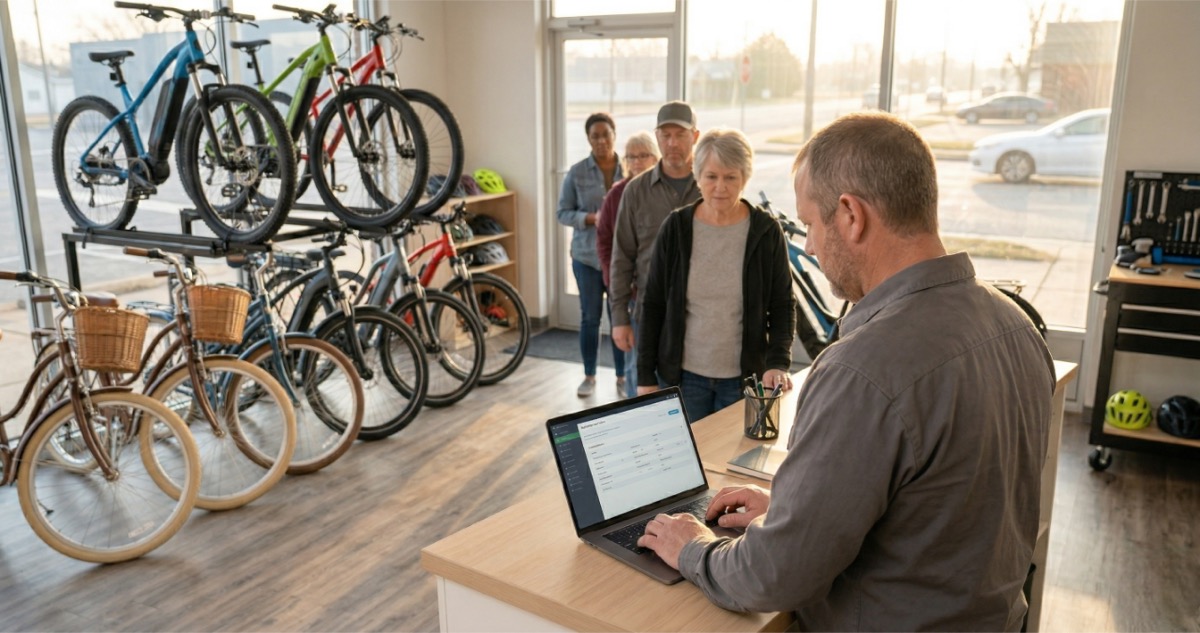
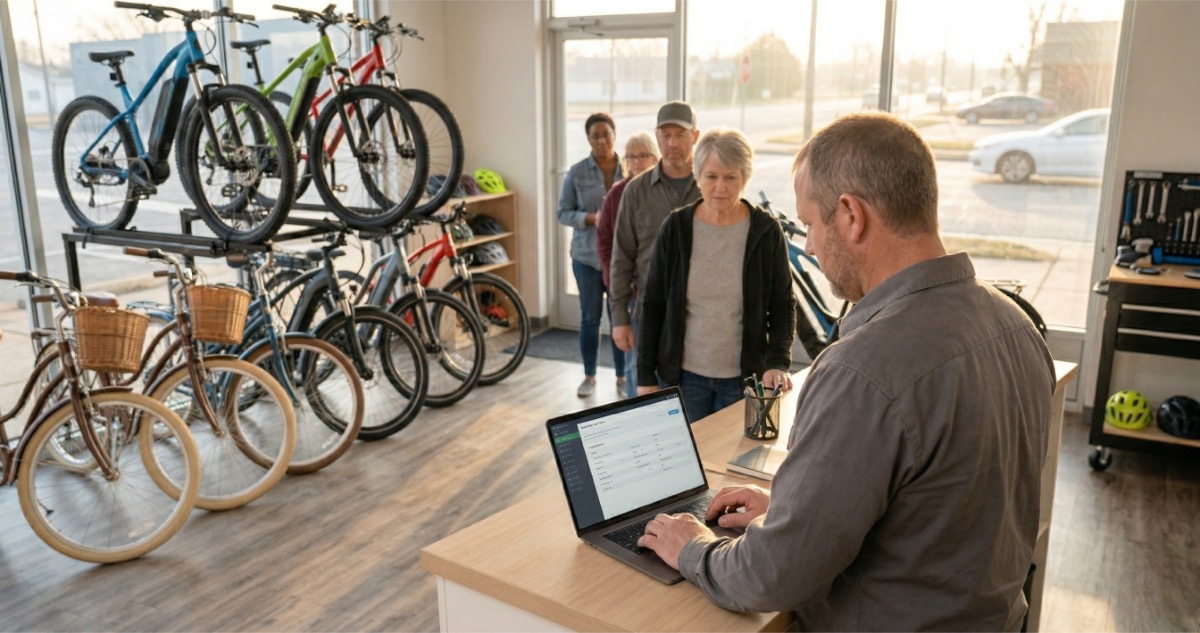
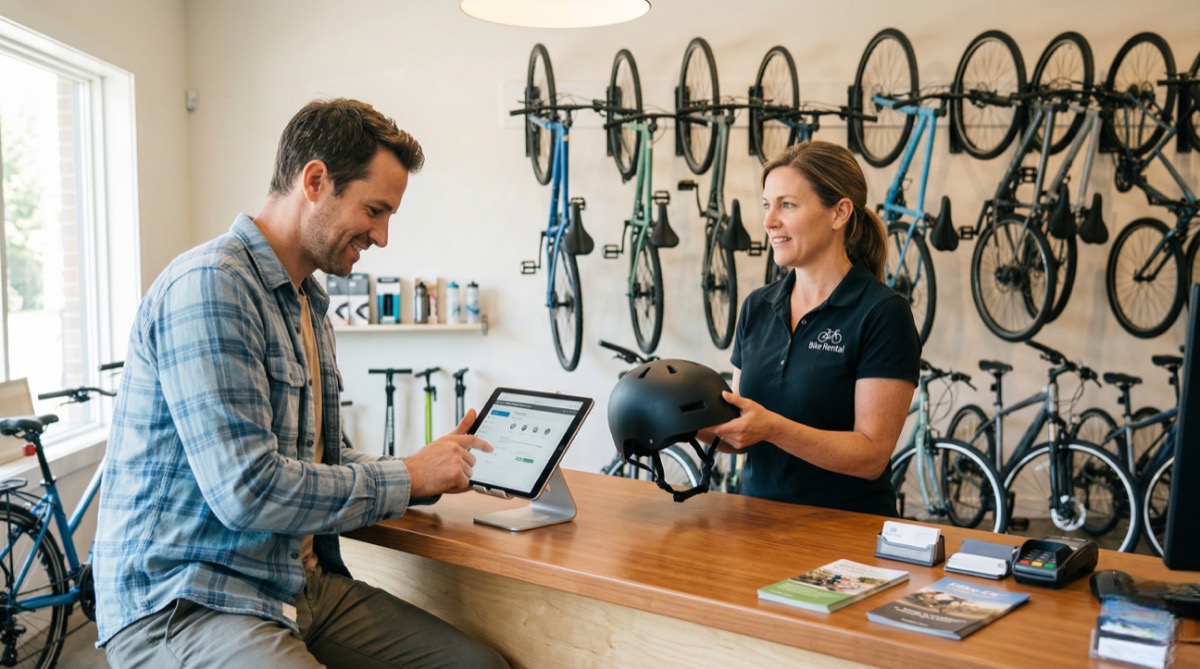
Once you have more than 5-10 bikes going out regularly, managing availability through texts, calls, and spreadsheets breaks down fast. You double-book a bike, lose track of who has what, or miss a reservation inquiry on a busy Saturday.
Bike rental software solves this by giving you real-time inventory tracking, online booking, and automated payment collection in one place.
Here is what to look for:
- Real-time availability — when someone books a bike, it is blocked instantly. No manual updates, no overlap.
- Online reservations — customers should be able to check what is available and book without calling you.
- Digital waivers and contracts — signed before pickup. Protects you legally and saves time.
- Payment processing — collect deposits and full payments online.
- Customer communication — automated confirmations and reminders so nothing slips through.
LendControl handles all of this for small rental operations. One feature that stands out for bike rental shops: WhatsApp AI availability — your customers send a message like “Do you have any e-bikes available this Saturday?” and get an instant answer pulled from your live inventory. No forms, no waiting for you to check and reply. For shops that get 10-20 availability questions a day through messaging apps, that is hours of back-and-forth eliminated.
Frequently asked questions
How much does it cost to start a bike rental business?
Most small operations launch with $15,000 to $60,000, depending on fleet size and bike type. A 20-bike fleet of standard city bikes can start closer to $15,000, while a fleet heavy on e-bikes pushes toward $40,000–$60,000. The biggest cost variables are bikes, location, and insurance.
Is a bike rental business profitable?
Yes — profit margins typically range from 40-50%. A 20-bike fleet averaging $40/day per rental at 60% utilization generates roughly $175,000 in annual revenue. After expenses (maintenance, insurance, rent, software), net profit for a well-run small operation can reach $70,000–$90,000/year.
Do I need a special license to rent bikes?
You need a standard business license and sales tax permit at minimum. Some cities require additional rental-specific permits — New York, San Francisco, and other large cities have their own requirements. Check with your local city clerk before opening.
What type of bike is most profitable to rent?
E-bikes offer the highest per-rental revenue at $40–$80/day, but they cost more upfront ($1,200–$2,500 each). City cruisers have lower margins per rental but lower acquisition and maintenance costs. The most profitable approach is a mixed fleet that matches your market — e-bikes for premium demand, cruisers for volume.
How many bikes do I need to start?
Start with 10-20 bikes. That is enough to generate meaningful revenue while keeping your initial investment manageable. You can scale up after your first peak season once you know which bike types rent the most and what your utilization rates look like.
Start your bike rental business the right way
A bike rental business in the right location, with the right fleet mix, and proper systems in place is a genuinely strong small business opportunity. The market is growing, the margins are healthy, and the barriers to entry are lower than most rental categories.
The operators who struggle are the ones who start renting before they have their insurance sorted, their pricing dialed in, or a system to manage bookings. Do not be that operator.
Get your bikes, get your coverage, set your prices, and use bike rental software to handle the operational side from day one. Your future self — the one not drowning in WhatsApp messages and sticky notes on a busy Saturday — will thank you.
Ready to run your bike rental business without the chaos?
No credit card required.