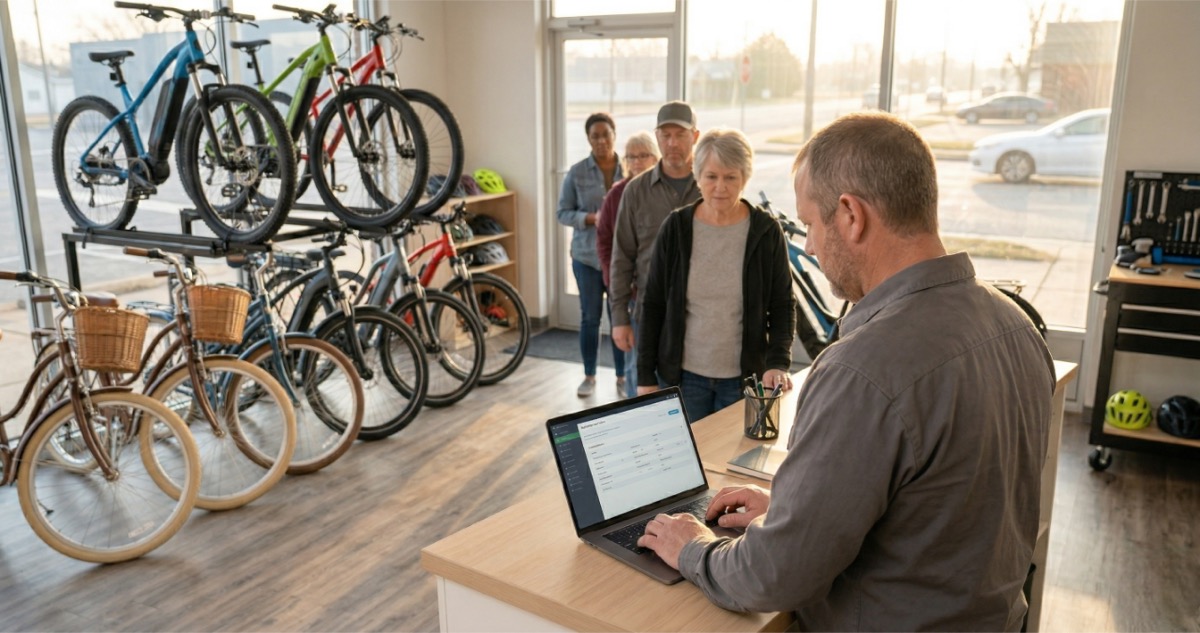
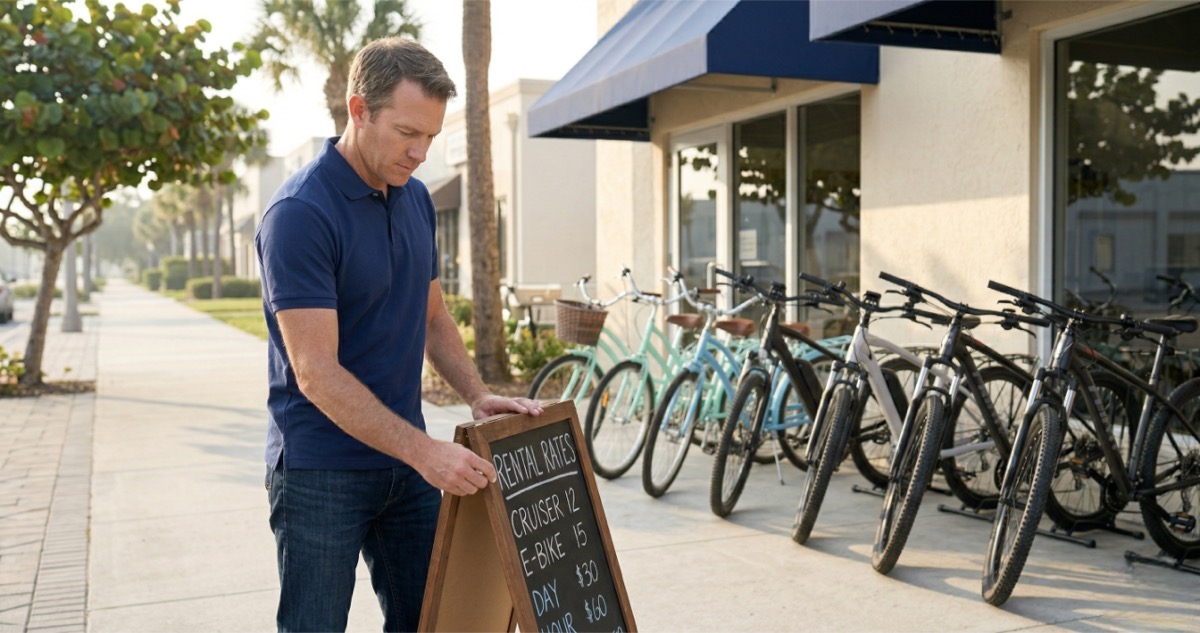
- Pricing is the difference between thriving and barely breaking even — charge too little and you’re working long hours for thin margins. Charge too much and customers walk to the next shop.
- Guessing what competitors charge is a starting point, not a strategy — your costs, your fleet, your location, and your customer mix are all different, and your rates should reflect that.
- This guide covers real rate data from actual rental shops — a formula for calculating your own prices, and the seasonal and add-on strategies that separate profitable operators from busy ones who still struggle to pay rent.
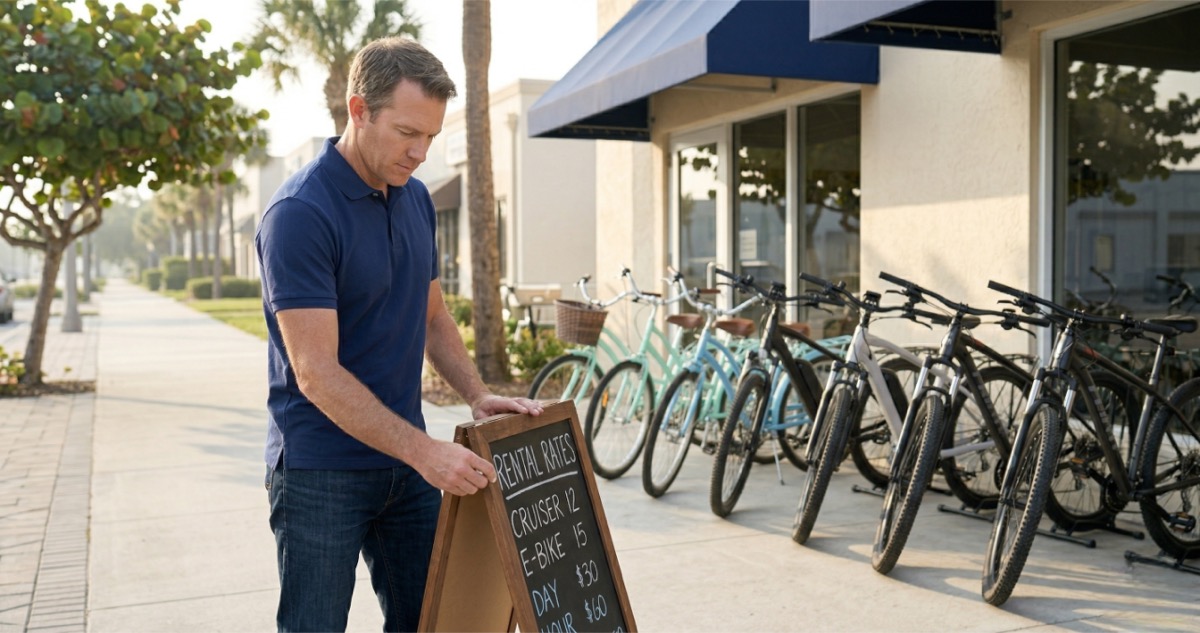
Know your costs before you set a single price
You cannot price profitably if you do not know what each rental actually costs you. Most operators underestimate this because they forget about the small expenses that add up over a full season.
Here is what goes into your cost per bike per year:
| Cost Category | Annual Estimate per Bike |
|---|---|
| Depreciation (bike value / useful life) | $100–$500 |
| Routine maintenance (tires, brakes, tune-ups) | $200+ |
| Storage/rent (per-bike share of your lease) | $150–$600 |
| Insurance (per-bike share of your policy) | $50–$150 |
| Booking software (per-bike share) | $20–$60 |
| Accessories (helmets, locks, baskets) | $30–$75 |
| Total annual cost per bike | $550–$1,385 |
A $400 city cruiser that lasts 3–4 rental seasons depreciates at roughly $100–$130 per year. A $2,000 e-bike depreciates faster — plan on $400–$500 per year — but it earns significantly more per rental.
Divide your total annual cost per bike by your expected number of rental days. If you expect 120 rental days per year, and your all-in cost is $800 per bike, your base cost per rental day is about $6.70. Every dollar above that is margin.
What bike rental shops actually charge in 2026
Here are actual bike rental rates from real shops and industry benchmarks, broken down by bike type:
| Bike Type | Hourly | Daily | Weekly |
|---|---|---|---|
| City bike / cruiser | $8–$15 | $25–$40 | $100–$175 |
| E-bike | $15–$25 | $40–$80 | $175–$350 |
| Mountain bike | $12–$20 | $50–$80 | $200–$400 |
| Road / performance | $15–$25 | $50–$75 | $200–$350 |
| Kids’ bike | $5–$10 | $10–$20 | $50–$100 |
Some real-world examples to benchmark against:
- In San Francisco, comfort bike rentals start from $40/day, with all rentals including helmets, locks, and bags
- In Florida, cruisers start at $30/day, e-bikes at $60–$65/day, and mountain bikes at $45/day
- In high-traffic tourist areas, standard rentals can reach $17/hour
Your location matters as much as your bike type. A cruiser in a beach tourist town can command $35–$40/day. The same bike in a college town renting monthly might only pull $50–$80/month — but with far more consistent utilization.
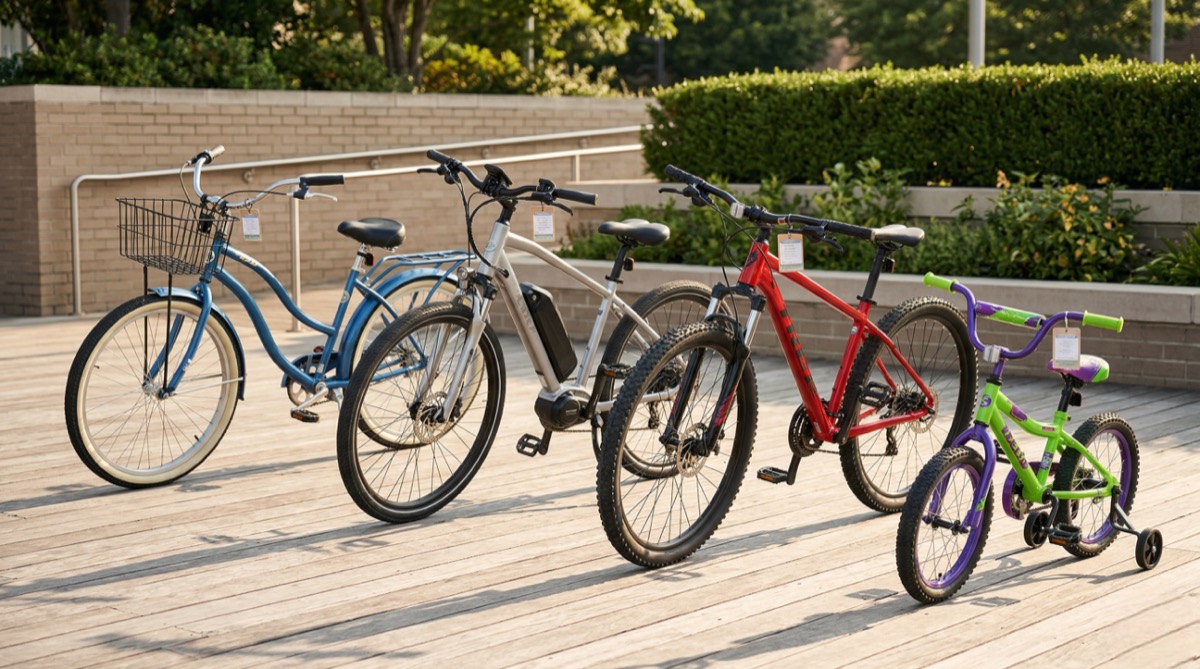
Use a cost-plus formula to set your base rates
Guessing is out. Here is the formula that works for most bike rental businesses:
Rental Price = Base Cost + (Base Cost x Desired Profit Margin)
Say your all-in cost per rental is $7.33 (maintenance, depreciation, overhead, split across expected rentals). You want a 400% margin to stay competitive in a tourist area. The math: $7.33 + ($7.33 x 4) = $36.65 per rental. That lands right in the $30–$40/day sweet spot for a standard cruiser.
For e-bikes, the base cost is higher — closer to $12–$18 per rental day — but the margin percentage can be similar or even higher because customers expect to pay a premium. A $15 base cost with a 400% margin puts you at $75/day, which is well within the $40–$80 range the market supports.
Set your daily rate first, then work backward
- Daily rate — your anchor price. Set this based on the cost-plus formula and competitor benchmarks.
- Hourly rate — charge 25–35% of the daily rate per hour. This discourages very short rentals while staying fair. A $36 daily rate becomes $9–$12/hour.
- Weekly rate — offer 15–25% off the 7-day equivalent. A $36/day bike becomes $190–$215/week instead of $252.
- Monthly rate — 40–50% off the 30-day equivalent for college towns and long-term renters. A $36/day bike becomes $540–$650/month.
Ready to send professional quotes with your custom pricing built in? Try LendControl free — no credit card required.
Adjust pricing by season and demand
If you charge the same rate in July and January, you are leaving money on the table in summer and losing customers in winter.
Peak season (summer, holidays, local events)
Raise rates 15–25% above your standard pricing during high-demand months. If your base daily rate is $35, peak pricing should be $40–$44. Most customers expect this — hotel rooms and car rentals do the same thing.
Weekends during peak season can go even higher. A Friday-to-Sunday premium of 10–15% on top of your peak rate is common and rarely causes pushback.
Shoulder season (spring, early fall)
Keep rates at standard or offer modest 10% discounts to maintain utilization. This is when locals and repeat customers fill the gap left by tourists.
Off-season (winter, rainy months)
Drop rates 20–30% to keep bikes moving. A $35/day cruiser becomes $24–$28. You will not get rich in the off-season, but covering your fixed costs beats letting bikes collect dust.
Off-season is also the best time to push monthly subscriptions. Offer locals and commuters a flat $50–$80/month rate. Twenty monthly subscribers at $65/month is $1,300/month in predictable revenue through the slow months.
Add revenue without adding bikes
Your per-rental price is not the only number that matters. Smart add-ons and ancillary charges can increase your average transaction by 20–30% without increasing your fleet size.
Damage waivers and protection plans
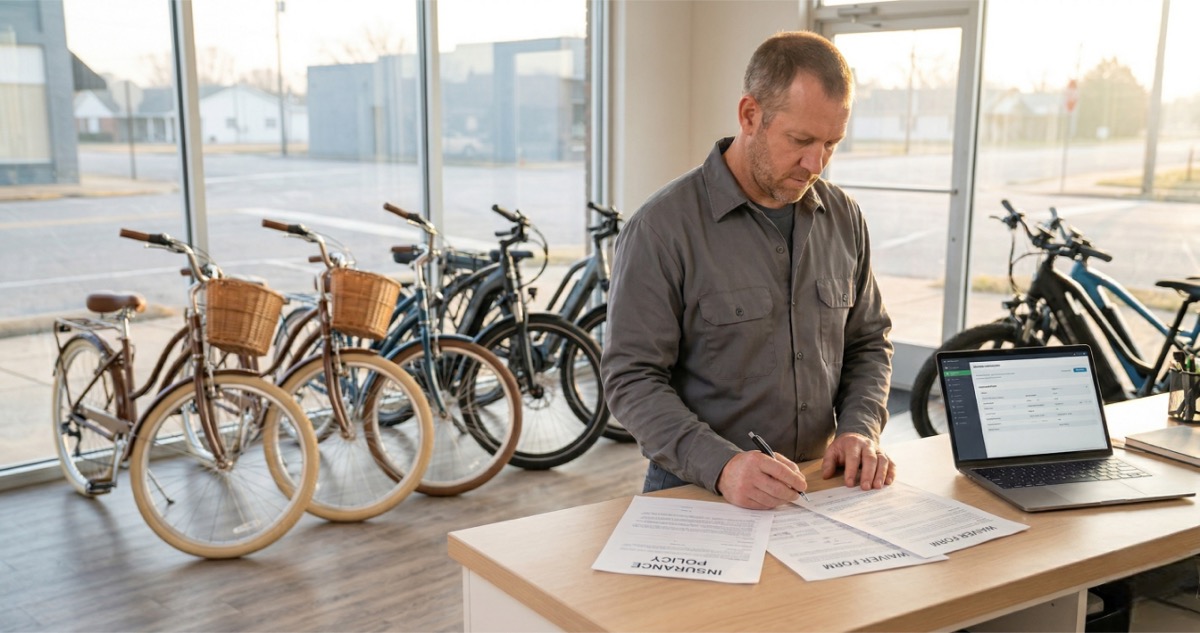
Offer an optional damage protection plan for $5–$10 per rental. It covers minor damage (scratched paint, bent derailleur) and reduces the customer’s liability. Many riders gladly pay $8 to avoid worrying about a $200 repair bill. For mountain bike and e-bike rentals, where damage risk is higher, the take rate on protection plans can exceed 50%.
Security deposits
Charge a refundable deposit of $50–$200 depending on bike value:
- $50 for cruisers
- $100–$200 for e-bikes
This covers no-shows, late returns, and major damage. Collect it at booking through your quotes and invoicing system so you are not chasing payments after the fact.
Accessories and add-ons
- Helmets: $5/rental (or include free as a competitive edge)
- Locks: $3–$5/rental
- Phone mounts: $3/rental
- Baskets or panniers: $5/rental
- Trail maps or guided route cards: $2–$5
A family of four renting cruisers at $35/day each, plus helmets and a trail map, goes from a $140 transaction to $165+. Over a season, those small add-ons compound significantly.
Guided tours
If your location supports it, guided tours are the highest-margin offering in the bike rental world. Private guided tours in major cities can run $449–$649 per group. Even shorter guided rides of 2–3 hours can command $50–$80 per person — far more than a self-service daily rental.
You do not need a fleet of guides. Start with one weekend tour option and see if there is demand before hiring.
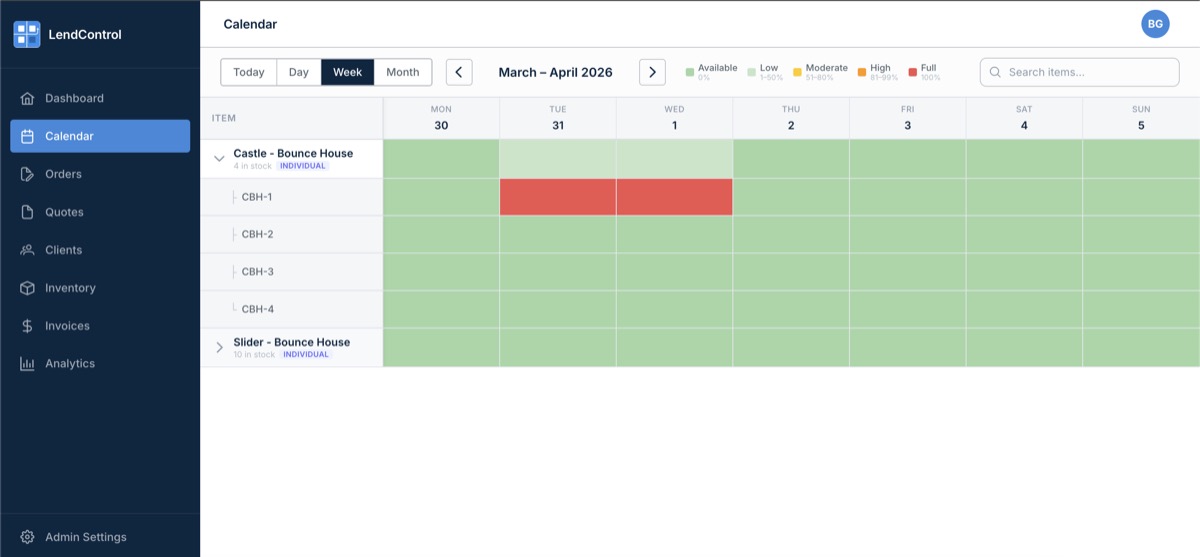
Send quotes and invoices without the back-and-forth
Once your pricing is dialed in, the next bottleneck is communicating it. If every quote requires a phone call, a text thread, and a manual calculation, you are spending time you should be spending on customers.
Rental software lets you build your rate structure once — hourly, daily, weekly, seasonal — and generate quotes automatically. Customers ask about availability through WhatsApp, get an instant answer, and receive a clean quote with your pricing, deposit, and damage waiver already calculated.
No spreadsheets. No math on the fly. No “let me get back to you” — which is often where you lose the booking.
Stop losing bookings to slow quotes. Get started with LendControl — build your rate structure once and let it work for you.
Frequently asked questions
How much should I charge for a bike rental?
Standard city bikes and cruisers rent for $25–$40/day in most markets. E-bikes command $40–$80/day, and mountain bikes sit at $50–$80/day. Your specific rate depends on your costs, location, and competition — use the cost-plus formula above to find your number.
How do I calculate my bike rental cost per day?
Add up all annual costs for each bike (depreciation, maintenance, insurance, storage, software) and divide by the number of rental days you expect per year. That gives you your base cost per rental day. Then apply your profit margin to set the customer-facing rate.
Should I offer hourly or daily bike rental rates?
Offer both. Set your daily rate first, then price hourly at 25–35% of the daily rate. This gives short-ride customers an option while making the full-day rate feel like a better deal — which encourages longer rentals.
How long does it take to break even on a rental bike?
A $400–$600 standard bike renting at $35/day can recoup its purchase cost in 15–20 rental days — roughly 1–2 months during peak season. E-bikes take longer due to higher upfront costs ($1,200–$2,500), but their higher daily rates mean a break-even of 30–50 rental days.
What is a good profit margin for a bike rental business?
Profit margins for bike rental businesses typically range from 40–50% after expenses like maintenance, insurance, rent, and software. Tourist-area operators with seasonal pricing and strong add-on revenue tend to hit the higher end.
Price with confidence, profit with consistency
Getting your bike rental pricing right is not a one-time decision. It is an ongoing process — adjusting for seasons, testing add-ons, and tracking which bike types earn the most per rental day. The operators who treat pricing as a living strategy instead of a fixed number are the ones pulling 40–50% margins.
Start with your costs, apply the cost-plus formula, benchmark against real shops in your area, and build in seasonal adjustments. Then make sure your pricing is easy for customers to see, understand, and act on — without you manually quoting every inquiry.
Ready to streamline your bike rental pricing? Get Started for Free — no credit card required.