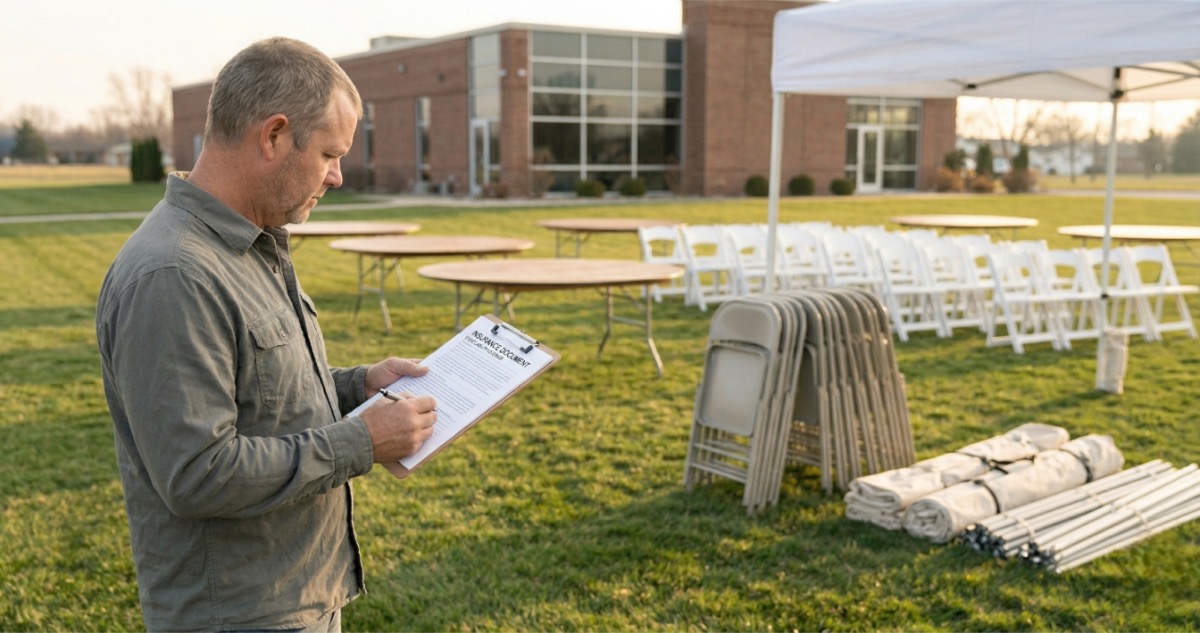
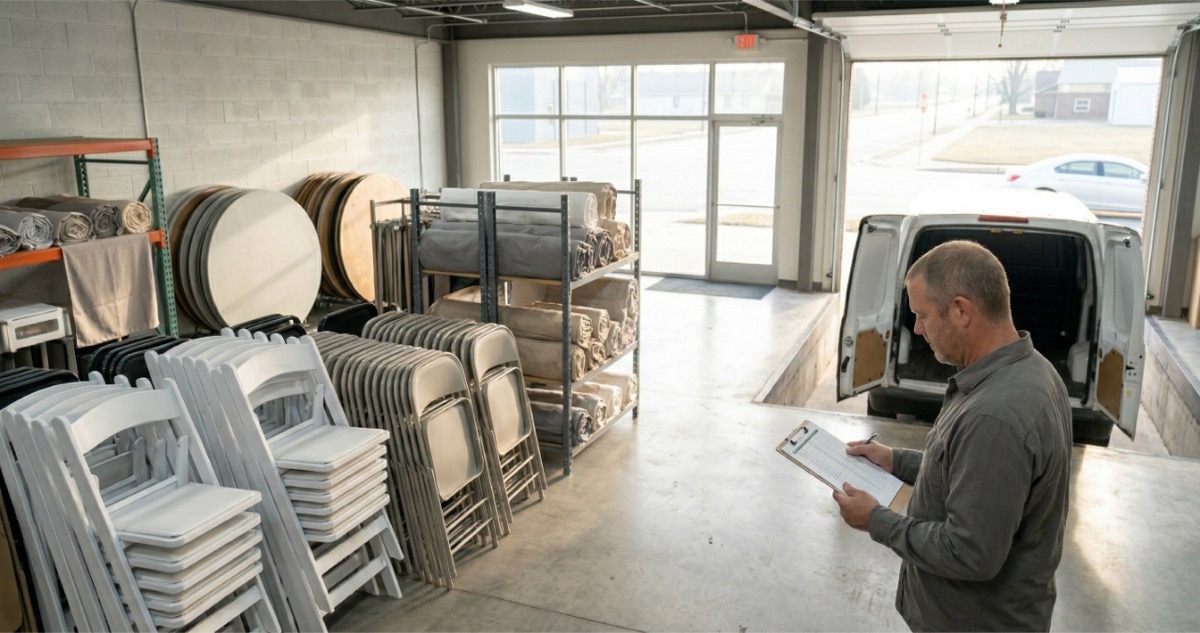
- The difference between a profitable event rental business and one that barely breaks even almost always comes down to pricing — you bought the tables, the chairs, a trailer full of tents and linens ready to go. Now someone asks for a quote, and you freeze — because you’re not sure if your prices are too high, too low, or just guesses.
- Getting event rental pricing right is the single most important decision in your rental business — charge too little and you’re busy but broke. Charge too much and you lose bookings to the company down the road.
- This guide walks through exactly how to price party rentals — per-piece rates, packages, add-ons, delivery fees, and seasonal adjustments — with real numbers from actual rental companies.
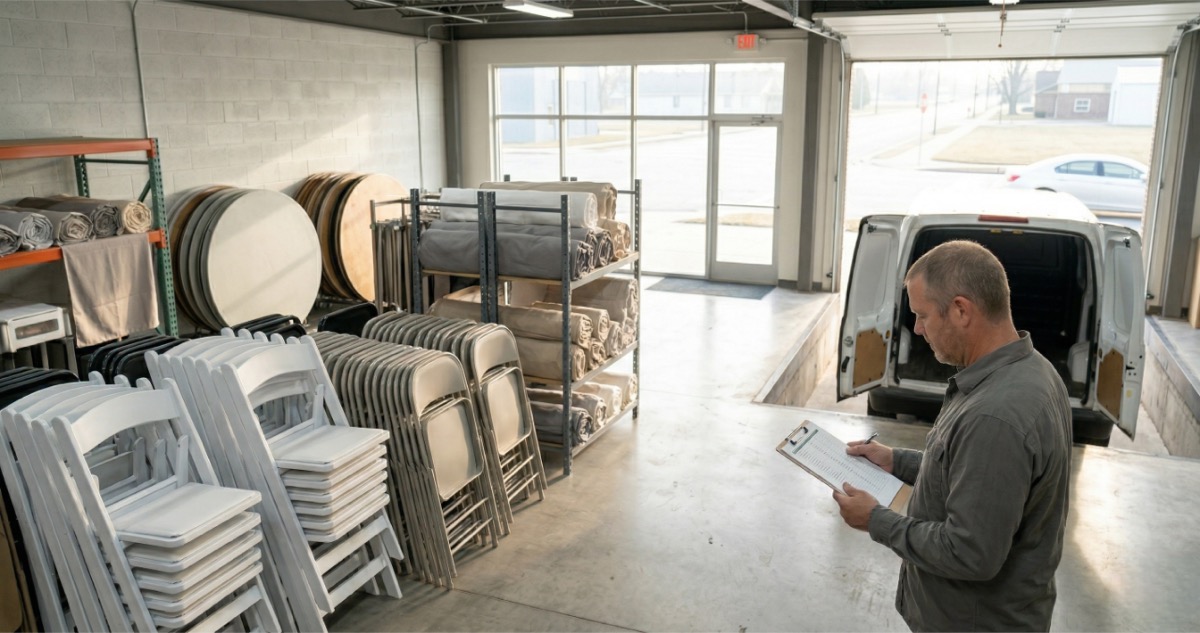
Know your costs before you set a single price
You cannot price profitably if you do not know what each rental actually costs you. Before building a rate sheet, calculate the true cost per item.
- Cost-plus pricing — figure out your total cost per item, then add a markup that covers overhead and profit
- Common benchmark — charge 8-15% of the purchase price per rental for standard items like tables and chairs
- The math — you should recoup your full investment within roughly 7-12 rentals, and everything after that is margin
Here’s what goes into the true cost of each rental:
- Purchase price — what you paid for the item (or wholesale cost if bought in bulk)
- Cleaning and maintenance — labor and supplies to prep each item between rentals
- Storage — your warehouse rent, divided across your total inventory
- Insurance — general liability and equipment coverage, allocated per item
- Depreciation — how many events an item survives before replacement (a folding chair lasts longer than a linen tablecloth)
Once you know the per-rental cost, apply a markup that reflects your market. Most event rental businesses operate with profit margins between 35-45% on rental revenue. If your margins are thinner than that, your prices are probably too low — or your costs are too high.
Set per-piece rates that match the market
Per-piece pricing is the foundation of your rate sheet. Every package and quote you build starts here. Below are real per-piece rates from active rental companies in 2025-2026:
| Item | Typical Rental Rate |
|---|---|
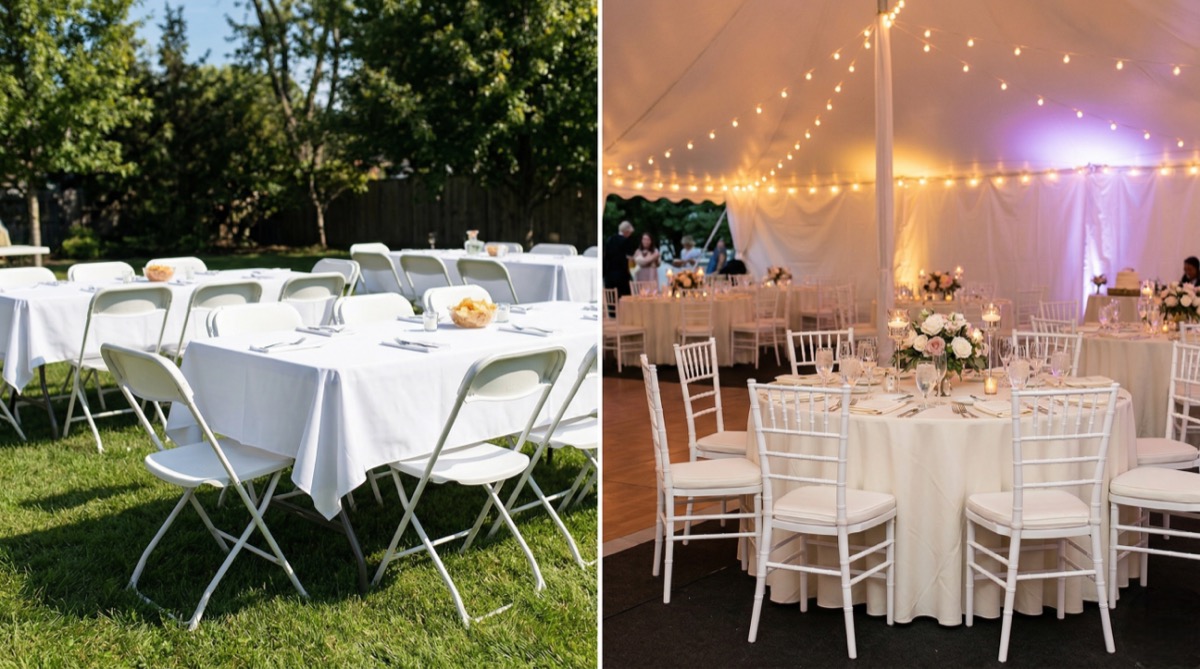
| Folding chair (white) | $2–$5 |
| Chiavari / padded chair | $5–$10 |
| 6′ rectangular table | $10–$15 |
| 60″ round table | $10–$16 |
| 20×20 pole tent | $200–$500 |
| 20×40 pole tent | $400–$750 |
| Linen tablecloth (standard) | $8–$25 |
| Chafing dish | $10–$15 |
| LED uplighting (per unit) | $35–$50 |
| Dance floor (12×12) | $250–$500 |
A few pricing rules that protect your margins:
- Charge 10% of purchase price per rental for durable items like folding chairs and resin chairs
- Charge 8-15% of purchase price for tables — they last a long time and need minimal maintenance
- Charge 20-25% of purchase price for tents — they require more labor for setup, transport, and cleaning
Your local market matters. Check what three to five competitors charge for the same items. Price within that range unless you’re offering noticeably better quality or service.

Build packages that increase average order value
Selling items one at a time works, but packages are where your party rental pricing really starts to compound. Bundling items together makes quoting faster — for you and the customer — and pushes the average order higher. Comprehensive packages typically save the customer 12-18% compared to a la carte pricing of the same items, but your total revenue per booking goes up because they’re renting more.
Here are three package tiers that work for most event rental companies:
Basic package (50 guests)
- 50 folding chairs, 6 rectangular tables, basic white linens
- Price: $250–$400
Standard package (100 guests)
- 100 chiavari chairs, 12 round tables, premium linens, 1 dance floor
- Price: $900–$1,500
Premium package (150+ guests)
- 150 chiavari chairs, 18 tables, premium linens, dance floor, uplighting, tent
- Price: $2,500–$5,000+
Build your packages around real event sizes — 50, 100, and 150 guests cover the majority of bookings. Let customers upgrade from there.
Ready to build and send rental quotes in minutes?
Try LendControl free for 14 days
No credit card required.
Price add-ons and extras for easy upsells
Add-ons are the highest-margin items in your inventory. A customer who has already committed to a $1,200 rental order is far more likely to say yes to a $50 lighting package than a new customer is to say yes to anything.
Common add-ons and what to charge:
| Add-on | Typical Rate |
|---|---|
| Setup and teardown (labor) | $100–$300 per event |
| Tent sidewalls | $25–$75 per panel |
| String lights / cafe lights | $50–$150 per strand |
| Centerpieces | $15–$40 each |
| Pipe and drape (per linear ft) | $8–$20 |
| Heaters or fans | $30–$100 each |
| Extra hours beyond standard rental | 15-25% of daily rate per hour |
Setup and teardown labor is the add-on you should push hardest. Many customers will pay $100-$300 to avoid doing it themselves, and the labor cost to you is often $50-$100 for a two-person crew. That’s a 50%+ margin on a service that also makes the customer’s experience better.
One approach that works well: include basic delivery in your package price but list setup/teardown as an optional add-on with a clear price. Most customers add it.
Charge delivery fees that actually cover your costs
Delivery is where most new rental operators lose money. They either absorb it to “stay competitive” or charge a flat $50 that doesn’t cover fuel, labor, and vehicle wear on a 45-minute drive.
Here’s how to structure delivery fees that protect your margins:
Zone-based pricing
Set delivery rates based on distance from your warehouse. This is the most common approach in the industry:
| Distance | Typical Delivery Fee |
|---|---|
| 0–10 miles | $50–$90 |
| 10–20 miles | $90–$150 |
| 20–30 miles | $150–$250 |
| 30+ miles | Custom quote |
Additional delivery surcharges
- Exact-time delivery window — $100-$150 surcharge
- After-hours pickup/delivery (before 9 AM or after 5 PM) — $100-$200 surcharge
- Stairs, elevators, or difficult access — $50-$150 per occurrence
- Multi-day rental with separate pickup — additional trip fee
A useful benchmark: delivery revenue should represent roughly 4-5% of total rental revenue. If it’s lower, you’re subsidizing delivery out of your rental margins.
Adjust pricing by season and demand
If you charge the same rate in February as you do in June, you’re leaving money on the table during peak months and losing bookings during slow ones.
Peak season (May through October for most markets) is when demand outpaces supply. You should be charging full rates with no discounts. Weekend events during peak months — especially Saturdays — can command a 20-50% premium over weekday rates.
Shoulder season (March-April, November) is when bookings slow but don’t stop. Offer 10-15% discounts to keep inventory moving without undercutting your brand.
Off-season (December-February) is when you compete for a smaller pool of events — holiday parties, corporate year-end events, indoor gatherings. Discounts of 20-30% are common and smart. A rented chair at 70% of full price is better than a chair sitting in your warehouse.
Other pricing adjustments worth implementing:
- Minimum order amounts — set a floor ($250-$600 depending on season) so small orders don’t eat up delivery capacity
- Volume discounts — offer 8-12% off for orders above $5,000-$10,000 to lock in large events
- Multi-day pricing — charge 50-75% of the daily rate for each additional day to encourage longer rentals
Use event rental software to manage pricing
Once you have 50+ items, multiple packages, seasonal rates, and delivery zones, managing pricing in a spreadsheet becomes a liability. You misquote a client, forget to apply a peak-season rate, or spend 30 minutes building a quote that should take 5.
Event rental software solves this by centralizing your rate sheet, automating quote generation, and keeping pricing consistent across every booking. Here’s what to look for:
- Custom rate sheets — set per-item, package, and seasonal pricing in one place
- Automated quote building — select items, apply discounts, add delivery fees, and send a professional quote in minutes
- Deposit and payment collection — collect deposits at booking and balances before delivery, all online
- Real-time availability — no more quoting items that are already booked for the same date
The feature that saves the most time for party rental companies: WhatsApp AI — customers message you asking “How much for 100 chairs and 10 tables for June 14?” and get an instant answer with pricing and availability pulled from your live inventory. No phone tag, no email chains. For operators fielding 15-20 pricing inquiries a day, that’s hours of quoting work handled automatically.
Stop quoting from spreadsheets.
No credit card required.
Frequently asked questions
How much should I charge for event rental chairs?
Standard folding chairs typically rent for $2-$5 each, while premium options like chiavari or padded chairs go for $5-$10 each. A good benchmark is to charge around 10% of the purchase price per rental. At that rate, you recoup your investment within 10 rentals and profit from every rental after.
What profit margin should I target for party rentals?
Most successful event rental businesses operate with profit margins between 35-45% on rental revenue. Higher margins are possible with premium inventory, efficient logistics, and strong add-on sales. If your margins are below 25%, review your pricing or your cost structure.
Should I include delivery in my rental prices?
Not usually. Most rental companies charge delivery separately based on distance, and customers expect this. Bundling delivery into item prices makes your per-piece rates look higher than competitors and hides a real cost that varies by location. Charge delivery transparently using zone-based pricing.
How do I price event rental packages?
Start with the a la carte total for all items in the package, then discount by 12-18%. The customer gets a deal, and you get a higher total order value because packages encourage renting more items. Build packages around common event sizes — 50, 100, and 150 guests.
When should I raise my event rental prices?
Review pricing at least twice a year — before peak season and after. Raise prices when your utilization rate consistently exceeds 70-80% during peak months, when material or labor costs increase, or when your prices are notably below the market average. A 5-10% annual increase is standard for the industry.
Get your event rental pricing right from day one
Profitable event rental pricing is not about being the cheapest option in your market. It’s about knowing your costs, structuring rates that protect your margins, and making it easy for customers to spend more through packages and add-ons.
Start with accurate per-piece rates. Build packages around real event sizes. Price delivery to cover your actual costs. Adjust seasonally. And use rental management software to keep it all consistent — so every quote goes out fast, accurate, and profitable.
Ready to streamline your event rental pricing?
No credit card required.