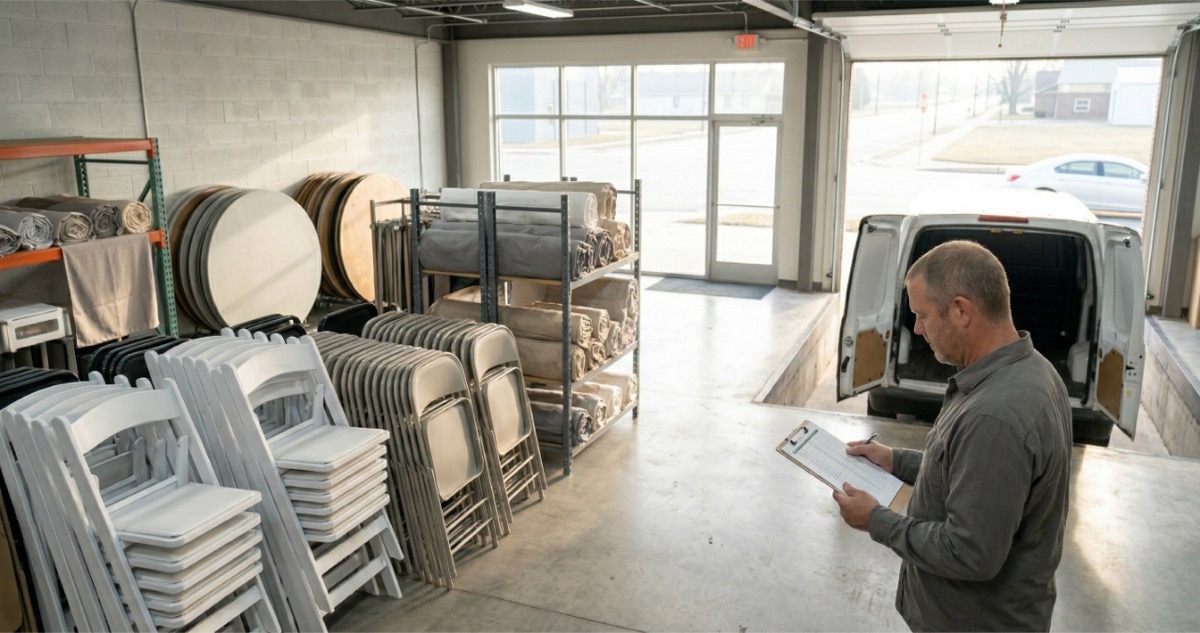
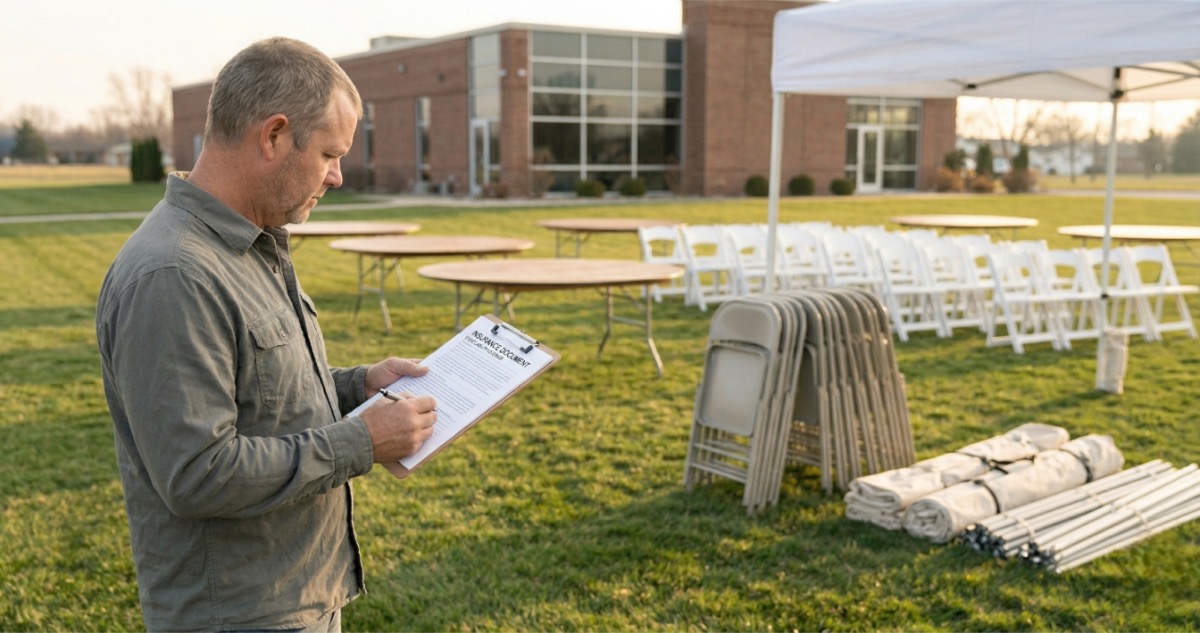
- A single guest trips over a tent stake at a wedding reception — the fall breaks a wrist. Six weeks later, you get a letter from an attorney demanding $85,000 in medical bills, pain and suffering, and lost wages.
- If you carry an event rental insurance policy, your carrier handles the claim — if you don’t, that number comes out of your bank account — and it could be enough to close your doors permanently.
- The average liability claim for a small business ranges from $10,000 to over $100,000 depending on severity — and serious injury claims regularly exceed $500,000.
- This guide breaks down exactly what coverage you need — what venues demand, how much it costs, and where operators get caught underprepared.
Why event rental insurance is not optional
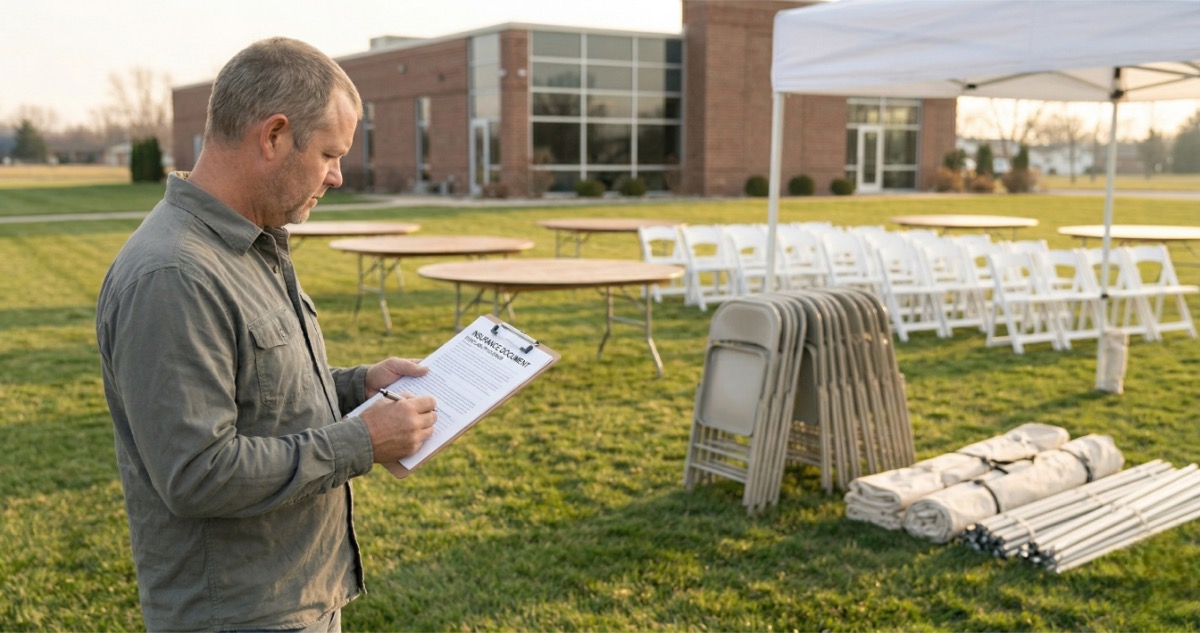
Skip insurance and you are gambling your entire business on every event going perfectly. That is not a strategy — it is a countdown.
Here is what can go wrong on any given weekend:
- Bodily injury — a child falls off a rented stage, a guest slips on a wet dance floor, a tent collapses in a wind gust
- Property damage — your delivery truck backs into the venue’s fence, a lighting rig scratches a ballroom ceiling, a table setup damages hardwood floors
- Equipment loss — a rented tent tears during setup, chairs are stolen from an outdoor event, linens are ruined by a catering spill
Every one of these scenarios has happened to real operators. And beyond the financial risk, most venues will not let you through the door without proof of coverage. No insurance means no booking — which means no revenue.
What venues actually require from you
Most venues have a standard set of insurance requirements baked into their rental agreements. If you cannot meet them, you do not get the contract. Here is what you will see in nearly every venue agreement.
General liability minimums
Venues almost universally require $1 million per occurrence and $2 million aggregate in general liability coverage. Some high-end venues — resorts, historic properties, luxury hotels — push that to $5 million, which typically requires an umbrella policy on top of your base coverage.
Certificate of insurance (COI)
A COI is the document your insurer provides that proves you have active coverage. It lists your policy type, coverage limits, effective dates, and the named insured. Venues will ask for this before signing any rental agreement — often 30 days before the event.
Additional insured endorsement
Venues want to be listed as an additional insured on your policy. That means if a claim arises from your rental operations at their property, your insurance responds first — protecting the venue from lawsuits tied to your equipment or setup.
Primary and noncontributory language
Higher-end venues increasingly require primary noncontributory endorsements. This means your policy pays first, regardless of what other insurance the venue carries. It prevents your insurer from trying to split the claim with the venue’s carrier — which speeds up resolution and keeps the venue protected.
Waiver of subrogation
Some venues also request a waiver of transfer of rights (waiver of subrogation). This prevents your insurance company from going after the venue to recover what it paid on a claim. It is becoming more common, especially at corporate event spaces and high-end wedding venues.
If any of this sounds excessive, it is not. Venues are protecting themselves — and the operators who can meet these requirements are the ones who win contracts consistently.

Types of coverage your event rental business needs
Party rental insurance is not one policy — it is a stack of coverages, each protecting a different risk. Here is what a complete insurance program looks like for an event rental operation.
General liability
Your foundation. Covers bodily injury, property damage, and personal/advertising injury claims from third parties. This is the policy venues care about most. Minimum recommended limit: $1 million per occurrence / $2 million aggregate.
Commercial property
Covers your owned business property — warehouse contents, office equipment, stored inventory. If a fire destroys your tent inventory or a break-in wipes out your chair stock, this is what pays for replacements.
Inland marine (equipment floater)
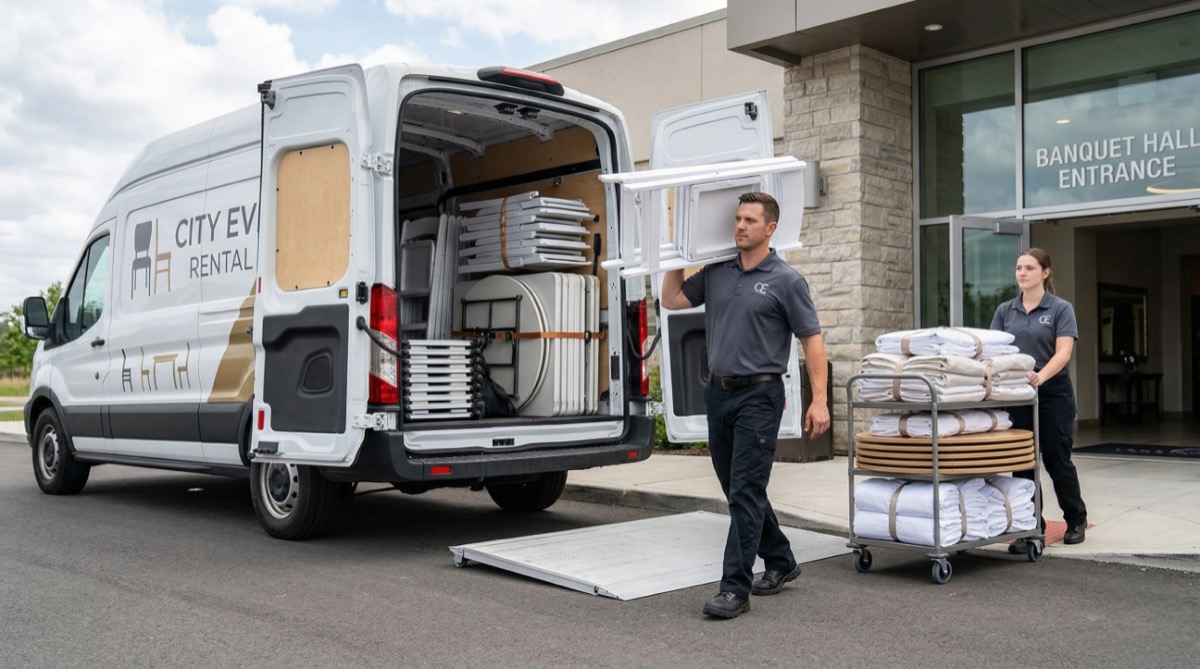
This is critical for event rental businesses because your equipment leaves your premises constantly. Standard commercial property policies often only cover items at your listed business address. Inland marine extends that protection to equipment in transit and at event sites. Average cost: ~$350/year for $100,000 in coverage.
Commercial auto
If you deliver equipment with company vehicles, you need commercial auto coverage. Personal auto policies exclude business use — so if your delivery van is in an accident while hauling tents to a venue, your personal insurer will deny the claim.
Workers’ compensation
Required in most states if you have employees. Covers medical bills and lost wages for workers injured on the job — and event rental involves heavy lifting, driving, and setup work that carries real injury risk. Average cost: $37/month.
Ready to track every rental contract and COI requirement in one place?
Try LendControl free for 14 days
No credit card required.
How much event rental insurance costs
Here is what real coverage costs for an event rental business in 2026, based on industry averages:
| Coverage type | Average monthly cost | Average annual cost | What it covers |
|---|---|---|---|
| General liability | $80 ($69-$93) | $960 ($828-$1,116) | Bodily injury, property damage, third-party claims |
| Inland marine | ~$29/month (~$350/year) | ~$29/month (~$350/year) | Equipment in transit and at event sites |
| Workers’ comp | $37 ($32-$43) | $444 ($384-$516) | Employee injuries on the job |
| Commercial auto | $175-$275/month | $2,100-$3,300/year | Delivery vehicles and transport |
| BOP (GL + property bundle) | $117 ($100-$139) | $1,404 ($1,200-$1,668) | Combined GL and property discount |
| Full package estimate | $350-$500 | $4,200-$6,000 | All coverages combined |
Bundling saves money. Combining general liability, commercial property, and commercial auto into a business owner’s policy (BOP) or package saves 17-25% compared to buying each policy separately.
Get quotes from at least three providers. Rates vary significantly by state, fleet size, and claims history.
Per-event vs. annual policies — which makes sense
This decision comes down to how many events you service per month.
Per-event policies start as low as $66-$160 per event depending on size and risk level. They work if you do fewer than 8-10 events per year, or if you need coverage for a one-off event that falls outside your normal operations.
Annual policies cost $960-$1,116/year for general liability alone, but they cover every event you service during the policy period. If you are running 2+ events per week — which most active event rental businesses are — the per-event math stops making sense after about 10-12 events.
Annual policies also come with benefits that per-event coverage cannot match:
- Consistent COI — you always have a certificate ready when a venue asks, with no scrambling 48 hours before an event
- Discount for annual payment — paying upfront saves 6-9% compared to monthly installments, which add 5-10% in installment fees
- Broader coverage — annual policies typically cover general business operations, not just specific events
The bottom line: if this is your full-time event rental business, get an annual policy. Per-event coverage is for side hustlers doing a handful of events per year.
How to keep insurance costs down without cutting corners
Insurance is a fixed cost you cannot avoid — but you can control how much you pay.
- Bundle your policies. A BOP combining general liability and commercial property saves 17-25% over standalone policies.
- Use digital contracts and waivers. Every signed waiver strengthens your legal position and can reduce your risk profile with insurers.
- Maintain clean claims history. Fewer claims means lower renewal rates. Invest in safety training for setup crews and use proper anchoring for tents and inflatables.
- Increase your deductible. Moving from a $500 to a $1,000 deductible can reduce premiums by 10-15%. Only do this if you have the cash reserves to cover the higher deductible.
- Track your equipment properly. Lost and damaged equipment drives up claims. Tracking every item from warehouse to venue and back reduces loss and gives insurers confidence in your operations.
- Review annually. Do not auto-renew without shopping around. Get competing quotes every year — even a 5% savings on a $5,000 policy is $250 back in your pocket.
Frequently asked questions
How much does event rental insurance cost per year?
A full insurance package for an event rental business typically costs $4,200-$6,000 per year, covering general liability, commercial property, inland marine, workers’ comp, and commercial auto. General liability alone averages $960/year. Your actual cost depends on location, fleet size, revenue, and claims history.
Do I need insurance for a one-time event rental?
Yes. Even a single event carries liability risk. Per-event policies start at $66-$160 and provide coverage for that specific date and venue. Most venues require proof of insurance regardless of whether it is your first event or your thousandth.
What is an additional insured endorsement?
It is a modification to your policy that adds the venue (or another party) as a covered entity. If a claim arises from your operations at their property, your policy responds on their behalf. Most venues require this before allowing you to set up.
Does event rental insurance cover equipment in transit?
Standard commercial property policies usually only cover items at your business address. You need inland marine insurance (also called an equipment floater) to cover tents, tables, chairs, staging, and other equipment while it is being transported to and from event sites.
What happens if I show up to a venue without proper insurance?
The venue will turn you away. No COI means no setup, which means a canceled event, an angry client, and potential breach-of-contract liability on your end. Always confirm venue insurance requirements at least 30 days before the event and have your COI ready to send.
Protect your event rental business the right way
Event rental insurance is not a nice-to-have — it is the foundation that lets you operate at venues, win contracts, and survive the claims that inevitably come with running a physical rental operation. The cost is predictable and manageable. The cost of being uninsured is not.
Get your coverage in place, meet venue requirements before they ask, and use systems that keep your contracts, waivers, and certificates organized. The operators who treat insurance as a competitive advantage — not just a checkbox — are the ones who build lasting businesses.
Manage your rental contracts, waivers, and insurance documents in one place.
No credit card required.