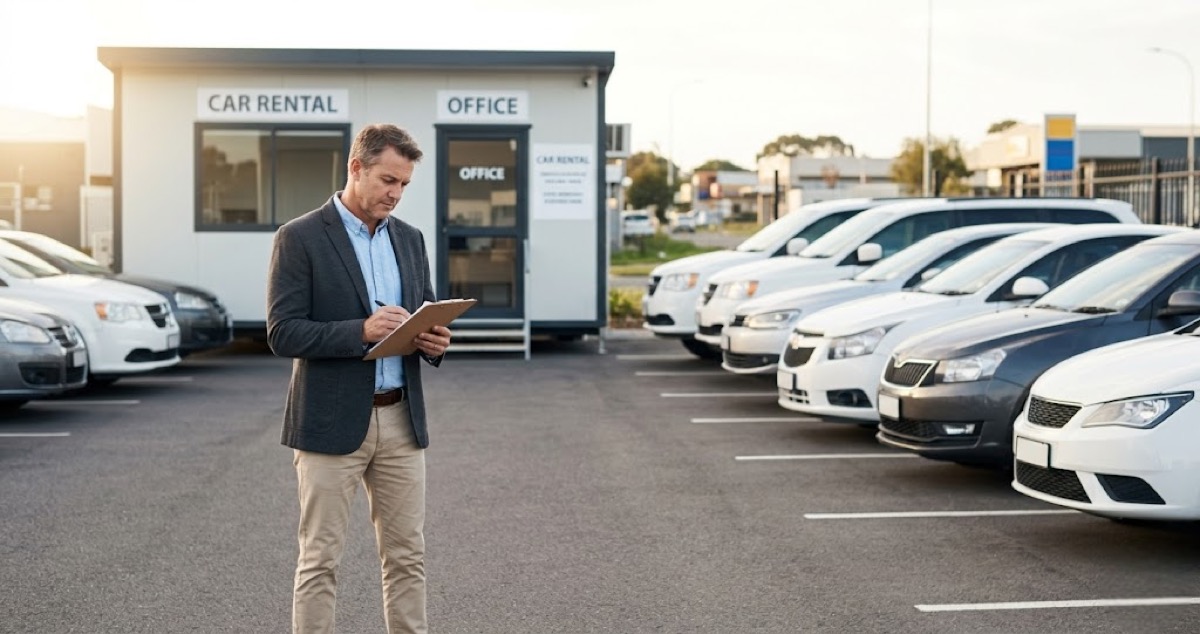

You have probably looked at the car rental market and thought: there has to be money in this. You are right. The U.S. car rental industry generated $60.7 billion in revenue in 2025, and it has grown at a 6.2% CAGR (2020–2025). Airports, tourist destinations, and urban centers all drive steady demand for rental vehicles.
But before you start shopping for cars, you need to understand the full car rental startup cost picture. Vehicles are only part of the equation. Underestimating any one cost category can stall your launch:
- Insurance — commercial auto coverage is mandatory and expensive
- Licensing — state and local permits add up fast
- Fleet management software — the system that keeps bookings and availability straight
- Parking — lot lease or storage for your vehicles
- Marketing — website, local ads, and signage to get customers in the door
This guide breaks down every major cost category with real 2026 numbers.

What does it actually cost to start a car rental business?
The total cost to start a car rental business depends on fleet size, vehicle type, and whether you lease or buy. A small independent operation with 5-10 vehicles typically requires $100,000 to $200,000 in startup capital. Larger fleets or premium vehicles push that number significantly higher.
What makes car rental more capital-intensive than other rental niches is the vehicles themselves. A single sedan can cost $25,000-$35,000 new. Multiply that by 5-10 cars and your fleet alone accounts for 60-70% of total startup costs.
The good news? You do not have to buy new. And you do not have to start with 10 cars. Many successful independent rental operators started with 3-5 vehicles and scaled after proving demand in their market.
Vehicle acquisition: your biggest line item
Your fleet is the core of your business, and it is where most of your capital goes. You have three main paths to building it.
Buying new vehicles
New sedans (Honda Civic, Toyota Corolla) run $25,000-$30,000 each. Compact SUVs (RAV4, CR-V) cost $30,000-$40,000. New vehicles mean lower maintenance costs in year one and better customer perception, but the upfront capital requirement is steep.
For a 5-car fleet of new sedans, expect to spend $125,000-$150,000 on vehicles alone.
Buying used vehicles
Used vehicles (2-3 years old, under 40,000 miles) cost 40-55% less than new. A 2023-2024 Corolla with 30,000 miles runs $16,000-$20,000. A used RAV4 in similar condition sits around $22,000-$28,000.
A 5-car used fleet can start at $80,000-$100,000 — a meaningful reduction from buying new. The trade-off is higher near-term maintenance and slightly shorter fleet life.
Leasing vehicles
Leasing keeps your upfront costs lowest. Commercial fleet leases for sedans run $300-$500/month per vehicle, and SUVs run $450-$700/month. For a 5-car fleet, that is $1,500-$3,500/month in lease payments.
Leasing works well for testing a market before committing heavy capital. The downside: you do not build equity, and lease agreements may restrict total mileage or modifications.
Insurance costs you cannot skip
Car rental insurance is non-negotiable, and it is more expensive than most new operators expect. You are putting vehicles worth tens of thousands of dollars into other people’s hands on public roads. Insurers price that risk accordingly.
Commercial auto insurance
This is your primary policy. It covers liability, collision, and comprehensive damage for every vehicle in your fleet. For a small car rental operation, commercial auto insurance runs $3,000-$5,000 per vehicle per year. A 5-car fleet means $15,000-$25,000 annually in auto insurance premiums alone.
General liability insurance
Covers injuries or property damage that happen on your premises — someone trips at your lot, for example — and general business liability. Expect $500-$1,500/year for a small operation.
Umbrella insurance
Provides additional coverage above your auto and GL policy limits. For a car rental business, this is strongly recommended. Policies start at $1,000-$2,000/year for $1 million in additional coverage.
Total insurance cost
For a 5-car fleet, budget $16,500-$28,500/year for a full insurance package. This is one of the highest recurring costs in the car rental business — and one of the most important.
Licensing, permits, and legal setup
Every state has different requirements, but here are the common costs:
- LLC or corporation formation: $50-$500 depending on your state
- EIN (Employer Identification Number): Free from the IRS
- State business license: $50-$400/year
- Sales tax permit: Required in most states — free to $100 to register
- Vehicle dealer or rental license: Some states require a specific rental car license. Florida charges $50-$200 per location. California requires a Seller of Travel registration if you bundle with tourism packages.
- Airport concession fees: If you plan to operate at or near an airport, concession fees can run 10-15% of gross revenue. Most independent startups avoid airport locations initially for this reason.
Total licensing and legal setup: $500-$2,000 for most small operators, assuming no airport concession.
Software, operations, and fleet management
Once you have more than 3-4 vehicles renting regularly, managing bookings through calls, texts, and spreadsheets falls apart. You double-book a vehicle. You lose track of return dates. A customer messages you on a Saturday asking what is available, and you are already on another delivery.
Car rental software solves this by centralizing your inventory, bookings, payments, and customer communication in one place.
What to look for in fleet management software
- Real-time vehicle availability — when a car is booked, it blocks instantly across all channels
- Online reservations — customers check availability and book without calling you
- Digital contracts and waivers — signed before pickup, protecting you legally
- Payment processing — collect deposits and full payments online at booking
- Automated reminders — return dates, payment confirmations, and pickup details sent automatically
Ready to manage your car rental fleet without spreadsheets?
No credit card required.
Other operational costs
- Parking or lot lease: $500-$3,000/month depending on location and size
- Vehicle cleaning and detailing: $25-$50 per turnover, or $200-$400/month for a small fleet
- Maintenance and repairs: Budget $1,200-$2,000 per vehicle per year for routine maintenance — oil changes, tires, brakes, inspections
- Fleet management software: $50-$150/month
- GPS tracking (optional but recommended): $15-$30/month per vehicle
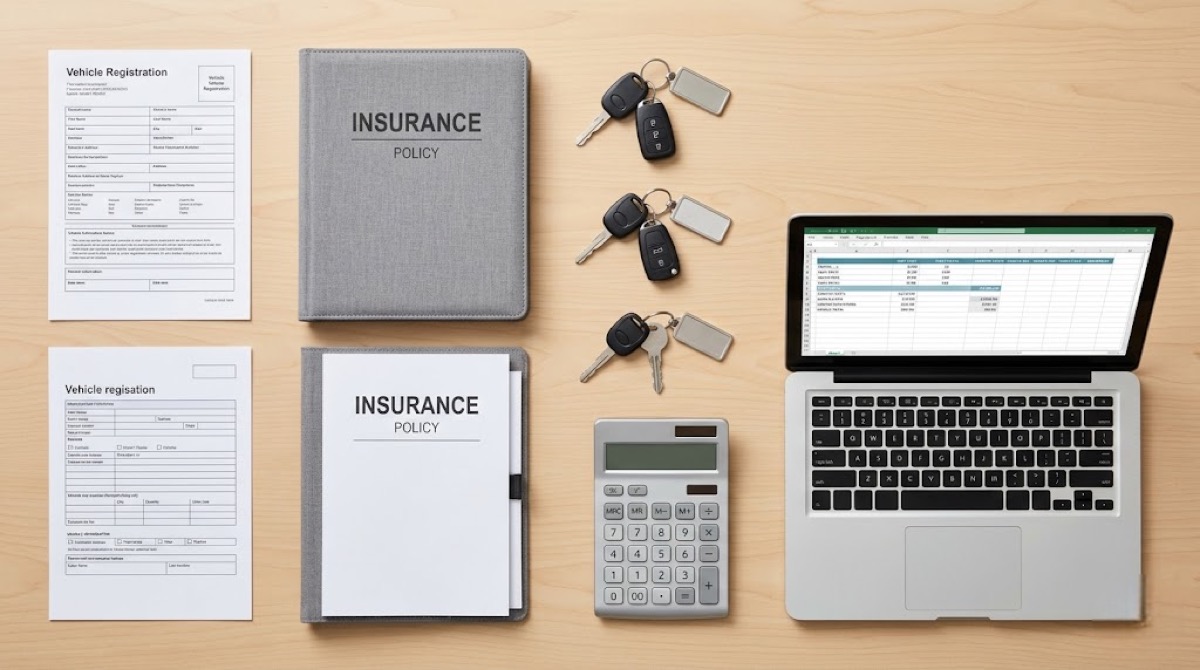
Marketing and customer acquisition
You need customers to find you. For a local car rental business, focus your early marketing spend on three areas.
Google Business Profile
Free, and it is the single most important thing you can do. A fully optimized profile with photos, pricing, and reviews puts you in front of people searching “car rental near me.” This costs nothing but time.
Local SEO and a basic website
A simple website with your fleet, pricing, and online booking costs $500-$2,000 to set up initially. Ongoing SEO content and maintenance runs $200-$500/month if you hire help.
Paid advertising
Google Ads targeting local car rental keywords can drive bookings quickly. Budget $500-$1,500/month to start. Target specific queries like “rent a car in [your city]” rather than broad national terms.
Signage and local presence
A good sign on your lot, business cards, and partnerships with local hotels and tourism offices. Budget $300-$1,000 for initial signage and printed materials.
Total first-year marketing budget: $3,000-$10,000 for a small independent operator.
Full car rental startup cost breakdown table
Here is the complete picture for a 5-car fleet (used sedans/SUVs):
| Expense Category | Estimated Cost |
|---|---|
| Vehicles (5 used sedans/SUVs) | $80,000-$130,000 |
| Commercial auto insurance (year 1) | $15,000-$25,000 |
| General liability + umbrella insurance | $1,500-$3,500 |
| Licensing, permits, legal setup | $500-$2,000 |
| Lot lease (first + last month) | $1,000-$6,000 |
| Fleet management software (year 1) | $600-$1,800 |
| Vehicle maintenance (year 1) | $6,000-$10,000 |
| Cleaning and detailing (year 1) | $2,400-$4,800 |
| GPS tracking (year 1, optional) | $900-$1,800 |
| Marketing (year 1) | $3,000-$10,000 |
| Total estimated range | $110,900-$194,900 |
If you lease vehicles instead of buying, you can drop the vehicle line item to $18,000-$42,000 for year one (lease payments only), bringing total startup costs down to roughly $48,900-$106,900. That is a significantly lower barrier to entry, though you will carry ongoing lease payments indefinitely.

Frequently asked questions
How much does it cost to start a car rental business?
A small independent car rental business with 5 used vehicles typically requires $110,000-$195,000 in total startup capital. Leasing vehicles instead of buying can reduce that to $50,000-$107,000. The biggest cost drivers are vehicle acquisition (60-70% of total) and commercial auto insurance.
Can I start a car rental business with one car?
Yes. Several successful operators started with a single vehicle on platforms like Turo to validate demand before scaling. One car lets you learn the operations — booking management, turnovers, insurance claims — without massive financial exposure. Once you are consistently booked at 60%+ utilization, add a second vehicle.
What insurance do I need for a car rental business?
At minimum, you need commercial auto insurance ($3,000-$5,000/vehicle/year), general liability insurance ($500-$1,500/year), and ideally umbrella insurance ($1,000-$2,000/year). Standard personal auto policies do not cover rental use. Talk to a commercial insurance broker who specializes in fleet or rental operations.
Is a car rental business profitable?
Independent car rental operators can see net profit margins of ~8.3% of industry revenue once they reach stable utilization rates above 65%. A single vehicle renting at $60/day with 70% utilization generates roughly $15,300/year in gross revenue. Across a 5-car fleet, that is $76,500 — before expenses. Profitability depends heavily on keeping insurance costs controlled and maintaining high utilization.
Do I need a special license to rent cars?
Requirements vary by state. Most states require a standard business license and sales tax permit. Some states (Florida, California, New York) require a specific rental car license or permit. Check with your state’s Department of Motor Vehicles and your local city clerk before opening.
Start your car rental business with the right numbers
Understanding the full car rental startup cost picture is what separates operators who launch successfully from those who run out of capital three months in. Vehicles, insurance, and operations costs are all significant — but they are also predictable once you plan for them.
Start small. A 3-5 car fleet with the right insurance, proper licensing, and car rental software to manage bookings gives you a solid foundation to grow from. Scale your fleet based on actual utilization data, not guesswork.
Ready to manage your car rental fleet the right way?
No credit card required.