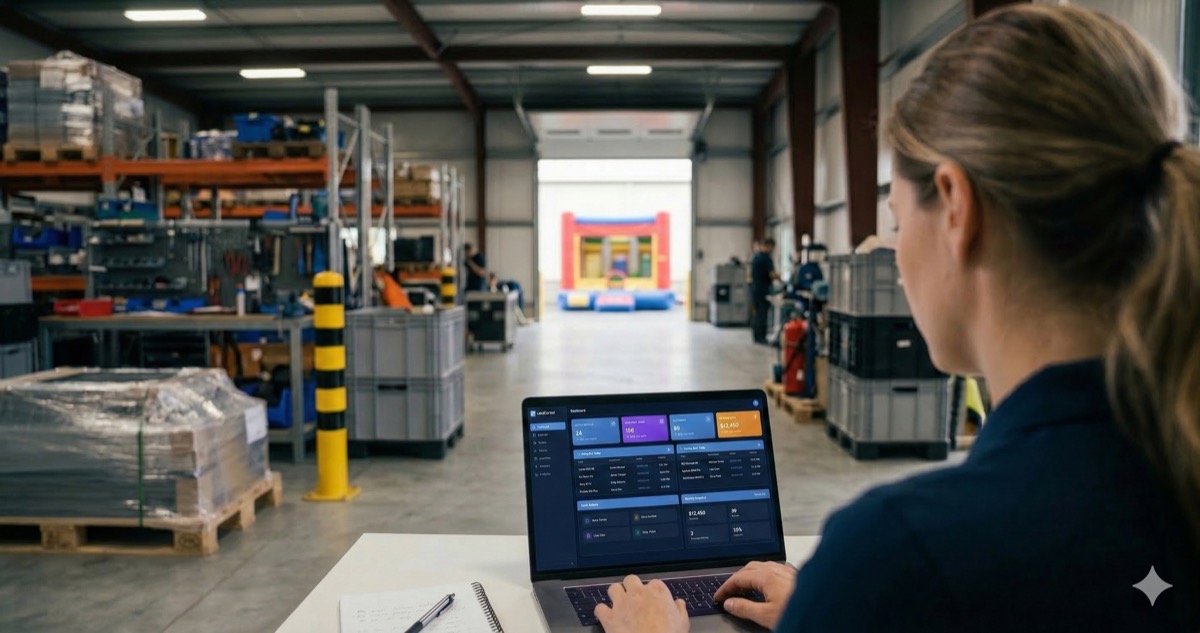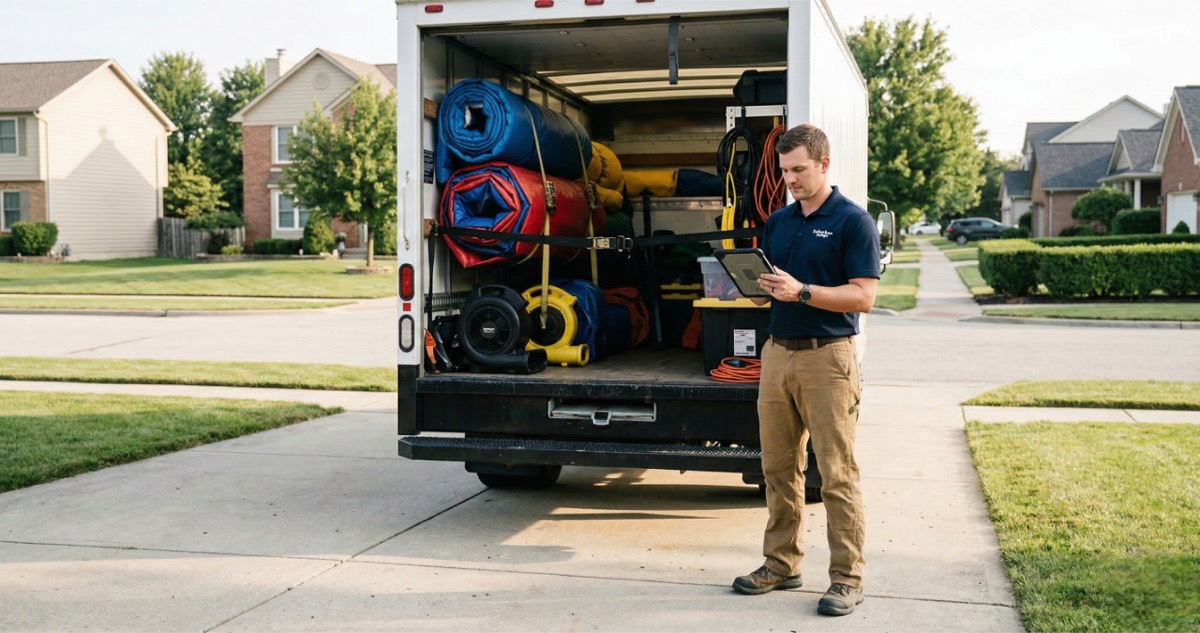

You can buy the best inflatables on the market, build a killer website, and line up a dozen bookings — but one injury claim without bounce house rental insurance can wipe out your entire business overnight.
This guide covers what coverage you actually need, what it costs, and what venues will demand before letting you set up.
Why bounce house rental insurance is non-negotiable
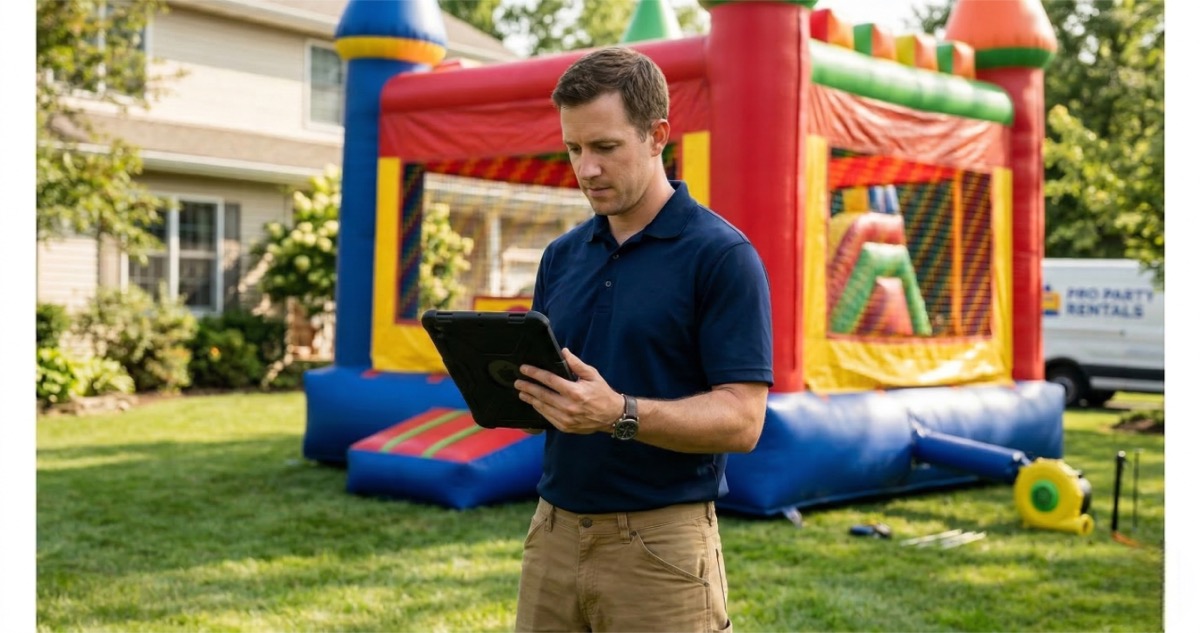
Kids jump. Kids collide. Kids fall out. And when they do, parents call lawyers before they call you. The U.S. Consumer Product Safety Commission has reported over 18,000 emergency room visits per year from inflatable-related injuries. You don’t need to be negligent — you just need to be the business that rented the equipment.
- Defending a lawsuit — six figures, even if you’re not at fault
- Serious injury claims — regularly reach $500,000+, with seven-figure settlements not unheard of
- No insurance — that money comes directly from you
And here’s the part that surprises new operators: insurance isn’t just protection — it’s a sales requirement. Most venues, parks, schools, and churches won’t let you set up without proof of coverage. No insurance means no booking.
What bounce house liability insurance actually covers
Not all insurance policies are created equal, and standard small business insurance typically excludes amusement devices. You need coverage specifically designed for inflatable and amusement rental businesses.
Bodily injury
A child breaks their arm jumping in your bounce house. A parent trips over an anchor stake while walking past. A toddler gets knocked down by an older kid. General liability covers medical bills, legal fees, and settlements for injuries that happen on or around your equipment.
Property damage
Your bounce house gets picked up by a wind gust and lands on a client’s fence. A blower cord damages someone’s lawn. An inflatable scrapes the side of a car during setup. Property damage coverage handles repair and replacement costs.
Product liability
This covers claims related to defects in the equipment itself — a seam that fails, a blower that malfunctions, a zipper that breaks and causes an injury. Most reputable providers bundle product liability with general liability.
Personal and advertising injury
Less common but still relevant — this covers claims of slander, libel, or copyright infringement. If a competitor claims you stole their marketing copy, this coverage responds.

How much does bounce house rental insurance cost?
This is the first question every new bounce house rental business owner asks. The answer depends on your coverage level, location, number of units, and claims history.
| Coverage Type | Annual Cost Range | What It Covers |
|---|---|---|
| General liability ($1M per occurrence) | $300–$1,500 | Bodily injury, property damage, product liability |
| General liability ($2M aggregate) | $800–$2,500 | Higher limits for busier operations |
| Commercial auto | $1,200–$3,000 | Your delivery vehicle while transporting equipment |
| Workers’ compensation | $450–$600+ | Employee injuries (required once you hire staff) |
| Business owner’s policy (BOP) | $1,000–$1,500 | Bundles general liability + commercial property |
For most solo operators just starting out, a general liability policy with $1 million per occurrence and $2 million aggregate coverage runs $800–$2,500 per year. That’s roughly $70–$210 per month.
If you want a comprehensive bundle — general liability, commercial property, and workers’ comp — expect to pay around $2,000–$3,000 per year total.
Several factors push your premiums higher:
- More units — insuring 10 inflatables costs more than insuring 2
- Higher revenue — insurers price based on projected annual revenue
- Claims history — one past claim can increase rates significantly
- Location — states with higher litigation rates (California, Florida, New York) generally have higher premiums
- Water inflatables — water slides and wet combos carry higher risk and higher premiums
Ready to track every booking, contract, and payment in one place?
Try LendControl free for 14 days
No credit card required.
Per-event insurance vs. annual policies
If you’re just testing the waters or only do a handful of events per year, per-event insurance might make sense. But for most active operators, an annual policy is the better deal.
| Per-Event Insurance | Annual Policy | |
|---|---|---|
| Cost | $100–$1,000 per event | $800–$2,500 per year |
| Best for | Occasional operators, testing the business | Anyone doing 10+ events per year |
| Coverage duration | Single day or weekend | Full year, all events |
| Additional insured certificates | Usually available, may cost extra | Typically included at no extra cost |
| Rush processing | 15-25% surcharge for same-day | Not applicable — you’re always covered |
| Break-even point | — | ~5-10 events per year |
The math is simple: at $150 per event, an annual policy ($1,500/year) breaks even at just 10 events. Most operators do 4-8 events per weekend in peak season. Plus, per-event policies mean remembering to buy coverage before every single booking — miss one, and you’re uninsured.
The bottom line: if you’re doing more than a handful of events per year, get an annual policy.
What venues and clients will require from you
This is where insurance stops being theoretical and becomes a booking requirement.
Minimum coverage amounts
Most venues, parks, and event spaces require $1 million in general liability coverage per occurrence. Schools and municipal parks often require $2 million. Some corporate clients and large venues now require $5 million — which usually means purchasing an umbrella policy on top of your base coverage.
Additional insured certificates
Here’s how this works: a venue lets you set up on their property. If someone gets hurt, the venue doesn’t want to get dragged into the lawsuit. So they require you to add them as an “additional insured” on your policy.
This means your insurance extends partial coverage to the venue for claims arising from your operations. Most reputable inflatable insurance providers issue additional insured certificates at no extra cost. Ask about this before you buy a policy — if a provider charges per certificate, look elsewhere.
Proof of insurance at every event
Get used to emailing certificates of insurance (COIs). Schools want them a week in advance. Parks departments want them with the permit application. Corporate event planners want them before signing the contract.
Keep a digital copy accessible at all times. Better yet, use bounce house rental software that stores your insurance certificates, contracts, and documents alongside every booking — so when a venue asks for proof, you pull it up in seconds instead of digging through email threads.
Workers’ comp and commercial auto — the coverages people forget
General liability gets all the attention, but two other coverage types matter once your bounce house rental business grows beyond just you.
Workers’ compensation
The moment you hire anyone — even a part-time helper for weekend deliveries — most states legally require workers’ compensation insurance. Bounce house work is physical. Your crew is lifting 200-400lb inflatables, driving delivery vehicles, and setting up in heat.
Consider this scenario: an employee severely strains his back lifting a 300-pound obstacle course, needs emergency surgery and three months off work. Medical bills: $38,000. Lost wages: $11,000. Without workers’ comp, that’s your bill.
Workers’ comp for bounce house businesses typically costs $35–$50 per month per employee. The exact rate depends on your state and payroll size.
Commercial auto insurance
Your personal auto policy almost certainly excludes business use. If you’re hauling inflatables in your truck and get into an accident, your personal insurer can deny the claim because you were using the vehicle for commercial purposes.
Commercial auto insurance covers your delivery vehicle — whether it’s a pickup truck, cargo van, or box truck — while transporting equipment. Expect to pay $1,200–$3,000 per year depending on the vehicle and your driving record.
Where to buy inflatable rental insurance
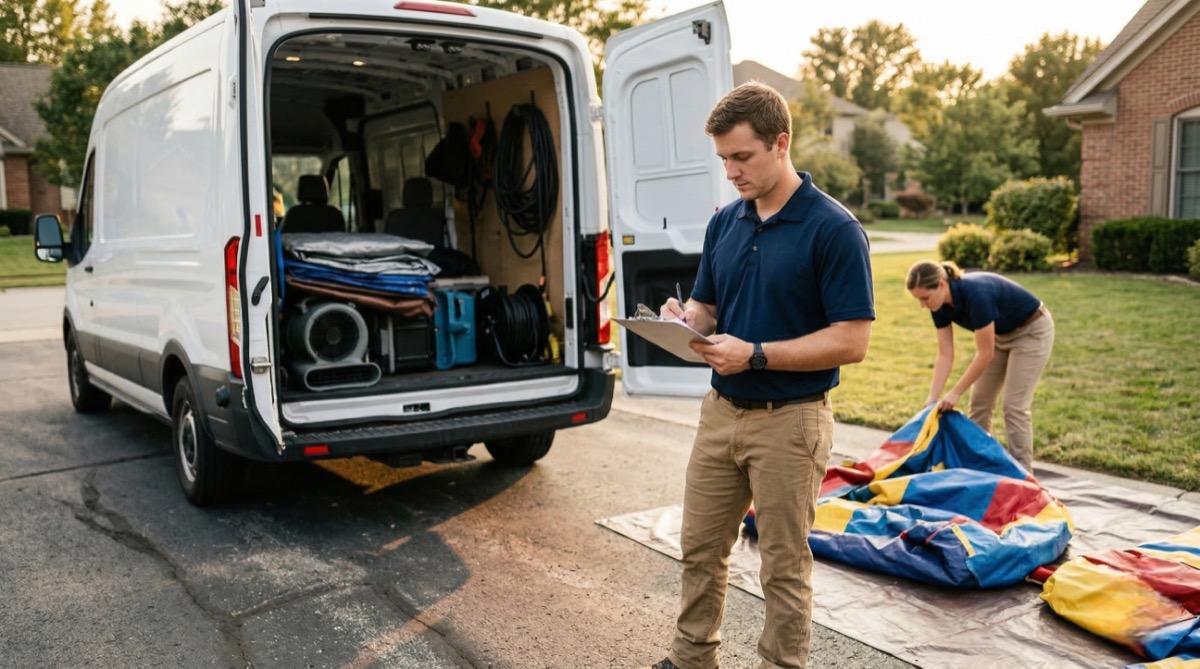
Standard business insurance providers (State Farm, Allstate, etc.) often exclude amusement devices from their general liability policies. You need a provider that specializes in inflatable rental insurance or amusement industry coverage.
Here are providers that specifically serve the bounce house and inflatable rental industry:
- XINSURANCE — specializes in inflatable and amusement rental coverage. Offers both annual and per-event policies. Known for covering hard-to-insure risks.
- Cossio Insurance — focused on party rental and inflatable businesses. Offers general liability, additional insured certificates, and bundled packages.
- K&K Insurance — a large specialty insurer covering events and amusement operations. Offers both short-term event coverage and annual policies.
- Pro Insurance Group — nationwide inflatable insurance with coverage options for bounce houses, water slides, and obstacle courses.
- The Hartford — a mainstream insurer that does cover bounce house businesses, with some of the more competitive general liability rates (averaging around $56/month for GL).
How to shop for a policy
- Get quotes from at least three providers — rates vary significantly between insurers
- Ask about additional insured certificates — confirm they’re included at no extra cost
- Check exclusions carefully — some policies exclude water inflatables, mechanical rides, or events above a certain attendance
- Verify per-occurrence and aggregate limits — $1M/$2M is the standard minimum
- Ask about the claims process — how quickly do they respond? Do they assign a dedicated adjuster?
Don’t just buy the cheapest policy. Read the exclusions. A $400/year policy that excludes water slides and doesn’t issue additional insured certificates will cost you more in lost bookings than a $1,500 policy that covers everything.
Frequently asked questions
How much is bounce house insurance per month?
General liability insurance for a bounce house rental business averages $35–$120 per month, depending on your coverage level, location, number of units, and claims history. For a standard $1M/$2M policy, most operators pay $70–$210 per month. Comprehensive bundles that include commercial property and workers’ comp run $150–$250 per month.
Can I operate a bounce house rental business without insurance?
Technically, most states don’t require insurance by law for bounce house rentals. But practically, no. Most venues, parks, schools, and churches require proof of liability insurance before letting you set up. Without it, you lose bookings. And one uninsured injury claim — even a minor one — can bankrupt a small operation through legal costs alone.
What’s the difference between general liability and a business owner’s policy?
General liability covers bodily injury, property damage, and product liability claims. A business owner’s policy (BOP) bundles general liability with commercial property insurance — covering your equipment if it’s stolen, damaged in storage, or destroyed by fire or weather. If you own $10,000+ in inflatables, a BOP is usually worth the extra cost.
Do I need separate insurance for water slides and wet inflatables?
Some policies cover all inflatable types under one premium. Others exclude water inflatables or charge a higher rate for them because wet surfaces increase injury risk. Always ask your provider specifically about water slide coverage before purchasing a policy. Don’t assume it’s included.
How do I get an additional insured certificate for a venue?
Contact your insurance provider and request a certificate of insurance (COI) naming the venue as an additional insured. Most inflatable insurance specialists issue these within 24-48 hours at no extra charge. Some can issue same-day certificates. Keep your provider’s contact info handy — you’ll be requesting these regularly, especially for school and park events.
Protect your business, then grow it
A solid general liability policy costs $800–$2,500 per year — that’s 3-5 weekend rentals. Get insured before your first booking, then layer on commercial auto and workers’ comp as you grow.
- Day one — general liability ($1M/$2M)
- When you start hauling — commercial auto
- When you hire help — workers’ comp
Keep your certificates organized so you never lose a booking because you couldn’t produce proof of coverage fast enough. Pair solid coverage with inflatable rental software to keep certificates, waivers, and bookings in one place from day one.
Ready to keep your bookings, contracts, and insurance docs organized?
No credit card required.