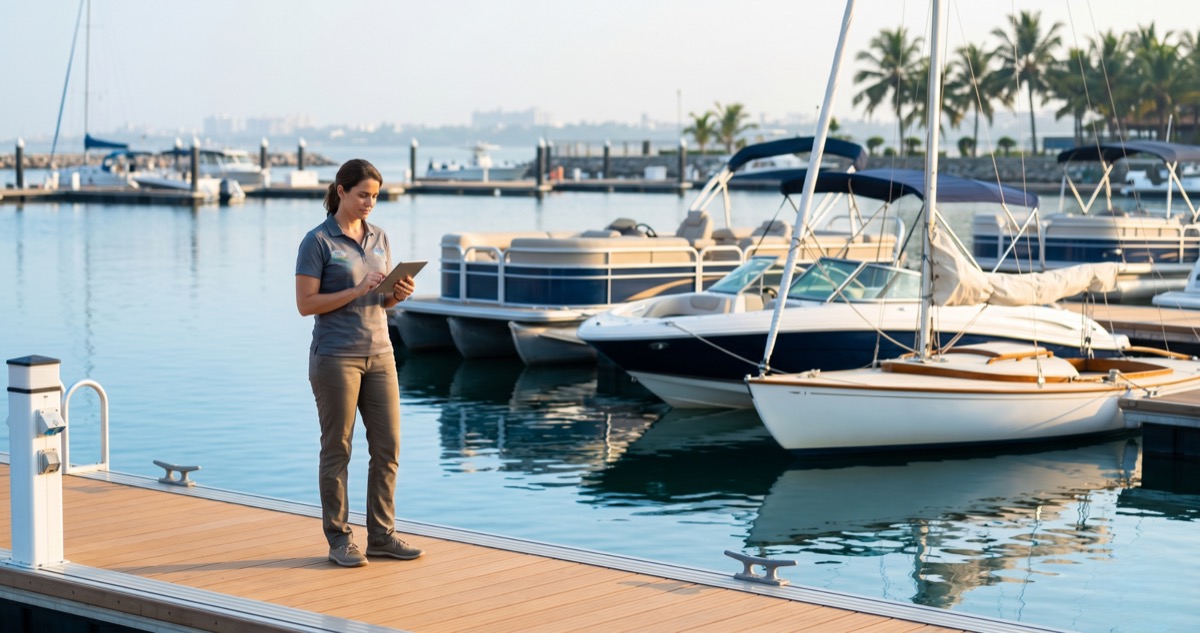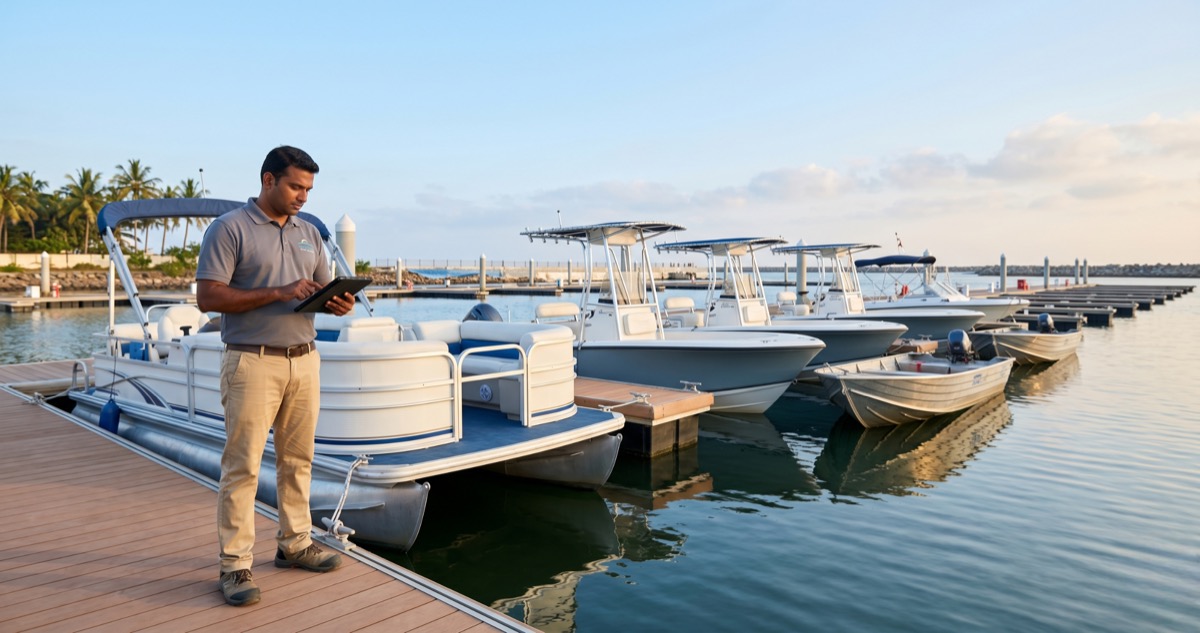

One renter grounds your pontoon on a sandbar. Another clips a dock piling backing out of a slip. A passenger trips boarding and breaks a wrist. These are not hypotheticals — they are Tuesday in the boat rental insurance claims world.
Running a boat rental business without the right insurance is not just risky. In most states, it is illegal. But “the right insurance” for a commercial marine rental operation looks nothing like the policy you carry on your personal boat:
- The coverage types are different — commercial marine policies cover risks that personal policies explicitly exclude
- The costs are higher — multiple operators, higher utilization, and third-party liability drive up premiums
- The legal requirements are stricter — federal and state regulations mandate specific coverage minimums for commercial operations
This guide covers every policy type you need, what each one actually protects, what it costs per boat, and where operators commonly leave gaps that cost them later.

Why boat rental insurance is different from regular boat insurance
A personal boat insurance policy covers one owner using their own vessel. The moment you hand keys to a paying customer, that policy is void. Every major marine insurer excludes commercial rental use from standard recreational policies.
Commercial boat rental insurance is underwritten differently because the risk profile is fundamentally different:
- Multiple operators with varying skill levels — your renters range from experienced boaters to first-timers who have never docked anything
- Higher utilization — a rental boat may log 600–1,200 hours per season compared to 50–200 hours for a privately owned vessel
- Third-party liability exposure — if a renter injures someone or damages another boat, your business is on the hook
- Passenger liability — you are enabling paying customers to carry their own guests, which changes the legal equation entirely
You need policies built specifically for commercial marine rental operations. A standard recreational policy will not pay a single claim that originates from a paid rental.
Hull insurance (physical damage)
Hull insurance covers damage to the boat itself — collision, grounding, storm damage, fire, theft, and vandalism. This is the marine equivalent of comprehensive and collision coverage on a car.
For a rental fleet, hull coverage typically runs 1.5–3% of the vessel’s insured value per year. A $40,000 pontoon boat costs roughly $600–$1,200/year for hull coverage alone.
Most hull policies include a deductible of $500–$2,500 per incident. Higher deductibles lower your premium, but you eat more cost per claim. For high-turnover rental fleets, a mid-range deductible ($1,000) usually balances premium savings against claim frequency.
Protection and indemnity (P&I)
P&I insurance is the marine industry’s version of general liability — but broader. It covers bodily injury to third parties, property damage to other vessels or docks, pollution liability (fuel spills), and wreck removal costs.
This is the most critical policy for any boat rental business. A single serious injury claim can exceed $500,000, and pollution cleanup from a fuel spill in a protected waterway can reach six figures fast.
P&I premiums for small commercial fleets typically range from $1,500–$4,000 per vessel per year, depending on boat type, operating area, and fleet size.
Commercial general liability (CGL)
CGL covers incidents that happen on your premises — the dock, the marina office, the parking lot. If a customer slips on your dock and breaks an ankle, CGL pays that claim. It also covers advertising injury and some contractual liabilities.
A standard CGL policy for a marine rental business runs $1,200–$3,500/year for $1 million per occurrence / $2 million aggregate. Most marina landlords require proof of CGL before they will lease you dock space.
Customer damage waivers
Boat rental liability insurance specifically covers damage caused by renters to your own vessels. Some operators self-insure this with security deposits ($500–$2,000 per rental), while others offer optional damage waivers to renters for $25–$75 per rental day — similar to what car rental companies do.
The damage waiver approach works well for two reasons: it generates revenue (many renters buy it), and it reduces disputes over security deposit deductions.
Compare your insurance options side by side
| Coverage type | What it protects | Typical annual cost | Required? |
|---|---|---|---|
| Hull insurance | Physical damage to your boats (collision, fire, theft, weather) | $600–$1,200 per vessel (1.5–3% of value) | Strongly recommended |
| Protection & indemnity (P&I) | Third-party bodily injury, property damage, pollution, wreck removal | $1,500–$4,000 per vessel | Yes — essential |
| Commercial general liability (CGL) | On-premises injuries, dock accidents, advertising liability | $1,200–$3,500/year (fleet-wide) | Yes — usually required by marina |
| Customer damage waiver | Renter-caused damage to your vessels | Self-insured or $25–$75/day charged to renter | Optional but smart |
| Workers’ compensation | Employee injuries (dock hands, captains, mechanics) | $2,000–$6,000/year depending on payroll | Required if you have employees |
| Umbrella / excess liability | Additional coverage above P&I and CGL limits | $1,000–$3,000/year for $1–2M additional | Recommended for fleets 5+ boats |
What boat rental insurance actually costs
Total insurance costs depend on fleet size, boat type, operating waters, and your claims history. Here is a realistic breakdown for a 5-boat rental operation running pontoons and center consoles in coastal or lake waters:
| Expense | Estimated annual cost |
|---|---|
| Hull insurance (5 boats, avg. $35,000 value each) | $2,625–$5,250 |
| P&I coverage (5 vessels) | $7,500–$20,000 |
| Commercial general liability | $1,200–$3,500 |
| Workers’ comp (2–3 seasonal employees) | $2,000–$4,500 |
| Umbrella policy ($1M additional) | $1,000–$2,500 |
| Total estimated annual cost | $14,325–$35,750 |
That works out to roughly $2,865–$7,150 per boat per year. For context, a single pontoon renting at $350/day for 120 days generates $42,000 in gross revenue. Insurance represents about 7–17% of gross revenue per vessel — a cost of doing business, not a margin killer.
Factors that raise or lower your premiums
- Operating area — coastal saltwater operations pay more than inland lake operations. Hurricane-zone marinas pay the most.
- Boat type — high-performance boats and PWCs (jet skis) carry the highest premiums. Pontoons and deck boats are the least expensive to insure.
- Claims history — three or more claims in a 3-year period can increase premiums by 20–40%.
- Safety equipment and training — documented renter orientation programs and up-to-date safety gear can earn discounts of 5–15%.
- Fleet size — insurers often offer multi-vessel discounts starting at 3–5 boats.
Maritime law requirements you cannot ignore
Boats operate under a different legal framework than land-based rental equipment. Federal maritime law applies in navigable waters, and it introduces obligations that do not exist for other rental businesses.
Jones Act and longshore coverage
If you employ captains or crew who spend 30% or more of their time on vessels in navigation, you may be subject to the Jones Act (46 U.S.C. Section 30104). The Jones Act applies to seamen — workers who contribute to the function of a vessel or the accomplishment of its mission. Dock hands and mechanics who work primarily on shore fall under the Longshore and Harbor Workers’ Compensation Act (LHWCA) instead. Both statutes provide broader protections to maritime workers than standard state workers’ comp.
Standard workers’ comp does not satisfy Jones Act obligations. You need a separate maritime employer’s liability endorsement — or a dedicated Jones Act policy — if you have crew operating your rental boats.
Passenger vessel requirements
If any of your boats carry more than 6 passengers for hire, the U.S. Coast Guard requires the vessel to be inspected and the operator to hold a Master license. A OUPV (Operator of Uninspected Passenger Vessel) license is capped at 6 paying passengers — anything above that requires the Master credential. Insurance underwriters also require proof of USCG compliance before issuing P&I coverage on passenger vessels.
For bareboat (self-drive) rentals where the customer operates the boat, these passenger vessel rules typically do not apply — but your state may have its own boater licensing requirements for renters.
State registration and titling
Every vessel in your fleet must be registered in your state and display valid registration numbers. Commercial vessels may require additional state-level commercial use permits. Requirements vary by state — Florida, for example, requires a separate livery (rental) permit for commercial boat operations.
Reduce your risk before insurance even kicks in
Insurance is your financial backstop. But the best way to keep premiums low and your business intact is to prevent claims from happening in the first place.
Require a renter orientation for every booking
Walk every renter through boat operation, navigation rules, no-go zones, and emergency procedures before they leave the dock. A 10–15 minute orientation reduces accidents significantly and gives you documentation if a claim does arise.
Use digital contracts and waivers
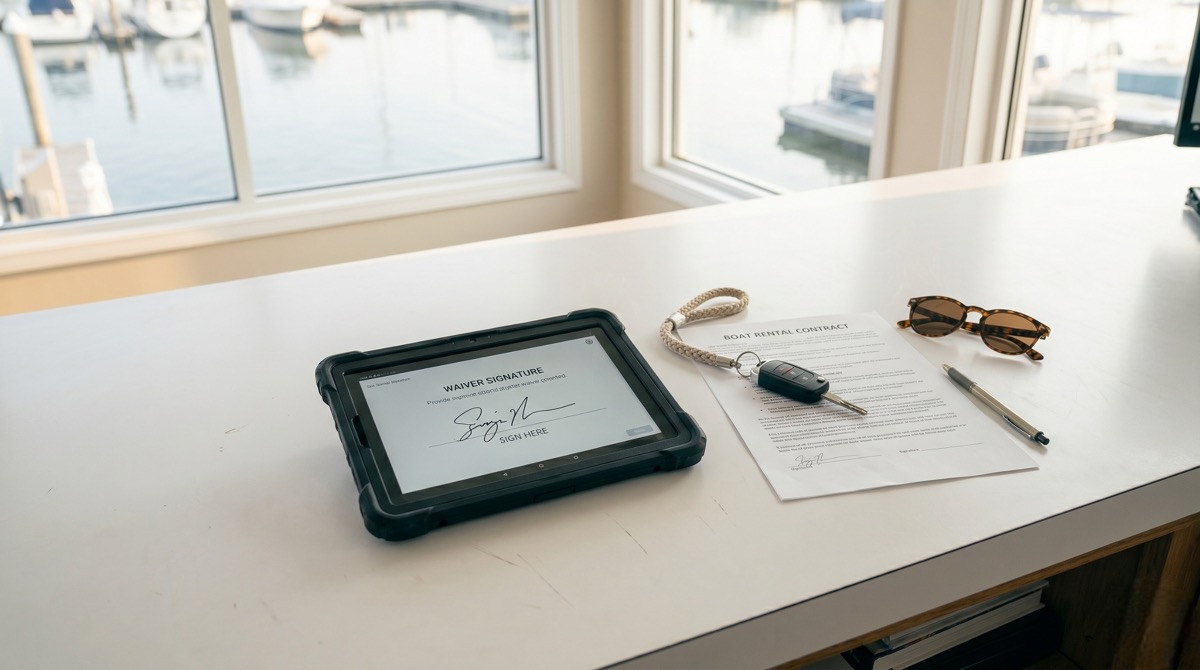
Paper waivers get lost, get wet, and are hard to enforce in court if they are illegible. Digital waivers — signed at booking time — are timestamped, stored automatically, and hold up better legally.
LendControl’s rental contracts feature lets you attach digital waivers to every booking. Renters sign before pickup, and the signed document is stored with the booking record. No chasing paperwork at the dock.
Collect security deposits and offer damage waivers
A $500–$2,000 security deposit (scaled to boat value) motivates renters to be careful. Pair it with an optional damage waiver at $35–$75/day that waives or reduces the deposit liability. This approach protects your cash flow and gives renters peace of mind.
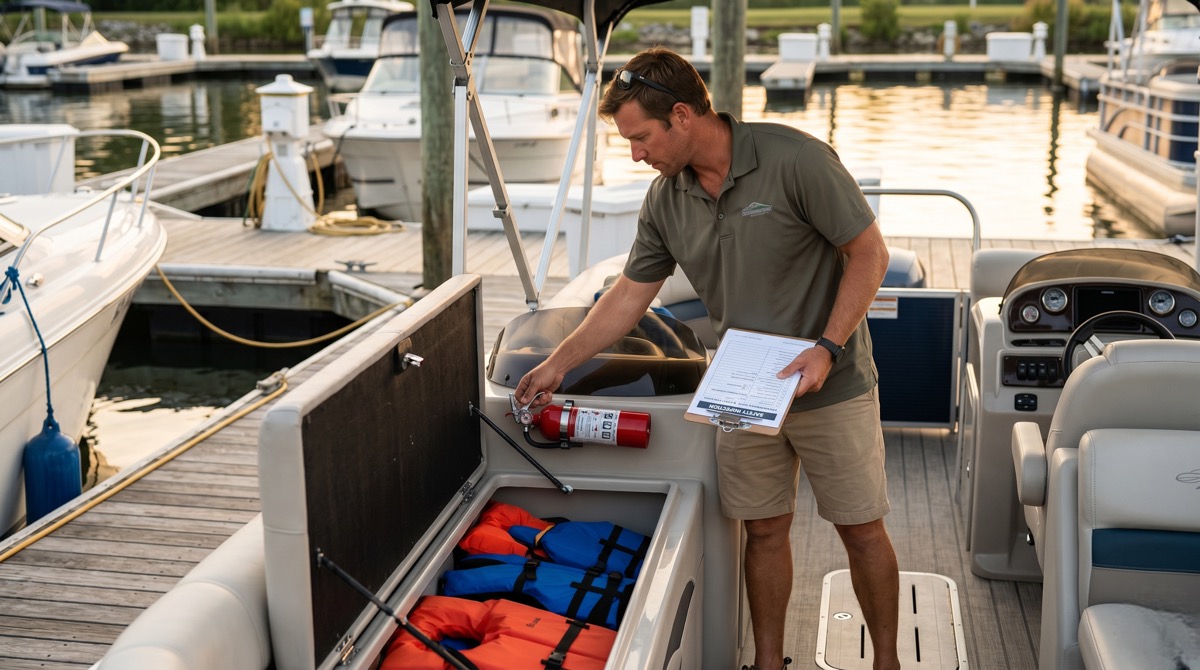
Track maintenance and safety inspections
Documented maintenance records prove your boats were in safe operating condition. If a claim involves equipment failure, your maintenance log is your defense. Automating maintenance scheduling and keeping inspection records tied to each vessel saves time and protects you legally.
Frequently asked questions
How much does boat rental insurance cost per year?
For a small fleet of 3–5 boats, expect to spend $14,000–$36,000 per year total across hull, P&I, general liability, and workers’ comp. Per vessel, that breaks down to roughly $2,800–$7,200 annually. Costs vary based on boat type, operating waters, and claims history.
Do I need boat rental insurance if renters sign a waiver?
Yes. A signed waiver reduces your liability exposure, but it does not eliminate it. Waivers can be challenged in court, and they do not cover third-party injuries or property damage. P&I and CGL coverage protect you from claims a waiver cannot.
Does my personal boat insurance cover rental use?
No. Personal and recreational boat insurance policies explicitly exclude commercial rental use. If you rent your boat to paying customers under a personal policy, every claim will be denied. You need a commercial marine insurance policy underwritten for rental operations.
What is P&I insurance and why do boat rentals need it?
Protection and indemnity (P&I) insurance covers third-party bodily injury, property damage to other vessels, pollution liability, and wreck removal. It is the marine equivalent of general liability and is considered essential for any commercial boat rental insurance program. A single uninsured injury claim can exceed $500,000.
What insurance do I need for jet ski rentals?
Jet skis (PWCs) require the same coverage types as boats — hull, P&I, and CGL — but premiums are higher per unit due to the elevated risk profile. PWC rental operations typically pay $1,500–$3,000 per unit per year for combined coverage. Many insurers also require renters to complete a PWC-specific safety briefing.
Protect your fleet and your business the right way
Boat rental insurance is not optional — it is the foundation your entire business sits on. At minimum, you need P&I coverage and commercial general liability. Add hull insurance to protect your fleet investment, and use damage waivers plus security deposits to cover the everyday dings and scrapes that renters cause.
The operators who get this right lock in coverage before their first booking, document everything, and use systems that keep their contracts, waivers, and maintenance records organized.
Ready to automate your rental contracts and waivers?
No credit card required.