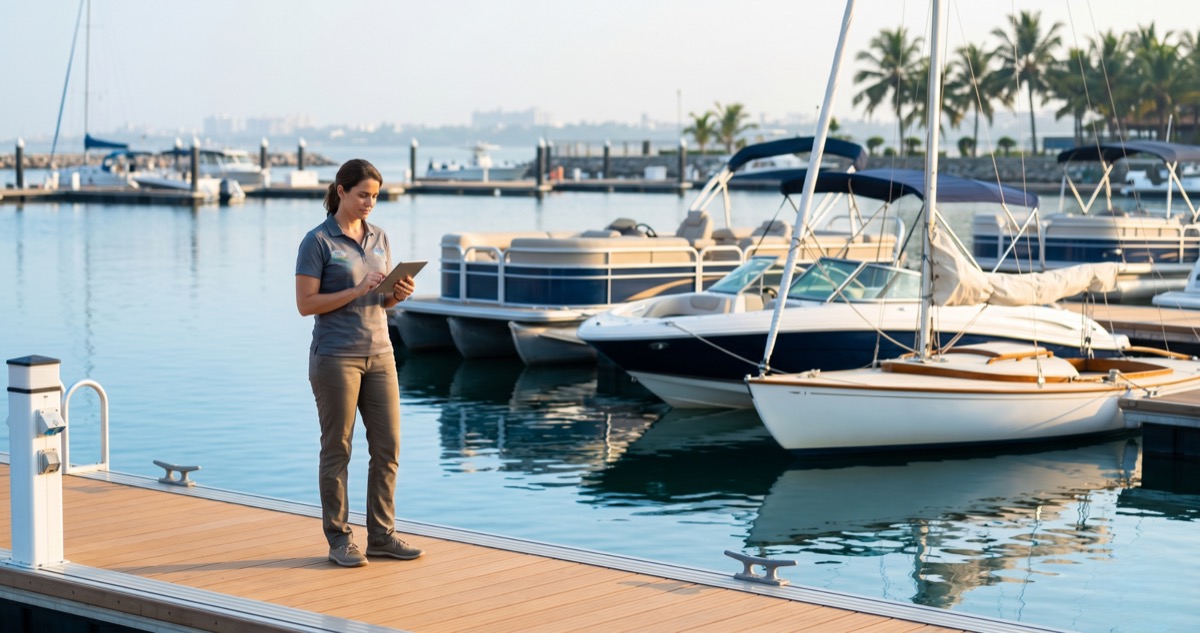
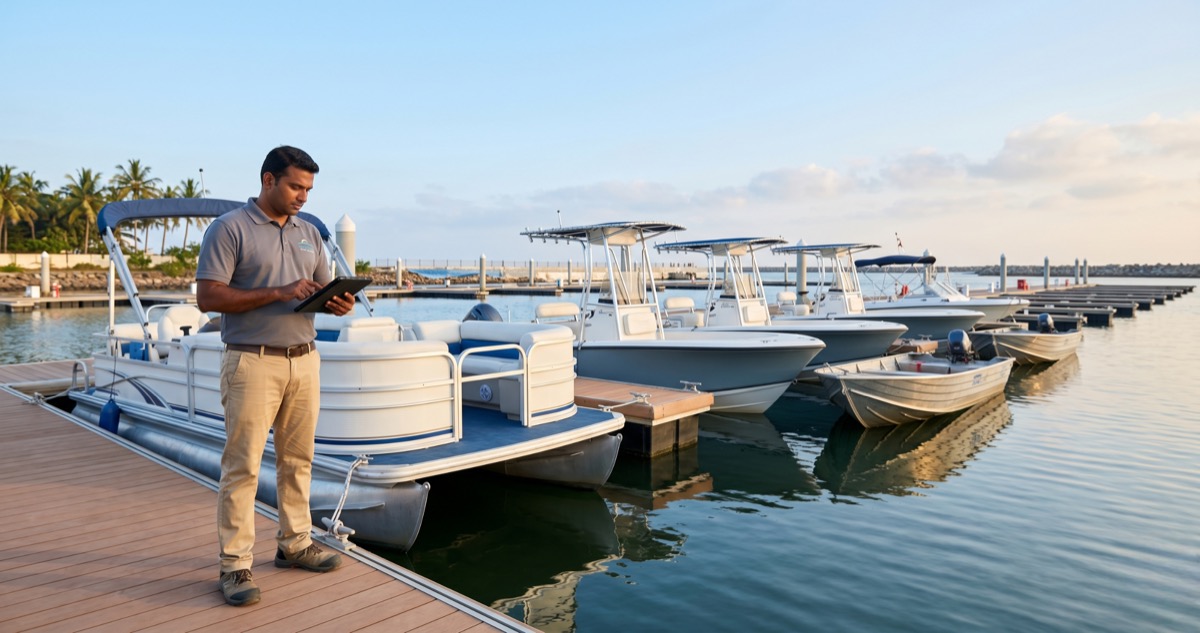
One double booking on a Saturday morning in July and you have two families standing on the dock, one boat, and zero good options. In a boat rental business, that kind of mistake does not just cost you a refund — it costs you reviews, referrals, and repeat customers.
Boat rental fleet management is operationally harder than renting bikes, bounce houses, or most land-based equipment. All of it has to stay in sync, or bookings fall apart:
- Weather cancellations — that reshuffle entire days of bookings
- Mandatory maintenance windows — between rentals that eat into schedulable hours
- Captain availability — another scheduling layer on top of boat availability
- Marina slip logistics — dock space and launch ramp access during peak hours
- Seasonal storage transitions — winterization and spring commissioning that take boats offline
This guide covers the specific operational challenges boat rental operators face and how to manage them without spreadsheets, sticky notes, or crossed fingers.
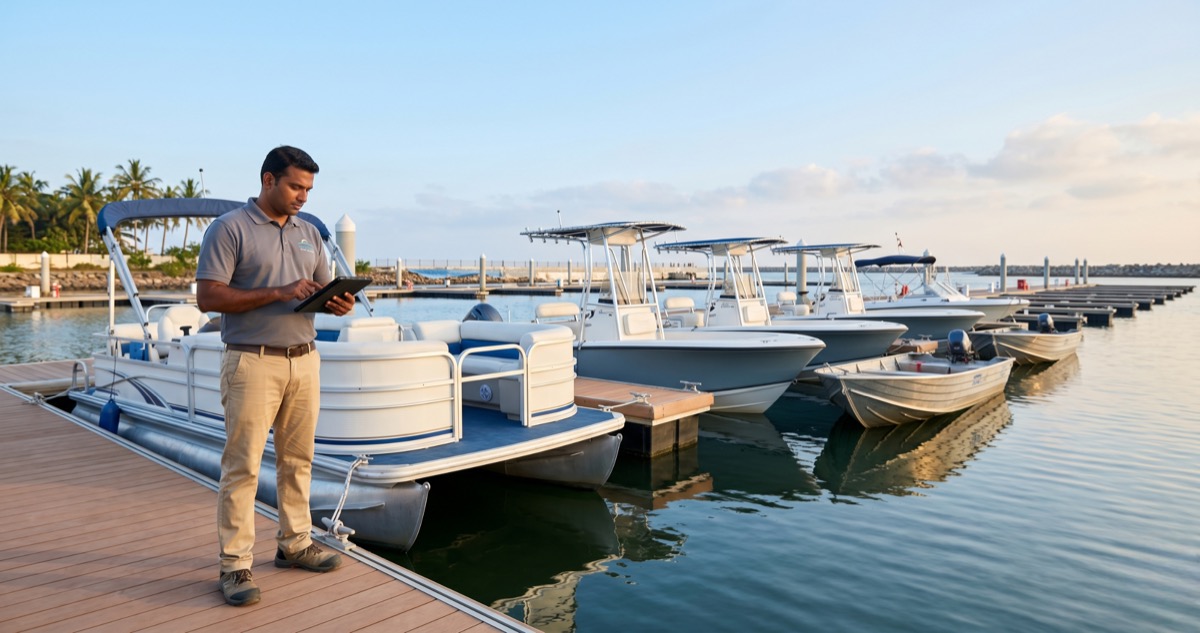
Why boat rental fleet management is harder than most rental categories
Renting out boats is not like renting out bikes or tools. A bike comes back, you check the tires, and it goes out again in 10 minutes. A boat comes back and needs a post-trip inspection, fuel top-off, bilge check, and potentially a freshwater rinse before it is ready for the next renter.
The U.S. recreational boating industry generated $55.6 billion in 2024 (National Marine Manufacturers Association), and the boat rental and charter segment continues growing as more people choose renting over ownership. But that growth means more bookings to manage, and more opportunities for scheduling collisions.
Here is what makes boat fleet operations uniquely complex:
- Turnaround time between rentals. Most boats need 30-90 minutes of prep between customers — fueling, cleaning, safety equipment checks, and a walk-around inspection. You cannot book back-to-back the way you would with simpler rental items.
- Weather dependency. A single storm cancellation can cascade through your entire day. If a morning rental gets pushed to afternoon, the afternoon booking now conflicts.
- Captain and crew requirements. Larger vessels or certain charter types require licensed captains. Their availability is another scheduling layer on top of boat availability.
- Marina and slip constraints. If you operate out of a shared marina, dock space and launch ramp access add logistical bottlenecks during peak hours.
- Seasonal transitions. Boats need winterization, spring commissioning, and periodic haul-outs for hull cleaning — all of which take vessels offline for days or weeks.
Every one of these factors increases the chance of a double booking if you are managing things manually.
The real cost of a double booking on the water
A double booking on a pontoon rental is not a minor inconvenience. Here is what it actually costs you.
Direct financial loss
The average half-day pontoon rental runs $250-$500, and full-day charters on larger vessels reach $800-$2,000+. When you double-book, you refund one customer and often discount the other to smooth things over. That is $500-$1,500 gone in a single incident.
Reputation damage
A 2024 BrightLocal survey found that 49% of consumers trust online reviews as much as personal recommendations (BrightLocal 2024). One frustrated family posting a one-star review about showing up to no boat does more damage than any amount of marketing can fix.
Operational chaos
When you scramble to fix a double booking — calling other marinas, trying to find a substitute vessel, rearranging captain schedules — you burn time that should go toward serving the customers who are actually on the water.
The operators who avoid double bookings are not just more organized. They have systems that make double bookings structurally impossible.
Build maintenance windows into every booking cycle
The fastest way to create a double booking is to ignore the time a boat needs between renters. If your booking system treats a 9:00 AM return and a 9:00 AM departure as compatible, you are going to have problems.
Buffer time between rentals
Build mandatory buffer blocks of 45-90 minutes between every booking. This covers:
- Post-return inspection (hull, engine, safety gear)
- Fueling and fluid checks
- Cleaning and trash removal
- Resetting the vessel for the next customer
For larger boats or those used in saltwater, extend that buffer. Saltwater vessels need a freshwater rinse after every trip to prevent corrosion, which adds 20-30 minutes.
Scheduled maintenance blocks
Beyond per-trip turnaround, boats need regular preventive maintenance that takes them offline:
- Engine service: oil and filters every 100 hours of operation or annually; impeller replacement every 300 hours (or 3 years)
- Hull cleaning and antifouling: every 4-8 weeks in warm saltwater environments
- Trailer and lift inspections: monthly during peak season
- Safety equipment recertification: fire extinguishers, flares, life jackets — annually per USCG requirements (U.S. Coast Guard)
Block these as recurring unavailable periods in your calendar. If maintenance windows are not scheduled in advance, they end up happening reactively — and that means canceling a paying customer.

Handle weather cancellations without wrecking your schedule
Weather is the variable that makes boat rental management harder than almost any other rental category. You cannot control it, but you can build systems that handle it without creating chaos.
Set a clear weather policy
Your cancellation policy should answer three questions before any customer asks:
- What conditions trigger a cancellation? Define specific thresholds — sustained winds above 20 knots, small craft advisories, lightning within 10 miles, or visibility under one mile.
- Who makes the call? The operator or captain decides, not the customer. This protects you from liability if conditions are borderline.
- What does the customer get? Options: full reschedule within 30 days, credit toward a future rental, or a partial refund. Avoid full cash refunds unless legally required in your state — credits preserve your revenue.
Manage the cascade
When a morning rental cancels due to weather, you have a window to fill. Here is where your scheduling system earns its keep:
- Automatically release the time slot so the afternoon customer can be offered an earlier start.
- Notify waitlisted customers if you maintain a standby list during peak season.
- Log the cancellation reason so you can track weather-related revenue loss over the season and adjust pricing or fleet deployment accordingly.
Weather cancellations are a real operational risk — build a clear cancellation and rebooking policy before your first booking season.
Manage captain scheduling and crew assignments
If you offer captained charters or operate vessels that require a licensed operator (more than 6 passengers for hire — vessel length is not the regulatory criterion), captain scheduling is a second inventory problem layered on top of boat availability.
Track captain availability alongside vessel availability
A boat is not bookable if no captain is available to operate it. Your scheduling needs to show both in one view:
- Captain certifications and vessel ratings. Not every captain is qualified on every boat. A USCG Master license holder rated for 50-ton vessels cannot be assigned to a 100-ton yacht without the proper endorsement.
- Hours and rest requirements. USCG regulations require adequate rest periods for licensed operators. Scheduling back-to-back 8-hour charters with the same captain creates compliance risk.
- Travel time between marinas. If you operate from multiple launch points, factor in the time it takes a captain to get from one location to another.
Peak-season staffing
During summer months, reliable charter captains are in high demand. The average USCG-licensed charter captain earns $200-$500 per day depending on vessel size and location (ZipRecruiter). Booking them early for the season — and giving them schedule visibility — reduces the chance they pick up work elsewhere on days you need them.
Use boat rental software to tie it all together
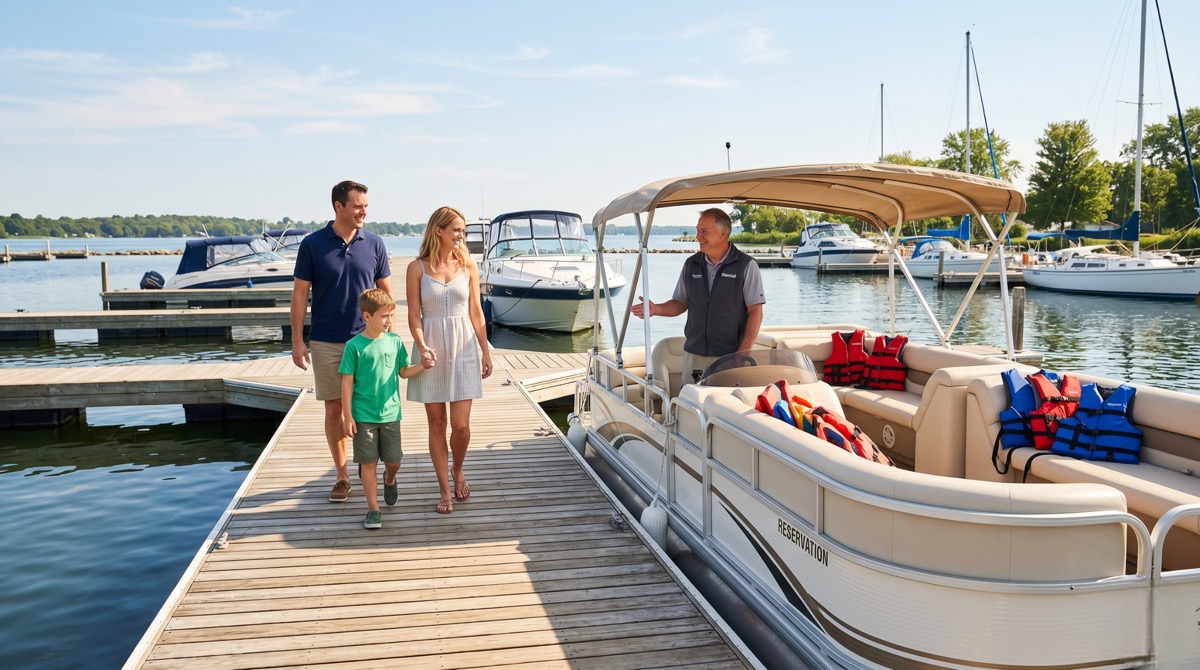
When you are managing 5+ vessels, captain assignments, maintenance schedules, weather cancellations, and marina logistics, a spreadsheet does not hold up. One missed update and someone shows up to a boat that is in dry dock.
Fleet management software centralizes everything — availability, bookings, customer communication, and payments — so that a double booking becomes structurally impossible. When a vessel is booked, it is blocked. When it is in maintenance, it is blocked. No manual cross-referencing required.
Here is what matters most for boat rental operations:
- Real-time fleet availability — every vessel shows its actual status: available, booked, in maintenance, or out of service. No gaps between what the calendar says and reality.
- Built-in buffer time — inventory management tools that automatically add turnaround time between bookings, so back-to-back conflicts never happen.
- Online booking with live inventory — customers see only what is genuinely available. No phone tag, no “let me check and get back to you.”
- Weather cancellation workflows — reschedule or credit a customer in a few clicks, with the time slot automatically reopened for rebooking.
- Digital waivers and contracts — signed before the customer arrives at the dock. Covers liability and saves 15-20 minutes per rental at check-in.
LendControl is built for exactly this kind of operation. One feature that boat rental operators find especially useful: WhatsApp AI availability — a customer messages “Are any pontoons open this Saturday?” and gets an instant answer pulled from your live inventory. During peak season, when you are fielding 20-30 availability questions a day through text and WhatsApp, that alone saves hours of back-and-forth.
Frequently asked questions
How do I prevent double bookings in a boat rental business?
Use a booking system that blocks vessels in real-time when they are reserved, in maintenance, or have buffer time between rentals. Manual calendars and spreadsheets are the primary cause of boat rental double booking problems. Software that syncs availability instantly across all booking channels eliminates the gap where overlaps happen.
What is the best buffer time between boat rentals?
Plan for 45-90 minutes between rentals depending on vessel size and type. This covers post-trip inspection, fueling, cleaning, and safety equipment checks. Saltwater boats need extra time for a freshwater rinse. Skipping this buffer is the fastest path to either double bookings or sending a dirty, under-inspected boat out with the next customer.
How do boat rental businesses handle weather cancellations?
Set a written weather policy with specific cancellation triggers (wind speed, advisories, lightning proximity). The operator or captain makes the call — not the customer. Offer reschedules or credits rather than cash refunds to preserve revenue. Track weather cancellations over the season to understand their impact on utilization and pricing.
What software features matter most for boat rental fleet management?
Real-time availability tracking, automatic buffer time between bookings, online booking with live inventory, weather cancellation workflows, captain scheduling, and digital waivers. The goal is a single system where every vessel’s status — booked, available, in maintenance — is always accurate and visible.
How many boats do I need to justify fleet management software?
Most operators find that managing 5+ vessels manually becomes unreliable. At that point, the risk of a double booking or missed maintenance window outweighs the monthly cost of software. If you are running fewer boats but offering captained charters with multiple captains, the scheduling complexity alone makes software worth it.
Run your boat rental fleet without the chaos
Boat rental fleet management comes down to one principle: every vessel, every captain, and every maintenance window needs to be visible in one place. When they are not, double bookings happen, customers show up to boats that are not ready, and you spend your peak season putting out fires instead of running a business.
Build buffer time into your booking cycle. Set a clear weather policy before the first cancellation forces you to improvise. Track captain availability alongside boat availability. And use boat rental software that makes double bookings structurally impossible — not something you have to manually prevent every day.
Your peak season is too short and too valuable to spend it apologizing on the dock.