One bad crash. That is the distance between a profitable bike rental business and a lawsuit that wipes you out.
- Bike rental insurance is not optional — but most new operators either buy too much of the wrong coverage or not enough of the right kind.
- The result is wasted money — or worse, a gap that leaves you exposed when a rider gets hurt or a bike gets stolen.
- This guide breaks down exactly which policies you need — what they cost, and how to structure your coverage so you are protected without overpaying.

Why one rider injury can end your bike rental business
Bicycle accident settlements vary widely — from five figures to over $1 million in severe cases involving head trauma or permanent disability.
- A tourist rents your bike, hits a pothole, breaks a collarbone — their attorney comes after your business
- Without liability coverage — you are paying that settlement out of pocket
- A single six-figure claim — means closing the doors for most small operators
This is not a hypothetical risk. Bikes go out every day to riders with varying skill levels, on roads and trails you do not control. The question is not whether an incident will happen — it is whether you will be covered when it does.
The four types of bike rental insurance you need
Not every policy is equally important. Here are the four that matter for a bicycle rental insurance setup, ranked by priority.
General liability insurance
This is the non-negotiable one. General liability covers bodily injury to riders and third parties, plus property damage claims. If a customer crashes into a parked car on your rental bike, this policy handles the claim.
Most commercial landlords require $1 million per occurrence in general liability coverage before they will even sign a lease with you. Event venues and tourism boards often require the same minimum plus a certificate of insurance (COI) naming them as an additional insured.
Commercial property insurance
If you lease or own a physical shop, commercial property insurance covers the building contents — your repair tools, front desk equipment, signage, and fixtures — against fire, theft, vandalism, and weather damage. It does not cover the bikes themselves when they are out on rental (that requires a separate policy).
Inland marine / equipment floater
This is the one most new operators miss. A standard commercial property policy only covers your bikes while they are inside your shop. Once a bike leaves the premises — which is the entire business model — you need an equipment floater (technically called inland marine insurance) to cover theft, accidental damage, and loss while the bike is with a customer or in transit.
Workers’ compensation
Required in most states the moment you hire your first employee. Workers’ comp covers medical costs and a portion of lost wages when an employee is injured on the job. For bike rental staff doing physical work — loading bikes, doing repairs, riding to delivery locations — the risk is real.

What each policy costs for a small bike fleet
Here is what a typical 15-to-25-bike rental operation can expect to pay annually. These are real ranges from insurance providers and industry sources.
| Coverage Type | Annual Cost | What It Covers |
|---|---|---|
| General liability ($1M per occurrence) | $540–$810/year | Bodily injury, property damage to third parties |
| Inland marine / equipment floater | ~$350/year | Bikes while rented out, in transit, or stored off-site |
| Workers’ compensation | ~$643/year | Employee injuries on the job |
| Business Owner’s Policy (BOP) | $648–$996/year | Bundles liability + property + business interruption |
If you buy each policy separately, expect to pay $1,800 to $3,100 per year total. A BOP bundles general liability, commercial property, and business interruption into a single policy — usually at a lower combined cost than buying them individually.
For a small fleet operation, a BOP plus an equipment floater plus workers’ comp (if you have staff) covers the critical bases:
- 20-bike fleet without employees: roughly $1,200 to $2,000 per year
- 20-bike fleet with a small team: roughly $1,500 to $2,700 per year
Ready to track every bike in your fleet and protect your rental records? Join the waitlist — no credit card required.
E-bikes change the insurance math
If your fleet includes e-bikes — and in 2026, it probably should — your bike rental liability insurance picture gets more complicated.
E-bikes are heavier, faster, and more expensive than pedal bikes. A standard rental e-bike costs $1,200 to $2,500 compared to $300–$800 for a city cruiser. That higher asset value means higher equipment floater premiums.
But the bigger issue is liability. E-bikes reach speeds of 20–28 mph depending on class, which increases the severity of potential injuries. Some insurers classify e-bikes differently than pedal bikes, and a few standard bicycle rental insurance policies exclude motorized vehicles entirely.
Before you add e-bikes to your fleet, confirm three things with your insurer:
- Your general liability policy explicitly covers e-bike rentals. Do not assume it does.
- Your equipment floater covers the full replacement value of each e-bike, not just the depreciated value.
- Your policy covers all three e-bike classes (Class 1, 2, and 3) if you plan to stock multiple types.
Specialized insurance providers offer policies built specifically for bike and e-bike rental operations. If your current insurer treats e-bikes as an afterthought, it is worth getting a quote from a specialist.
Waivers and contracts: your first line of defense
Insurance pays claims after something goes wrong. Waivers and rental contracts reduce your legal exposure before anything happens.
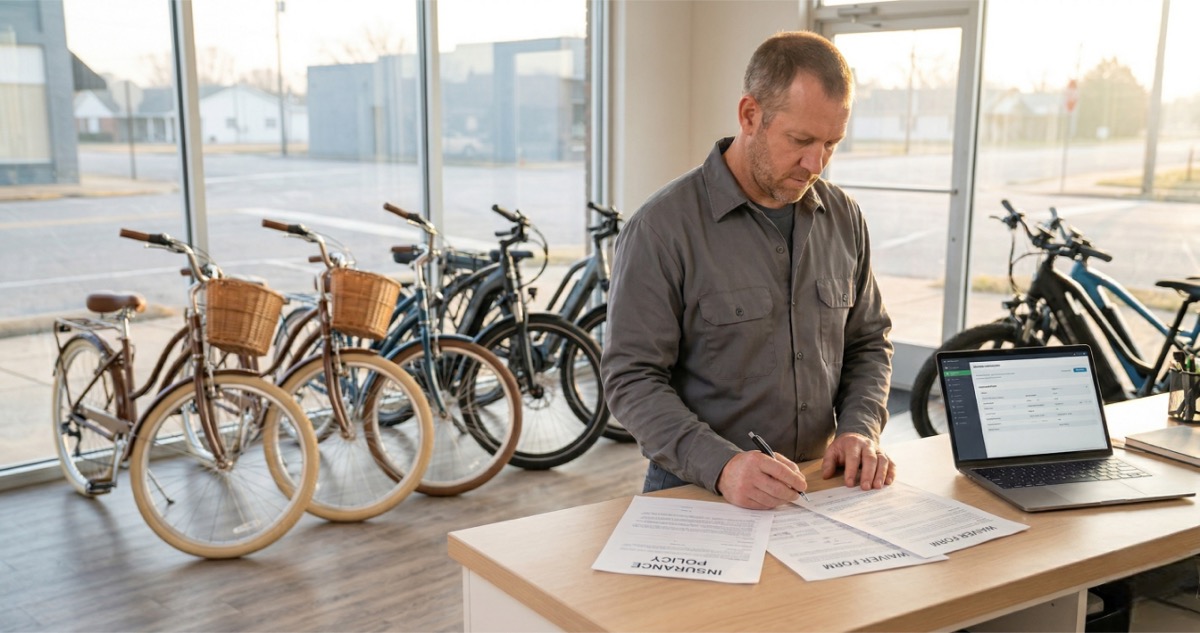
Every rider should sign a liability waiver and rental agreement before touching a bike. A solid rental contract covers:
- Assumption of risk — the rider acknowledges cycling carries inherent risk
- Liability release — limits your responsibility for injuries during normal use
- Damage responsibility — defines who pays for damage, theft, or loss
- Return conditions — specifies return time, condition expectations, and late fees
- Security deposit terms — documents the deposit amount ($50–$200 per bike is standard) and refund conditions
Paper waivers work, but they create a storage nightmare and are easy to lose. Digital waivers signed at booking time are faster, more organized, and hold up better in court because they capture timestamps and electronic signatures.
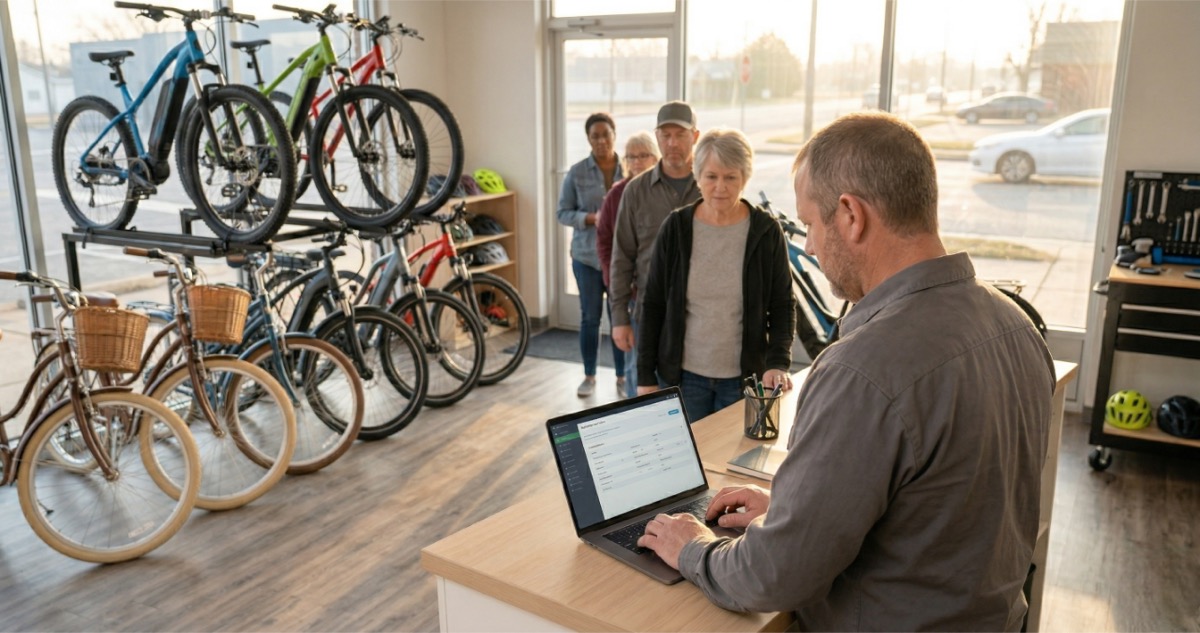
With rental management software, digital contracts can be built into the booking flow. Customers sign before pickup, and every signed agreement is stored automatically — no filing cabinets, no missing paperwork. You can set up rental contracts that capture the waiver, deposit authorization, and rental terms in one step.
How to keep your premiums low
Bike rental insurance does not have to eat your margins. Here are practical ways to reduce what you pay:
- Bundle with a BOP. A Business Owner’s Policy costs less than buying general liability and commercial property separately. Ask your agent about adding an equipment floater to the same policy.
- Require signed waivers from every rider. Insurers view documented risk acknowledgment favorably. Consistent waiver compliance can improve your renewal rates.
- Charge damage waiver fees to customers. A $5–$15/day optional damage waiver fee offsets your deductible costs and creates a revenue stream.
- Collect security deposits. A $50–$200 refundable deposit per bike discourages reckless riding and covers minor damage without filing a claim. Every claim you avoid keeps your premiums stable.
- Maintain your fleet. Documented maintenance logs show insurers you are reducing risk. Bikes with working brakes, proper tire pressure, and functional lights are less likely to cause incidents.
- Increase your deductible. If you can absorb a $1,000 or $2,500 deductible instead of $500, your annual premium drops. Only do this if your cash reserves can handle it.
- Shop multiple providers. Get quotes from at least three insurers, including both generalist providers and specialists who focus on rental operations.
Frequently asked questions
How much does bike rental insurance cost per year?
A small bike rental operation with a 15-to-25-bike fleet typically pays $1,200 to $3,100 per year for full coverage, depending on whether you bundle policies and whether you have employees. General liability alone runs $540–$810/year for $1 million in coverage. A Business Owner’s Policy ($648–$996/year) can reduce total costs by bundling liability and property coverage.
Do I need separate insurance for e-bikes?
Not always a separate policy, but you need to confirm your existing coverage explicitly includes e-bikes. Some general liability and equipment policies exclude motorized vehicles. E-bikes are heavier, faster, and more expensive to replace — all factors that can affect your premiums and coverage limits. Ask your insurer directly and get the answer in writing.
Is bike rental insurance required by law?
There is no federal requirement, but many states require workers’ comp if you have employees. Beyond legal mandates, commercial landlords almost universally require $1 million in general liability before signing a lease. Tourism boards and event venues also require proof of insurance. In practice, you cannot operate a legitimate bike rental business without it.
Can a signed waiver replace insurance?
No. A waiver reduces your legal exposure by documenting that the rider accepted the risk, but it does not eliminate liability. Courts can and do override waivers, especially in cases involving negligence (like renting out a bike with faulty brakes). Waivers and insurance work together — the waiver is your first defense, and insurance is your financial backstop.
What happens if a customer steals a rental bike?
If you have an inland marine or equipment floater policy, the theft is covered up to your policy limit minus the deductible. Without that coverage, the loss is entirely yours. This is why security deposits ($50–$200) and documented rental agreements matter — they create a paper trail and a financial deterrent. For high-value e-bikes, GPS tracking adds another layer of protection.
Protect your bike rental business before your first booking
Getting your bike rental insurance right is not exciting, but it is the difference between a business that survives its first incident and one that does not. Start with general liability and an equipment floater at minimum. Add a BOP if you have a physical shop. Layer in workers’ comp when you hire.
Pair your insurance with signed waivers, security deposits, and solid rental contracts to build a defense that covers you from every angle. And use rental management software to keep your contracts, booking records, and fleet documentation organized — because when a claim happens, the operator with clean records is the one who comes out whole.
Get Started for Free — no credit card required.