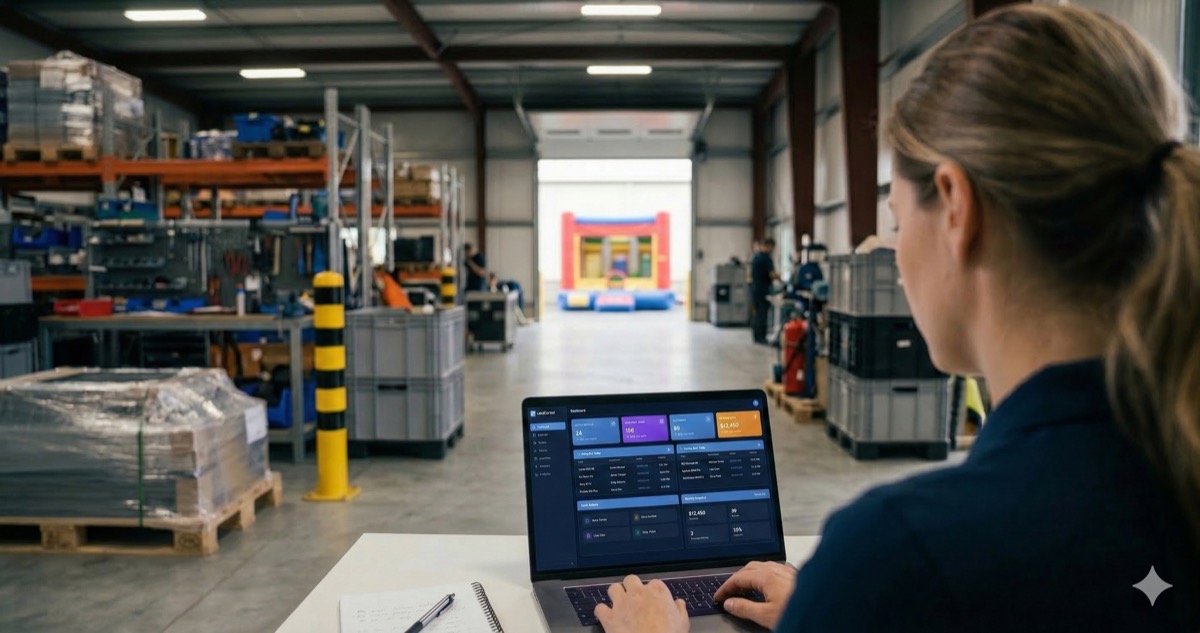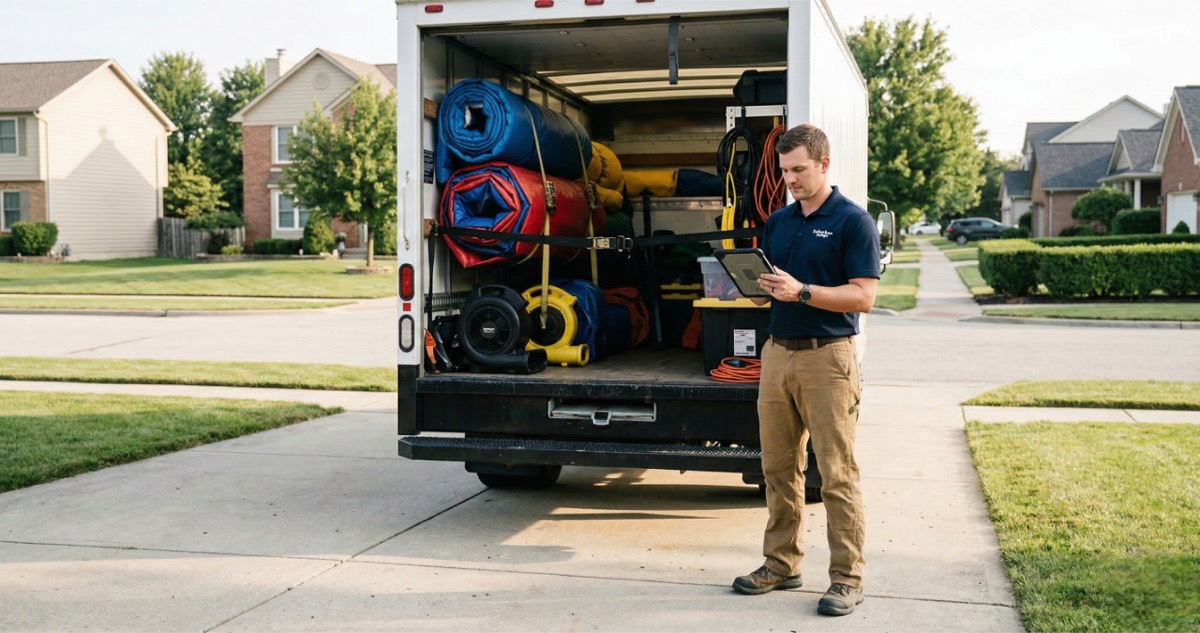

A bounce house rental business is one of the cheapest ways to break into the rental industry. The startup costs are low, the demand is steady, and a single unit can pay for itself in a few weekends.
The U.S. inflatable rental market is worth $4.4 billion in 2025 and growing at 4.1% annually. Most operators start part-time on weekends and scale from there. Some hit six figures within two to three years.
This guide covers everything you need to go from zero to your first booking — equipment, insurance, legal setup, pricing, marketing, and operations.

Run the numbers before you buy anything
Before you spend a dollar, understand what you’re getting into financially. Here’s what a realistic startup looks like:
| Expense | Cost Range |
|---|---|
| 2-3 commercial bounce houses | $4,000–$12,000 |
| Delivery vehicle or trailer | $3,000–$10,000 (used) |
| Liability insurance | $1,800–$2,500/year |
| Business registration (LLC) | $50–$500 |
| Storage unit (10×20, climate-controlled) | $150–$300/month |
| Marketing (website, Google Business, signs) | $500–$2,000 |
| Accessories (blowers, stakes, tarps, dollies) | $300–$800 |
| Total to launch | $10,000–$28,000 |
Most people start on the lower end — two bounce houses, a used truck or trailer they already own, and a basic website. You can realistically launch for $5,000–$10,000 if you keep it lean.
The math on getting your money back is straightforward. A standard 13×13 bounce house rents for $150–$350 per day. If you rent it 4-6 times per month, that’s $600–$2,100 in monthly revenue from a single unit. A $3,000 bounce house pays for itself in 2-4 months.
Ready to track your bounce house inventory from day one?
Try LendControl free for 14 days
No credit card required.
Set up your business legally
Don’t skip this. Operating without a legal structure puts your personal assets at risk if someone gets hurt on your equipment.
Form an LLC
Register an LLC through your state’s Secretary of State website. Filing fees run $50–$500 depending on your state. An LLC separates your personal finances from the business and protects you from personal liability.
Get your business license
Most cities and counties require a general business license. Check your local government website. Some municipalities have specific requirements for amusement devices — New York and Virginia, for example, require additional amusement device permits and equipment inspections.
Register for sales tax
In most states, rental income is taxable. Register for a sales tax permit so you can collect and remit sales tax on each rental. Your state’s Department of Revenue website will walk you through the process.
Open a business bank account
Keep your business money separate from personal money. You’ll need your LLC paperwork and an EIN (free from the IRS) to open a business account.

Buy your first bounce houses
This is your biggest upfront investment. Get it right.
Buy commercial-grade, not residential
Commercial bounce houses are built from 18oz vinyl — flame-retardant, lead-safe, and designed for hundreds of rentals. They cost $2,000–$5,000 each. Residential units ($200–$500) are cheaper but will fall apart after a few uses, aren’t insurable, and are a safety liability.
Start with 2-3 versatile units
You don’t need ten inflatables on day one. Start with:
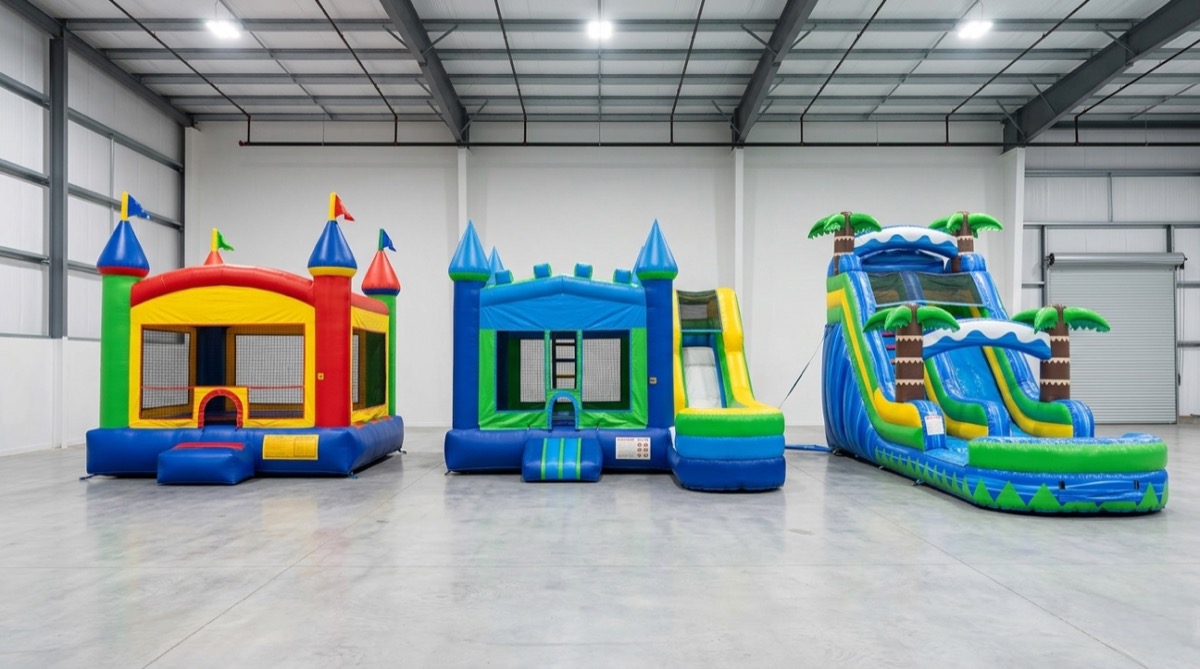
- 1 standard 13×13 bounce house ($2,000–$3,000) — your bread and butter. Every birthday party wants one.
- 1 combo unit with a slide ($3,000–$5,000) — commands higher rental rates and attracts slightly older kids.
- 1 water slide or obstacle course (optional, $3,500–$6,000) — seasonal money-maker in warm climates.
Where to buy
Established U.S. manufacturers include Happy Jump, JumpOrange, Cutting Edge Creations, and Blast Zone. You can also buy wholesale from suppliers like HullaBalloo Sales or BounceWave Slide Sales. Expect to pay less when buying multiple units.
Avoid the cheapest imports. If a “commercial” bounce house costs $400, it’s not commercial-grade. You’ll spend more replacing it than you saved.
Get insured — this is not optional
Kids jump. Kids fall. Parents sue. Without insurance, one injury claim can shut you down.
What you need
| Coverage Type | What It Covers | Estimated Cost |
|---|---|---|
| General liability | Bodily injury and property damage claims | $1,000–$2,500/year |
| Product liability | Defects in the equipment itself | Often bundled with general liability |
| Commercial auto | Your delivery vehicle while transporting equipment | $1,200–$3,000/year |
| Workers’ comp | Employee injuries (required if you hire staff) | Varies by state |
Most standard business insurance policies exclude amusement devices. You need specialized inflatable or amusement rental insurance. Companies like XINSURANCE, Cossio Insurance, and K&K Insurance specialize in this.
Venue requirements
Here’s the part most new operators miss: venues, parks, schools, and churches will ask for proof of insurance before letting you set up. Most require $1 million to $2 million in general liability coverage. Some now require $5 million. They’ll also want to be listed as “additional insured” on your certificate.
If you don’t have insurance, you lose the booking. It’s not just protection — it’s a sales requirement.
Figure out storage and delivery
Your inflatables need a dry, clean home. And you need a reliable way to get them to the party.
Storage
A 10×20 climate-controlled storage unit runs $150–$300/month and fits 2-4 deflated bounce houses. Choose a unit with 24/7 access — your pickups will start early and your drop-offs will run late, especially on weekends.
Make sure the unit is climate-controlled. Heat and moisture destroy vinyl over time. A few hundred dollars in monthly rent protects thousands in equipment.
Delivery vehicle
You have options:
- Pickup truck — works for 1-2 standard bounce houses. Most new operators start here.
- Cargo van — better for 2-3 units. Keeps equipment clean and dry during transport.
- Enclosed trailer — ideal once you have 3+ units. Can be towed by an SUV or truck.
- Box truck — for larger operations. Overkill on day one, but where you’ll end up if you scale.
Budget $3,000–$10,000 for a used vehicle or trailer. If you already have a truck or SUV, you might only need a utility trailer ($1,000–$3,000 used).
Delivery essentials
- Heavy-duty dolly — you’ll be moving 200-400lb inflatables. A standard hand truck won’t cut it.
- Ratchet straps — to secure units during transport.
- Ground stakes and sandbags — stakes for grass setups, sandbags for concrete or asphalt.
- Extension cord (100 ft, outdoor-rated) — every bounce house needs a 110V outlet or generator.
- Tarps — to place under the bounce house and protect it from wet or rough surfaces.
Set your rental pricing
Pricing depends on your market, your equipment, and what the competition charges. Here’s a framework:
Standard pricing ranges
| Unit Type | 4-8 Hour Rental | Full Day (8+ Hours) |
|---|---|---|
| Standard 13×13 bounce house | $150–$250 | $200–$350 |
| Combo unit (bounce + slide) | $200–$350 | $275–$450 |
| Water slide | $250–$400 | $350–$575 |
| Obstacle course | $300–$500 | $400–$600 |
The rule of ten
A quick pricing formula: take what you paid for the unit and divide by ten. That’s your base rental fee. A $3,000 bounce house rents for about $300. Adjust based on your local market.
What to charge extra for
- Delivery beyond your standard radius (usually 15 miles included) — $1–$3 per extra mile
- Generator rental — $50–$100 if the venue doesn’t have power
- Overnight rental — 25-50% more than the standard day rate
- Setup on concrete (requires sandbags instead of stakes) — $25–$50
Don’t underprice
New operators often price low to win bookings. That’s a mistake. You need to cover equipment costs, insurance, gas, labor, and wear and tear. If your rate doesn’t leave room for profit after all expenses, you’ll burn out fast.
Check what local competitors charge. Price within the same range — competing on quality and reliability, not on being the cheapest. Learn how LendControl handles invoicing automatically
Get your first customers
You have equipment, insurance, and pricing. Now you need bookings.
Claim your Google Business Profile (day one)
This is the single most important marketing move for a local rental business. When someone searches “bounce house rental near me,” Google shows the local map pack first. Your Google Business Profile gets you into that map pack.
Fill it out completely — photos of your inflatables, your service area, hours, website link, and phone number. Ask every customer to leave a review. Reviews are the biggest ranking factor for local search.
Build a simple website
You don’t need anything fancy. One page with:
- What you rent (with photos and pricing)
- Your service area
- A way to book or request a quote (online booking is better than a contact form — you’ll capture more leads)
- Your phone number
Social media (Facebook and Instagram first)
Post photos and videos of your bounce houses at real events. Tag the venue and the customer (with permission). Join local parent groups and community event pages on Facebook. Don’t spam — answer questions, be helpful, and mention your business when relevant.
Referral program
Your first 10-20 customers are your best marketing channel. Offer $25 off their next rental for every referral that books. Word of mouth is how most local bounce house businesses grow.
Local partnerships
Partner with event planners, party supply stores, and children’s activity centers. Leave business cards. Offer them a referral fee or commission for sending you business. See how online bookings can capture leads 24/7
Manage bookings without losing your mind
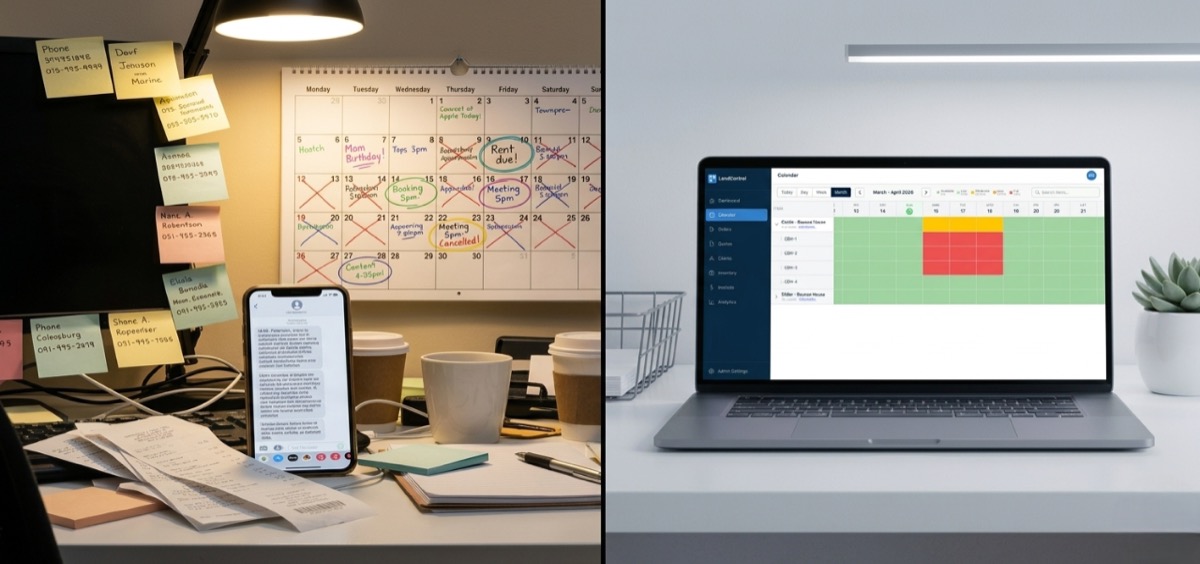
When you’re running 1-3 inflatables on weekends, a spreadsheet might work. But the moment you start double-booking — or forget who paid a deposit — you need a system.
Here’s what happens without one:
- Two families show up expecting the same bounce house on the same Saturday
- You forget to collect a security deposit and the unit comes back torn
- A customer calls asking “is the combo unit available next Sunday?” and you have to dig through texts and notes to figure it out
Rental management software solves all of this. You get a dashboard where you can see what’s booked, what’s available, and who owes what — in real time.
LendControl is built for exactly this. Manage your bounce house inventory, take online bookings, send contracts, collect payments, and track everything from one screen. Your customers can even check availability and book directly through WhatsApp — they ask “is the bounce house available on the 20th?” and get an instant answer from your live inventory.
Most operators wait too long to set up software and lose bookings in the meantime. Set it up early, even if you only have two units. Explore LendControl’s inventory management
Frequently asked questions
How much money can you make with a bounce house rental business?
Most operators earn $15,000–$50,000 in their first year running part-time on weekends. A single bounce house rented 4-6 times per month at $200 averages $800–$1,200 in monthly revenue. Profit margins run 30-40% after insurance, gas, maintenance, and storage. Successful full-time operators report $50,000–$100,000+ annually within 2-3 years.
How many bounce houses do I need to start?
Two to three is the sweet spot. One standard bounce house and one combo unit covers most party requests. Starting with more ties up cash in inventory you might not rent consistently. Add units as demand grows and you understand what your market wants.
Do I need a license to rent bounce houses?
Requirements vary by location. At minimum, you need a general business license and LLC registration. Some states (New York, Virginia) require amusement device permits and equipment inspections. Check your state and local government websites for specific requirements.
Is a bounce house rental business seasonal?
In most markets, yes — spring through fall is peak season. Summer weekends are the busiest. However, you can extend your season with indoor setups for churches, gyms, and community centers during winter months. Water slides and wet units are summer-only in most climates.
How do I prevent double bookings?
Use rental management software with real-time availability tracking. When someone books your 13×13 bounce house for Saturday, it’s immediately blocked from other bookings. Spreadsheets and paper calendars can’t do this reliably — one missed update costs you a customer and your reputation.
Related: Bounce House Rental Software — manage inventory, bookings, and customers in one platform.