
You have the location picked out. You know there is demand. But the question stopping you from moving forward is the most practical one: how much is this actually going to cost?
The bike rental startup cost you will see quoted online ranges anywhere from $5,000 to $100,000 — which is not helpful. The real number depends on:
- Fleet size and bike types (cruisers vs e-bikes vs mountain bikes)
- Location — beachfront shop vs mobile trailer vs kiosk
- Operation model — full shop or lean startup
This guide breaks down every category of startup expense with sourced numbers so you can build a realistic budget, not a fantasy one.
The real bike rental startup cost range
Most small bike rental operations launch with $15,000 to $60,000 in total startup capital. That range covers everything from a 10-bike kiosk near a trail to a 30-bike storefront in a tourist town.
Here is a full breakdown for a typical 20-bike mixed fleet:
| Expense Category | Estimated Cost |
|---|---|
| Bikes (20 units, mixed fleet) | $8,000–$30,000 |
| Shop or storage space (first + last month) | $1,000–$6,000 |
| Insurance (annual) | $1,200–$3,000 |
| Helmets, locks, accessories | $800–$1,500 |
| Business registration + licenses | $100–$800 |
| Maintenance tools and supplies | $500–$1,000 |
| Rental management software | $35–$100/month |
| Marketing (signage, website, local ads) | $500–$3,000 |
| Total estimated range | $12,135–$45,300 |
The wide range exists because of one variable more than any other: bike type. A fleet of 20 standard cruisers costs a fraction of what 20 e-bikes will run you. The next section breaks that down.
Bike fleet — your biggest line item
Your fleet is 40–60% of your total bicycle rental startup budget. Picking the right mix of bikes is the single most important financial decision you will make.
Standard city bikes and beach cruisers
The most affordable option. New cruisers and city hybrids run $300–$500 per bike at wholesale. Used fleet bikes from rental companies that rotate stock annually can drop that to $150–$300. These are the workhorses — low maintenance, easy for anyone to ride, and they hold up well under daily rental use.
E-bikes
The premium category. New e-bikes for a rental fleet cost $1,200–$3,000 per unit, with fleet discount programs from some suppliers offering 2–10% off retail. E-bikes are more expensive upfront, but they command $40–$80 per day in rental rates compared to $25–$40 for standard bikes. The ROI math works — most operators recoup the cost of an e-bike within 2–3 months of steady rentals.
Mountain bikes
Solid rental mountain bikes cost $400–$800 new and rent for $50–$80+ per day in trail-heavy areas. They require more frequent maintenance (suspension service, drivetrain wear), but per-rental revenue is strong.
Kids’ and specialty bikes
Budget $100–$300 per unit. Lower rental rates ($10–$20/day), but they increase your average transaction when families rent together. Tag-along trailers and child seats cost $50–$150 each and round out a family-friendly offering.

Storage, shop space, and location costs
Your second-largest expense is where you keep and rent your bikes. The gap between a kiosk setup and a full retail shop is significant.
Kiosk or trailer operation: $200–$800/month for a parking lot spot, trailer permit, or small covered area near a trailhead or beach. This is the leanest way to start. You skip the buildout costs and test your market before committing to a lease.
Small retail storefront: $1,000–$3,000/month depending on your market. Tourist areas and downtown locations will be at the higher end. Add $1,000–$5,000 for initial buildout — bike racks, a small counter, signage, and basic security.
Shared retail space: Some operators split space with surf shops, outdoor gear stores, or coffee shops. This cuts rent dramatically and puts you in front of foot traffic that already skews toward your customer base.
A kiosk model can reduce your total bike rental startup cost by 20–40% compared to a traditional storefront.
Ready to manage your fleet and bookings from day one?
Try LendControl free for 14 days
No credit card required.
Insurance you cannot skip
One rider injury without coverage can end your business before it really starts. Here is what you need and what it costs.
General liability insurance covers injuries to riders and third-party property damage. A standard policy runs an estimated $480–$660 per year for a small bike rental business (based on similar small business categories). Most commercial landlords require at least $1 million per occurrence in coverage.
A full insurance package typically includes:
- General liability: ~$480–$660/year (estimated based on similar small business categories)
- Business Owner’s Policy (BOP): Bundles general liability + commercial property — saves $200-$300/year vs. buying separately
- Equipment/inland marine (covers your bikes against theft and damage): $175–$450/year
- Workers’ comp (if you hire staff): $360–$720/year
Total insurance budget: $1,200–$3,000/year depending on fleet size and coverage level.
One more thing: require signed liability waivers from every single rider. Digital waivers signed during booking protect you legally and save time at pickup. This is non-negotiable.
Business registration and licenses
This part is straightforward and relatively cheap.
- LLC formation: $40–$500 depending on your state — Kentucky is the cheapest at $40, Massachusetts the most expensive at $500
- EIN (Employer Identification Number): Free from the IRS. Takes five minutes online.
- Local business license: $50–$200/year from your city or county clerk
- Sales tax permit: Required in most states — register with your state’s Department of Revenue
Some cities require rental-specific permits. New York City requires a Bicycle Business License from NYC DOT, and San Francisco requires a Commercial Activity Permit. Check your local requirements before signing any lease.
Total registration costs: $100–$800 for most operators.
Software, tools, and accessories
These are smaller line items individually, but they add up.
Rental management software
You need a system to track inventory, manage bookings, and collect payments. Manual tracking with spreadsheets breaks down once you pass 5–10 bikes. Bike rental software costs $35–$100/month for most small-business plans.
What to look for: real-time availability tracking, online booking, digital waivers, and payment processing. LendControl handles all of this — and its WhatsApp AI integration lets customers ask availability questions like “Do you have any e-bikes free this Saturday?” and get instant answers pulled from your live inventory. That eliminates hours of back-and-forth messaging every week.
Helmets and safety gear
Wholesale bike helmets run $7–$15 each in bulk orders of 24+ units. For a 20-bike fleet, budget $200–$400 for helmets with some spares for replacement.
Locks and accessories
U-locks or cable locks cost $15–$30 each. Add baskets ($10–$20), phone mounts ($5–$10), and reflective vests for evening riders. Total accessory budget for 20 bikes: $600–$1,100.
Maintenance tools
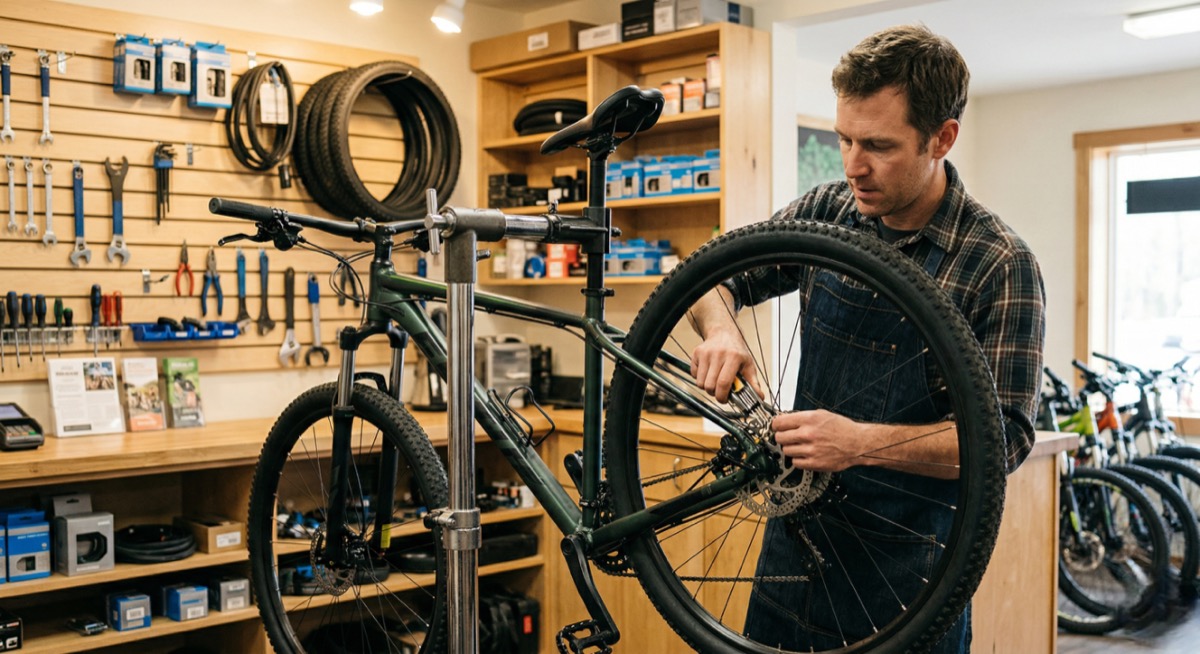
A basic bike repair station — pump, multi-tool set, tire levers, chain lubricant, brake pads, inner tubes, and a work stand — runs $500–$1,000. Doing basic maintenance in-house saves you significant money over outsourcing every repair to a bike shop.
Marketing and launch costs
You do not need a massive marketing budget to launch. Most successful bike rental operators rely on location visibility + online presence more than paid advertising.
Essential marketing spend:
- Signage: $200–$1,000 for outdoor signs, A-frames, and banners. If you are in a high-foot-traffic location, signage alone can drive the majority of your walk-in business.
- Website: $200–$800 for a simple site with online booking, fleet photos, pricing, and your location. Platforms like Squarespace or a booking-integrated solution keep costs low.
- Google Business Profile: Free. This is your most important digital asset for local search. Add photos, hours, pricing, and respond to every review.
- Local partnerships: Free or low-cost. Partner with hotels, Airbnb hosts, and tour operators for referral traffic. Offer them a small commission or discount code.
- Social media and local ads: $100–$500 for initial boosted posts targeting tourists and locals searching for outdoor activities in your area.
Total marketing budget at launch: $500–$3,000. You can always increase spending after your first season once you know what channels actually drive bookings.
Ongoing costs most people forget
Your startup budget gets you open. But you need to plan for recurring costs that hit every month and every year.
Maintenance per bike per year
Budget $150–$300 per standard bike per year for routine maintenance — tire replacements, brake adjustments, chain lubrication, and periodic tune-ups. E-bikes run higher at $200–$500 per year due to battery upkeep, motor checks, and more frequent brake wear. E-bike battery replacements cost $500–$800 and are needed every 3–5 years.
Seasonal cash flow gaps
If you operate in a tourist market, expect 60–80% of your revenue to come during a 3–5 month peak season. You need enough cash reserves to cover rent, insurance, and loan payments during the off-months. Budget at least 3 months of fixed expenses as a cash cushion.
Replacement bikes
Rental bikes take a beating. Plan to replace 10–15% of your fleet annually — that means 2–3 bikes per year for a 20-bike fleet. Factor that into your year-two budget.

Frequently asked questions
How much does it cost to start a small bike rental business?
A small operation with 10–15 standard bikes can launch for $8,000–$20,000 if you use a kiosk or trailer setup, buy a mix of new and used bikes, and keep marketing lean. Adding e-bikes or a retail storefront pushes the range to $25,000–$60,000.
Are e-bikes worth the extra startup cost?
Yes — for most markets. E-bikes cost $1,200–$3,000 each compared to $300–$500 for standard bikes, but they rent for nearly double the daily rate. Most operators recoup the cost of an e-bike within 2–3 months. Start with a small percentage of your fleet (20–30%) and scale up based on demand.
What insurance do I need for a bike rental business?
At minimum, you need general liability insurance (estimated $480–$660/year based on similar small business categories). A full package including a BOP, equipment coverage, and workers’ comp runs $1,200–$3,000/year. Most landlords and local regulations require at least $1 million per occurrence in liability coverage.
How much should I budget for bike maintenance annually?
Budget $150–$300 per standard bike per year and $200–$500 per e-bike per year for routine maintenance. For a 20-bike mixed fleet, that is roughly $4,000–$7,000 annually in maintenance costs.
Can I start a bike rental business with no storefront?
Absolutely. A kiosk, trailer, or mobile setup near a popular trail or beach is one of the best ways to test a market. It reduces your bike rental startup cost by 20–40% compared to a full retail shop. Many successful operators started mobile and moved into a storefront after their first profitable season.
Build your budget, then build your business
The total bike rental startup cost for most small operators falls between $15,000 and $60,000. The biggest variables are your fleet mix (standard bikes vs. e-bikes), your location setup (kiosk vs. storefront), and how lean you keep your launch marketing.
The operators who get in trouble are the ones who underestimate recurring costs — maintenance, insurance renewals, and off-season cash flow gaps. Build those into your budget from day one, and you will avoid the scramble later.
Once your budget is set, you need a system to manage the bikes, bookings, and payments without drowning in spreadsheets. Bike rental software handles the operational side so you can focus on growing the business.
Ready to launch your bike rental business?
Try LendControl free for 14 days
No credit card required.