
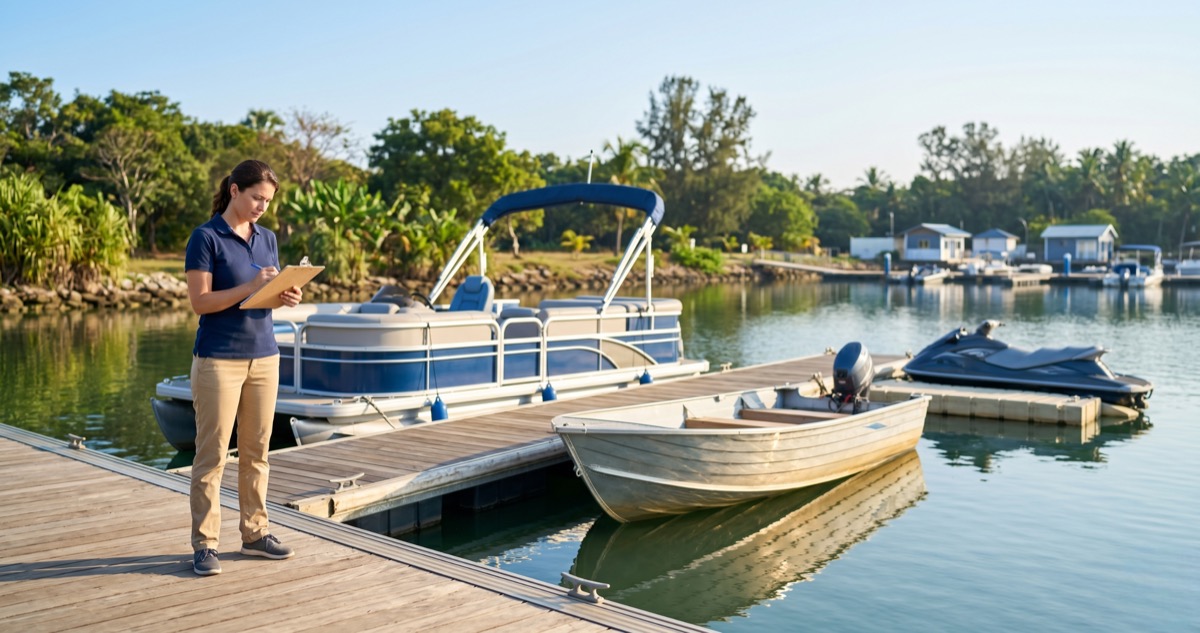
The difference between a boat rental business that thrives and one that barely breaks even usually comes down to one thing: how you set your rates.
Getting boat rental pricing wrong is expensive — in both directions.
- Price too high — your boats sit at the dock while competitors fill their schedules
- Price too low — you’re burning through fuel, maintenance, and insurance costs faster than revenue comes in
The good news: boat rental rates are not a guessing game. This guide breaks down exactly how much to charge across every major category, with real numbers you can use today.
- Clear market ranges by boat type — so you know where your rates should land
- Proven structures for captain fees and fuel surcharges — so you do not leave money on the table
- Seasonal strategies — that keep your utilization high even in shoulder months

Know what your boats actually cost you before setting rates
You cannot price profitably if you do not know your cost per rental. Most boat rental operators dramatically underestimate their true operating costs because they only think about the purchase price and fuel.
Here is what actually goes into the cost of putting a boat on the water for a customer.
Depreciation
Year 1 depreciation is typically 15–20%; years 2–5 average 5–10%. A $40,000 pontoon might lose $6,000–$8,000 in its first year, then $2,000–$4,000 annually after that. That cost needs to be recovered through rentals.
Insurance
Commercial boat rental insurance runs $2,500 to $10,000+ per vessel per year depending on boat type, value, and coverage limits. Jet skis and high-performance boats sit at the higher end.
Maintenance
Annual maintenance costs average $2,000 to $5,000 per boat for standard vessels, covering winterization, engine servicing, hull cleaning, and trailer upkeep.
Slip and storage fees
Marina slips cost $1,200 to $6,000+ per year depending on location and boat size.
Fuel
A pontoon burns roughly 4–8 gallons per hour, a fishing boat 3–6 GPH, and a jet ski 10–25 GPH depending on model.
Add those up, divide by your expected rental days per season, and you have your minimum daily rate — the floor below which you lose money on every booking. Everything above that is margin.
Boat rental rates by type: what the market is charging
Boat rental rates vary significantly by vessel type, location, and rental duration. Here are the standard market ranges across the United States for 2026.
| Boat Type | Hourly | Half-Day (4 hrs) | Full Day (8 hrs) | Weekly |
|---|---|---|---|---|
| Pontoon (20–24 ft) | $75–$150 | $250–$500 | $400–$800 | $2,000–$4,500 |
| Jet ski / PWC | $60–$100 | $200–$350 | $300–$500 | $1,500–$3,000 |
| Fishing boat (16–22 ft) | $50–$100 | $175–$350 | $275–$550 | $1,200–$3,000 |
| Deck boat (20–26 ft) | $85–$150 | $300–$500 | $450–$800 | $2,200–$4,500 |
| Sailboat (22–30 ft) | $75–$125 | $250–$450 | $350–$700 | $1,800–$4,000 |
| Yacht (30–50 ft) | $200–$500+ | $600–$1,500 | $1,000–$3,000+ | $5,000–$15,000+ |
Pontoons are the volume play
Pontoons are the most commonly rented boat type in the U.S. — families, bachelor parties, casual lake days. Demand stays consistent throughout peak season, and they are forgiving on fuel costs.
Jet skis have the highest hourly margins
A $12,000 jet ski renting at $80/hour for even 3 hours a day generates serious revenue. The flip side: maintenance and insurance costs per unit are disproportionately high.
Yachts are high-ticket but low-volume
A single full-day yacht charter can gross $2,000+, but you may only book 2–3 per week during peak season. Factor in captain costs, fuel, and crew when calculating margins.
Decide on captain fees
Not every customer has a boating license or feels comfortable driving a 24-foot pontoon. Offering captained rentals opens your market to a much wider audience — and commands a premium.
- Captained rates add $150 to $400+ per trip depending on vessel size, duration, and location
- On yacht charters, captain fees are almost always included and can run $300 to $800+ per day
- Many operators require a captain for boats over a certain size (typically 26+ feet) or for renters without a valid boating license
If you hire captains as independent contractors, your costs are lower but you take on scheduling complexity. Full-time captains on payroll cost more but give you reliable availability during peak weekends.
Choose a fuel policy
How you handle fuel directly affects your margins and customer experience. There are three standard approaches.
Renter pays for fuel (most common)
Boat goes out full, must come back full. Simple. The customer buys fuel at the marina. You avoid fuel cost risk entirely.
Fuel included in the rental rate
Simpler for the customer, but you need to price conservatively. Add $50–$150 per half-day depending on boat type to cover fuel costs.
Flat fuel surcharge
A fixed fee ($50–$100) added to every booking. Covers average use without requiring the customer to refuel. Works well for jet ski and pontoon rentals where usage is predictable.
The cleanest approach for most operators: require a full tank return and charge a $75–$150 refueling fee if the boat comes back under half a tank. It keeps your pricing transparent and recovers costs when renters do not refuel.
Use seasonal pricing to maximize revenue year-round
If you charge the same rate in July that you charge in October, you are leaving money on the table during peak season and scaring off bookings during slow months. Most successful operators use a three-tier structure.
Peak season (Memorial Day through Labor Day)
Full rates. No discounts. Demand exceeds supply on weekends, so some operators charge a 10–20% premium on Saturdays and holiday weekends.
Shoulder season (April–May and September–October)
Reduce rates by 15–25% to keep boats moving. Weekday specials and multi-day discounts work well here.
Off-season (November through March)
In warmer climates (Florida, Gulf Coast, Southern California), you can still run at 30–40% off peak rates. In cold-weather markets, most operators winterize and focus on maintenance and marketing for next season.
Weekend vs. weekday pricing
A pontoon that rents for $600/day on Saturday might sit empty Tuesday through Thursday. Offering a $400 midweek rate fills those empty days without devaluing your peak-demand pricing.
Holiday weekends — Fourth of July, Memorial Day, Labor Day — are your highest-revenue days. Block these out early for advance bookings and never discount them.
Ready to automate your boat rental quotes and invoicing?
Try LendControl free for 14 days
No credit card required.
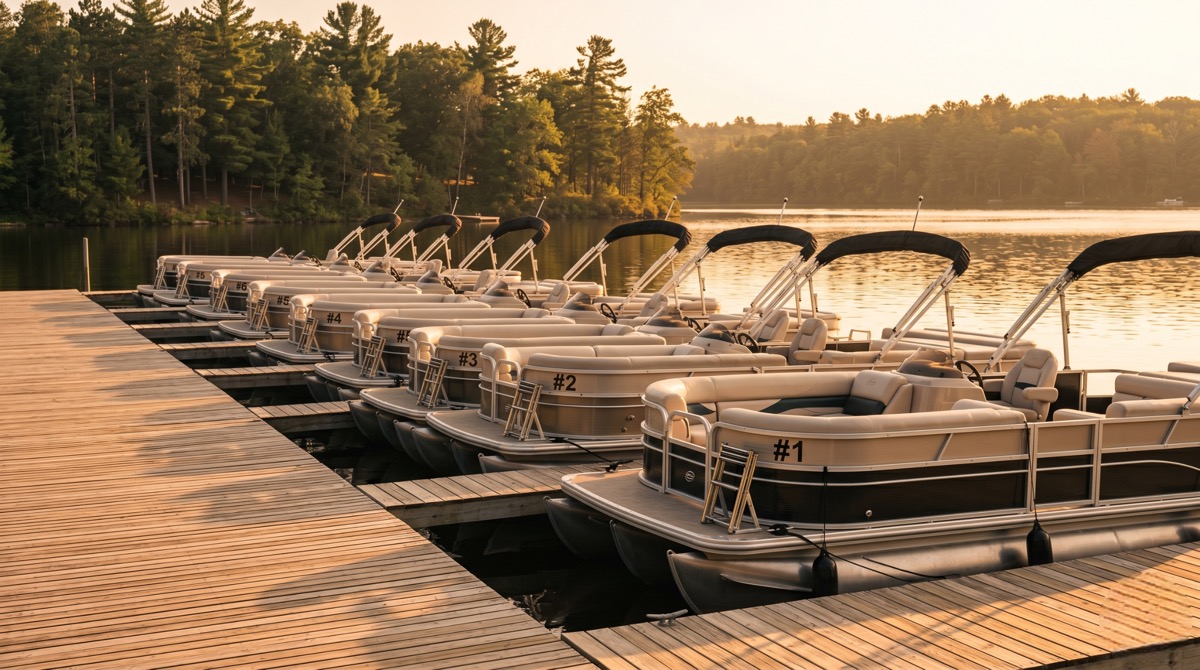
Structure deposits and damage waivers to protect your margins
Boats are expensive assets on open water. A single collision, grounding, or prop strike can cost you thousands in repairs and weeks of lost rental income. Your deposit and waiver structure is what stands between you and absorbing that loss entirely.
Security deposits
Standard security deposit ranges by boat type:
| Boat Type | Typical Deposit |
|---|---|
| Jet ski / PWC | $300–$500 |
| Fishing boat | $500–$1,000 |
| Pontoon | $500–$1,500 |
| Deck boat | $750–$1,500 |
| Sailboat | $1,000–$2,500 |
| Yacht | $2,000–$10,000+ |
Collect deposits at booking — not at the dock. A hold on a credit card works best: the customer sees the hold, understands the stakes, and you can charge against it if there is damage. Release the hold within 24–48 hours of a clean return.
Damage waivers
A damage waiver is an optional fee (typically $25–$75 per rental) that reduces or eliminates the renter’s liability for accidental damage. It works like the collision damage waiver on a car rental.
For you, it is nearly pure margin — the fee revenue from hundreds of incident-free rentals far exceeds the occasional damage payout. Many operators report $5,000–$10,000+ in annual waiver revenue on a 10-boat fleet.
Send accurate quotes without the back-and-forth
Pricing a boat rental is more complex than most rental categories. You are combining a base rate, captain fee, fuel policy, seasonal adjustment, deposit, and optional waiver — all of which change depending on the boat, the date, and the duration.
When you handle this manually, every inquiry turns into a 15-minute back-and-forth over WhatsApp or email. Multiply that by 10–20 inquiries a day during peak season, and you are spending hours on quoting instead of running your boat rental business.
This is where boat rental software pays for itself. With LendControl, your rates, seasonal adjustments, captain fees, and deposit rules are configured once. When a customer asks “how much for a pontoon this Saturday?”, the system generates an accurate quote instantly — including through WhatsApp AI, where customers message you and get a real-time answer pulled directly from your availability and pricing rules.
No spreadsheets. No mental math at the dock. No misquoted rates that cost you money.
Frequently asked questions
How much should I charge for a pontoon boat rental?
Pontoon boat rental rates typically range from $75–$150 per hour, $250–$500 for a half-day, and $400–$800 for a full day depending on your location and boat size. Lake destinations and tourist-heavy areas command the higher end. Always factor in your insurance, depreciation, and maintenance costs before setting your final rate.
How much should I charge for a jet ski rental?
Jet ski rentals typically run $60–$100 per hour or $300–$500 for a full day. Hourly rentals generate the highest per-hour revenue. Most operators also require a $300–$500 security deposit because jet skis have high damage and theft risk relative to their value.
Should I include fuel in my boat rental price?
Most operators use a “full tank out, full tank back” policy — the simplest and most transparent approach. If you want to include fuel for a smoother customer experience, add $50–$150 per half-day to your rate depending on the vessel. A flat fuel surcharge of $50–$100 per trip is a good middle ground for jet skis and pontoons.
How do seasonal pricing adjustments work for boat rentals?
Use a three-tier model: full rates from Memorial Day through Labor Day, 15–25% discount in shoulder months (April–May, September–October), and 30–40% off in the off-season if your climate allows winter rentals. Weekends and holidays should always be priced at or above your peak rate.
What is a damage waiver and should I offer one?
A damage waiver is an optional per-rental fee ($25–$75) that reduces or eliminates the renter’s liability for accidental damage. It generates consistent revenue with minimal payout risk — most rentals come back without incident. Offering it is a net positive for both your margins and your customer experience.
Set your boat rental pricing with confidence
- Know your costs — understand what the market pays for each boat type
- Set base rates using the market ranges above
- Layer in captain fees and fuel policies that match your operation
- Use seasonal tiers to capture maximum revenue in peak months without leaving boats idle in the shoulder season
- Put a system in place that handles quoting, deposits, and invoicing so you can focus on growing your fleet
The operators who profit most are not the ones with the lowest rates — they are the ones who price accurately, collect proper deposits, and do not waste hours manually quoting every inquiry.
Ready to automate your pricing and close bookings faster?
No credit card required.